


Blog
Manpower Staffing Agency: Your Complete Guide for 2026

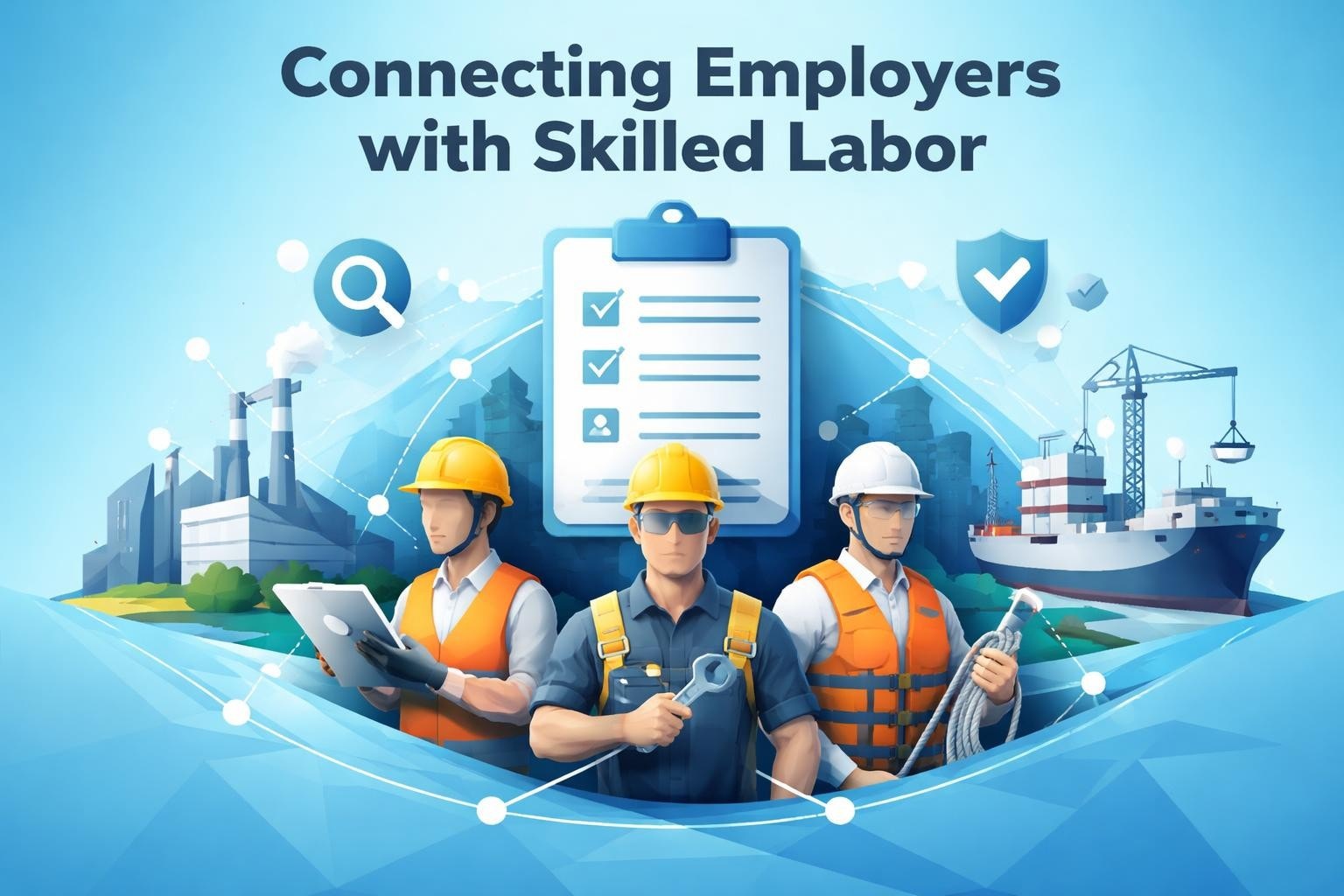
Businesses across the industrial, construction, and maritime sectors face a common challenge: finding qualified, safety-certified workers quickly while maintaining project timelines and operational efficiency. A manpower staffing agency solves this problem by providing immediate access to pre-screened, job-ready talent without the overhead costs of full-time hiring. Whether you need certified welders for a refinery shutdown, licensed CDL drivers for logistics operations, or bilingual construction teams for diverse worksites, the right staffing partner delivers measurable results. The decision to work with a specialized agency isn’t just about filling positions-it’s about gaining a competitive advantage through workforce flexibility, safety compliance, and cultural competency that traditional hiring methods simply cannot match.
What Defines a Manpower Staffing Agency
A manpower staffing agency serves as the strategic bridge between employers requiring skilled labor and qualified workers seeking employment opportunities. Unlike traditional recruitment firms that focus primarily on permanent placement, these agencies specialize in temporary, temp-to-hire, and contract staffing solutions that address immediate workforce needs.
The core function centers on three critical pillars: talent acquisition, workforce management, and compliance assurance. First, agencies maintain extensive databases of pre-screened candidates across multiple skill levels and trade specialties. Second, they handle all administrative burdens including payroll, benefits, workers’ compensation, and tax withholdings. Third, they ensure regulatory compliance with OSHA standards, industry certifications, and safety protocols.
The Business Model Behind Workforce Solutions
Revenue generation occurs through markup pricing, where agencies charge clients a rate higher than the worker’s hourly wage. This margin covers operational costs, recruitment expenses, insurance, and profit. ManpowerGroup’s global operations demonstrate the scalability of this model, with billions in annual revenue across diverse industry sectors.
Key differentiators include:
- Industry specialization and trade-specific expertise
- Geographic coverage and regional market knowledge
- Bilingual capabilities and cultural competency
- Safety certification programs and compliance infrastructure
- Speed of deployment and workforce scalability
The most effective agencies don’t just provide bodies-they deliver strategic workforce solutions tailored to specific operational requirements and project demands.
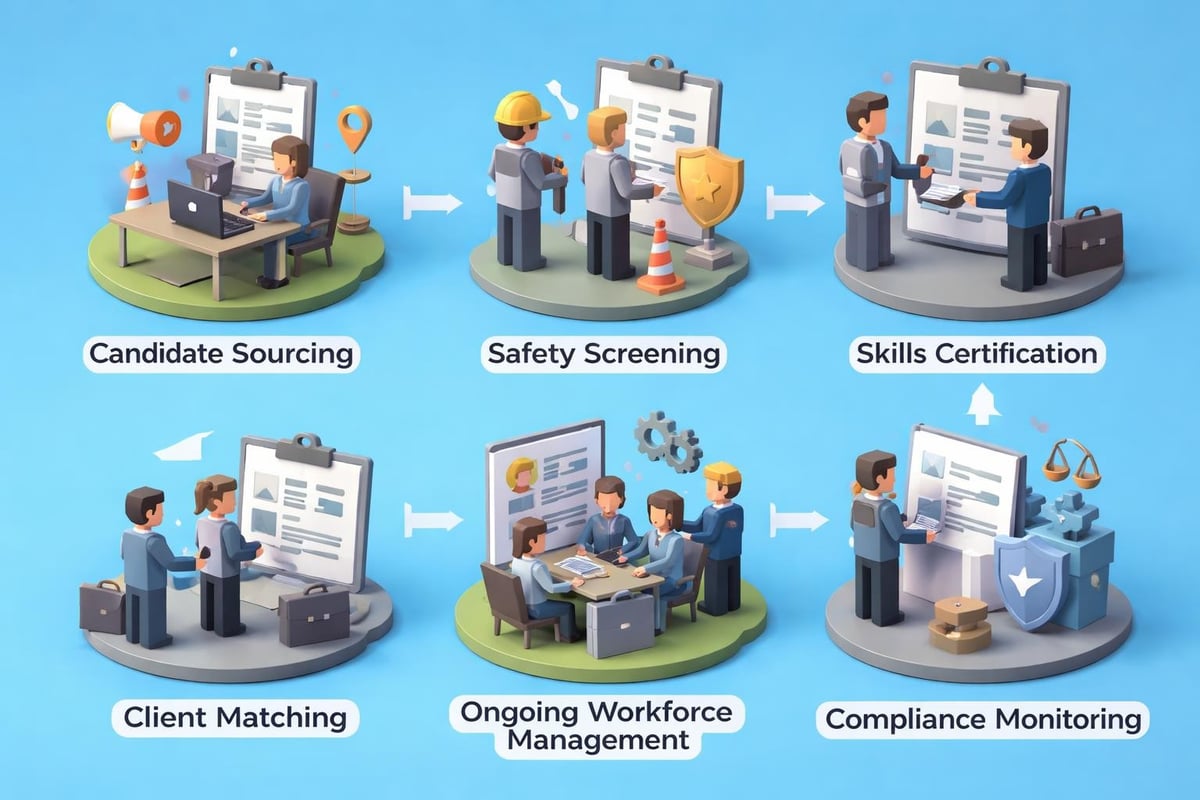
Core Services Every Manpower Staffing Agency Should Provide
The staffing landscape has evolved far beyond simple labor placement. Today’s workforce demands require comprehensive service offerings that address every aspect of employment management and talent deployment.
Industrial and Skilled Trades Staffing
Certified tradespeople represent the backbone of manufacturing, energy, and industrial operations. A manpower staffing agency must maintain rosters of welders with current certifications (SMAW, GMAW, FCAW), pipefitters holding journeyman credentials, electricians with state licenses, and heavy equipment operators with documented experience.
For construction staffing specifically, agencies need immediate access to carpenters, concrete finishers, steel workers, and general laborers who understand job site protocols and safety requirements. The difference between mediocre and exceptional agencies lies in verification depth-confirming not just claimed skills but documented certifications, work history, and safety records.
Transportation and Logistics Personnel
The logistics sector demands specialized licensing and clean driving records. Class A and Class B CDL drivers must meet federal DOT requirements, pass drug screenings, and maintain acceptable Motor Vehicle Records. Forklift operators need current OSHA certification, while warehouse personnel require background checks and safety training documentation.
Supply chain disruptions make this category particularly valuable. Companies cannot afford delays caused by driver shortages or unqualified operators. The right staffing partner maintains pre-qualified talent pools ready for immediate deployment.
Administrative and Professional Placements
Not all staffing needs involve hard hats and steel-toed boots. Office managers, administrative assistants, data entry specialists, and clerical staff keep operations running smoothly. Professional staffing requires different screening criteria-software proficiency, communication skills, organizational abilities, and cultural fit within corporate environments.
| Service Category | Key Requirements | Typical Timeline |
|---|---|---|
| Industrial Trades | Certifications, 5+ years experience | 24-48 hours |
| Construction Labor | Safety training, reliable transportation | 12-24 hours |
| CDL Drivers | Clean MVR, DOT physical, drug test | 48-72 hours |
| Administrative Staff | Software skills, background check | 3-5 business days |
The Strategic Advantage of Spanish-Speaking Workforce Specialization
Here’s the truth no one wants to say out loud: the skilled labor shortage isn’t uniform across all demographic groups. The Latino workforce represents an underutilized talent pool with exceptional work ethic, skilled trades expertise, and cultural values aligned with demanding industrial environments.
A manpower staffing agency offering bilingual capabilities and Spanish-speaking workforce specialization delivers three decisive advantages. First, access to talent competitors cannot reach. Second, improved job site communication and safety compliance through language-appropriate training. Third, higher retention rates driven by cultural competency and worker satisfaction.
Operational benefits include:
- Reduced miscommunication errors on safety-critical tasks
- Faster onboarding through native-language orientation
- Stronger team cohesion in multicultural work environments
- Enhanced productivity through clear instruction and feedback
- Lower turnover rates compared to poorly-integrated workers
Construction projects, maritime operations, and industrial facilities throughout the Gulf South region increasingly require bilingual supervision and Spanish-speaking crews. Companies that recognize this reality gain competitive advantage through workforce diversity and cultural intelligence.
The business case is straightforward: a crew that understands instructions performs safer, works faster, and delivers better results. Period.

Safety Compliance and Certification Standards
Safety isn’t negotiable-it’s the foundation of every successful staffing relationship. Industry best practices for employee safety emphasize proactive risk management, comprehensive training, and documented compliance protocols.
OSHA Requirements and Industry Standards
Every manpower staffing agency must maintain current knowledge of OSHA regulations specific to client industries. The 10-hour and 30-hour OSHA training programs represent baseline requirements, but specialized environments demand additional certifications.
Confined space entry, fall protection, lockout/tagout procedures, hazardous materials handling, and respiratory protection each require specific training documentation. Agencies that cut corners on safety create liability exposure for themselves and their clients.
Smart businesses verify safety credentials before deployment, not after incidents occur. The cost of proper training pales compared to the financial and reputational damage of workplace accidents.
Background Checks and Screening Processes
Avoiding common mistakes when choosing manpower services starts with understanding screening depth. Criminal background checks, drug testing, employment verification, and reference checks form the minimum acceptable standard.
For sensitive environments, additional screening includes credit checks, motor vehicle records, and industry-specific clearances. Agencies with stricter background checks provide superior risk mitigation and workforce quality.
The screening process should answer three questions: Can this person perform the job safely? Do they have the required skills and certifications? Will they represent your company professionally?
Geographic Considerations and Regional Expertise
National staffing agencies offer broad coverage but often lack local market intelligence. Regional specialists understand specific industry concentrations, prevailing wage rates, seasonal demand fluctuations, and available talent pools within their service areas.
The Gulf South region (Louisiana, Mississippi, Alabama, and Kentucky) presents unique workforce dynamics shaped by petrochemical operations, maritime commerce, construction cycles, and agricultural patterns. An Alabama temp agency serving Birmingham manufacturing clients faces different challenges than one supporting New Orleans maritime operations.
Industry Concentration and Labor Markets
Louisiana’s concentration of refineries, chemical plants, and offshore energy operations creates demand for specialized industrial tradespeople. Mississippi’s automotive manufacturing sector requires different skill sets. Alabama’s steel production and construction markets drive specific labor needs. Kentucky’s logistics corridors demand transportation professionals.
Regional expertise delivers:
- Faster talent sourcing through established local networks
- Competitive wage intelligence based on market conditions
- Understanding of regional safety requirements and union relationships
- Cultural knowledge specific to local workforce expectations
- Established compliance with state-specific employment regulations
Distance matters when you need workers on-site tomorrow morning. Regional agencies with local presence respond faster and deliver better results than distant corporate offices shuffling resumes across time zones.
The Financial Value Proposition
Every staffing decision ultimately reduces to cost versus value analysis. A manpower staffing agency appears more expensive than direct hiring when comparing only hourly rates, but comprehensive cost accounting reveals different conclusions.
Total Cost of Employment Analysis
Direct hiring costs include recruitment advertising, interview time, background screening, onboarding, benefits, payroll taxes, workers’ compensation insurance, unemployment insurance, training, and HR administration. For temporary or seasonal needs, these costs quickly exceed staffing agency fees.
| Cost Component | Direct Hire | Staffing Agency |
|---|---|---|
| Recruitment | $4,200 average | $0 |
| Background Check | $100-500 | Included |
| Benefits | 25-40% of wages | Included |
| Workers’ Comp | Variable by industry | Included |
| Unemployment Tax | State-dependent | Agency responsibility |
| Administrative Time | 15-20 hours | Eliminated |
| Replacement Risk | Full restart cost | Same-day replacement |
Ways manpower supply companies boost efficiency include eliminating downtime, reducing administrative burden, and providing workforce flexibility that internal HR departments cannot match.
Scalability and Project-Based Workforce Management
Construction projects, facility shutdowns, seasonal demand spikes, and unexpected absences require immediate workforce scaling. Maintaining adequate bench strength internally creates unnecessary overhead during slower periods.
Staffing agencies absorb this volatility, providing exactly the labor you need precisely when you need it. The ability to scale from 10 workers to 100 workers within 48 hours represents genuine competitive advantage in project-driven industries.
Selection Criteria for Choosing the Right Partner
Not all manpower staffing agencies deliver equal value. Selecting the wrong partner creates operational headaches, safety risks, and financial waste. The decision framework should evaluate specific criteria relevant to your industry and operational requirements.
Industry Specialization and Track Record
Generalist agencies spread resources across multiple sectors, diluting expertise in any single industry. Specialists in construction, industrial, or maritime staffing develop deeper talent pools, better understand client needs, and deliver superior results.
Verification matters more than marketing claims. Ask for client references in your specific industry. Review their safety record and OSHA incident rates. Confirm their insurance coverage and financial stability. Examine their screening processes in detail.
Critical evaluation questions:
- How long have you specialized in our industry?
- What certifications do your recruiters hold?
- Describe your safety training program in detail.
- What is your average time-to-fill for our typical positions?
- How do you handle worker performance issues?
- What happens if a worker doesn’t show up?
- Do you offer bilingual capabilities and Spanish-speaking workers?
The answers reveal whether an agency truly understands your business or simply wants another client logo on their website.
Cultural Competency and Workforce Diversity
Project success increasingly depends on managing diverse, multicultural teams effectively. A manpower staffing agency offering permanent placement services alongside temporary staffing demonstrates commitment to long-term workforce development, not just transactional placements.
Spanish-speaking workforce capabilities represent a specific competitive differentiator, but broader cultural competency matters equally. Agencies should demonstrate understanding of different work cultures, communication styles, and integration challenges across diverse teams.

Technology Integration and Workforce Management Systems
Modern staffing operations leverage technology for efficiency, transparency, and real-time workforce visibility. Cloud-based platforms enable time tracking, credential verification, scheduling, and performance monitoring that streamline operations and reduce administrative friction.
Mobile applications allow workers to clock in/out, submit timesheets, access safety documents, and communicate directly with agency representatives. Client portals provide real-time visibility into worker hours, upcoming schedules, and billing information.
The technology stack should integrate seamlessly with your existing HR and payroll systems. API connections, automated data feeds, and standardized reporting formats eliminate manual data entry and reduce errors.
Compliance Automation and Documentation
Regulatory compliance generates substantial paperwork-I-9 forms, tax withholdings, safety certifications, training records, and insurance documentation. Manual processes create compliance gaps and audit risks.
Advanced agencies automate credential tracking, sending alerts when certifications approach expiration and ensuring workers never arrive on-site with outdated credentials. Digital document management provides instant access to compliance records during audits or incident investigations.
Best practices for staffing agencies emphasize measurement, tracking, and continuous improvement through data-driven decision making.
Emergency Response and Rapid Deployment Capabilities
Natural disasters, equipment failures, unexpected resignations, and sudden project demands require immediate workforce response. A manpower staffing agency’s true value emerges during crisis situations when internal hiring processes move too slowly.
Hurricane recovery, facility repairs, emergency construction, and rapid production scaling demand agencies with deep talent pools, 24/7 availability, and proven deployment systems. The difference between responsive and exceptional agencies appears during these high-pressure scenarios.
Rapid deployment requirements:
- 24/7 emergency contact availability
- Pre-screened talent pools ready for immediate activation
- Expedited safety orientation and job-specific training
- Transportation assistance for workers in disaster scenarios
- Flexible billing and overtime management
- Same-day replacement guarantee for no-shows or performance issues
Companies operating critical infrastructure, time-sensitive projects, or seasonal operations cannot afford staffing delays. Response time separates premium agencies from mediocre competitors.
Performance Metrics and Accountability Standards
What gets measured gets managed. Effective staffing partnerships include defined performance metrics, regular reviews, and accountability mechanisms that ensure continuous improvement and alignment with business objectives.
Key Performance Indicators Worth Tracking
Time-to-fill measures how quickly an agency fills requisitions from initial request to worker arrival on-site. Quality-of-hire assesses worker performance, safety compliance, and retention beyond initial placement. Fill rate percentage tracks what portion of requisitions the agency successfully completes.
Essential staffing metrics:
| Metric | Target Benchmark | Importance |
|---|---|---|
| Time-to-Fill | 24-48 hours | Operational continuity |
| First-Day Show Rate | 95%+ | Reliability |
| 30-Day Retention | 80%+ | Quality of match |
| Safety Incident Rate | Below industry average | Risk management |
| Client Satisfaction | 4.5/5.0 or higher | Overall performance |
Regular performance reviews identify improvement opportunities and ensure agency accountability. The relationship should feel like a strategic partnership, not a vendor transaction.
The Minority-Owned Business Advantage
Corporate diversity initiatives and supplier diversity programs create additional value when partnering with minority-owned businesses. Many large corporations maintain specific procurement goals for minority, women, and veteran-owned suppliers.
A minority-owned manpower staffing agency provides workforce solutions while simultaneously supporting diversity objectives. This dual benefit strengthens the business case for partnership and aligns with broader corporate social responsibility commitments.
Beyond procurement scorecards, minority-owned businesses often bring unique cultural perspectives, community connections, and workforce access that enhance talent acquisition effectiveness in diverse labor markets.
Industry Trends Shaping Staffing Services in 2026
The staffing industry continues evolving in response to technological change, workforce demographics, and economic conditions. Research on employment flexibility demonstrates how temporary staffing arrangements enhance organizational competitiveness through operational agility.
Labor Shortage Responses and Talent Strategies
Skilled trades shortages intensify as experienced workers retire faster than new workers enter these fields. Effective agencies invest in training programs, apprenticeship partnerships, and recruitment strategies that expand available talent pools.
Spanish-speaking workforce development represents one solution to bridging skilled labor gaps. This demographic brings strong work ethic, willingness to learn trades, and commitment to supporting family through reliable employment.
Technological automation reduces some labor needs while creating demand for workers with different skills-CNC operation, robotic welding, automated systems maintenance, and data-driven quality control. Forward-thinking agencies anticipate these shifts and develop talent pipelines accordingly.
Regulatory Environment and Compliance Challenges
Immigration enforcement, labor law changes, independent contractor classifications, and workplace safety regulations create ongoing compliance challenges. Agencies must stay current with federal, state, and local requirements affecting employment relationships.
The joint employer doctrine creates potential liability when client companies exercise sufficient control over temporary workers. Clear contracts, defined responsibilities, and documented practices protect both agencies and clients from regulatory exposure.
Professional staffing associations provide resources, training, and advocacy that help agencies navigate this complex landscape. Membership in industry organizations signals commitment to ethical practices and professional standards.
Building Strategic Staffing Relationships That Last
Transactional staffing relationships focus on filling today’s open positions. Strategic partnerships address long-term workforce planning, talent development, and operational excellence through collaborative problem-solving.
The best client-agency relationships involve regular communication, transparent feedback, joint planning sessions, and mutual investment in continuous improvement. Clients share upcoming projects and workforce forecasts. Agencies provide market intelligence, talent availability insights, and proactive solutions.
This collaboration creates competitive advantage through workforce readiness, faster project execution, and better talent retention. The relationship becomes a strategic asset rather than a necessary expense.
Partnership development stages:
- Initial engagement and needs assessment
- Trial period with defined performance metrics
- Expanded scope based on proven results
- Strategic planning integration
- Long-term partnership with continuous optimization
Trust builds through consistent execution, problem-solving during challenges, and demonstrated commitment to client success beyond immediate transactions.
Selecting the right manpower staffing agency determines whether your workforce becomes a competitive advantage or operational liability. The Gulf South region demands specialized expertise, bilingual capabilities, and safety-first commitment that generic national providers simply cannot deliver. CDR General Services combines minority-owned business status with unmatched Spanish-speaking workforce specialization, delivering the skilled, safety-certified, and culturally competent talent your projects demand-backed by regional expertise and decisive execution that separates industry leaders from everyone else.