


Blog
First Staffing Agency: History & Modern Workforce Solutions


The story of the first staffing agency revolutionized how businesses connect with qualified talent, forever changing the employment landscape. Understanding this history matters because it reveals why modern staffing agencies exist and how they’ve evolved to meet today’s complex workforce demands. The first staffing agency didn’t just fill open positions; it created an entirely new industry model that continues to shape how companies across industrial, construction, and maritime sectors access skilled labor in 2026.
The Origin Story: When Did the First Staffing Agency Launch
The first staffing agency emerged in the late 19th century, fundamentally transforming the employer-employee relationship. While various employment services existed informally for decades, the formalized staffing agency concept took root in the 1890s.
Milwaukee’s claim to the title includes a compelling origin story: In 1893, the Webbink Office Service in Milwaukee became recognized as one of the earliest documented temporary staffing services. This pioneering operation focused primarily on clerical workers and stenographers, responding to the growing demand for flexible office support during economic expansion.
The European Influence on Early Staffing Models
European employment agencies predated their American counterparts by several decades. The history of employment agencies shows that Britain and Germany established labor exchanges as early as the 1850s, creating frameworks that would influence the first staffing agency models in the United States.
These early agencies operated under vastly different regulatory frameworks than today’s standards. They faced:
- Minimal government oversight
- No standardized safety protocols
- Limited worker protections
- Inconsistent fee structures
- Regional licensing variations
The transition from informal labor brokers to legitimate staffing operations required decades of industry development and regulatory refinement.
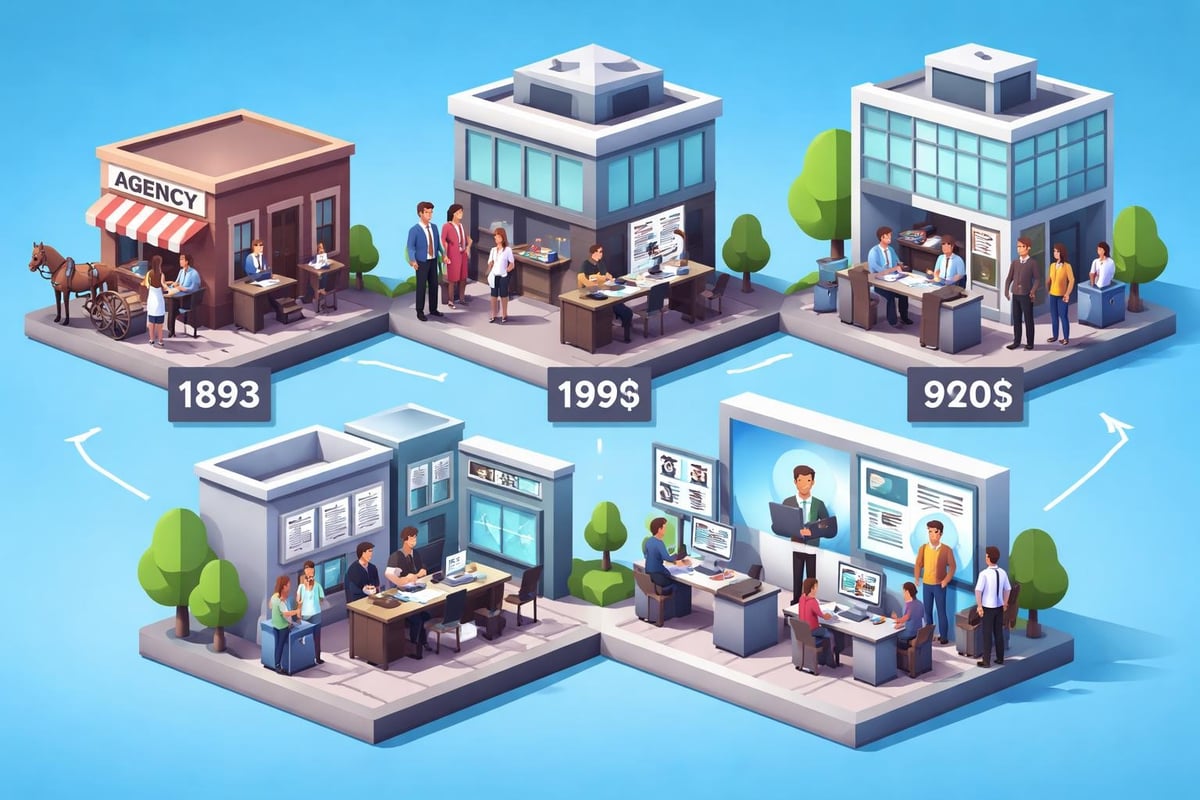
How the First Staffing Agency Operated Versus Modern Practices
The operational model of the first staffing agency bears little resemblance to today’s sophisticated workforce solutions. Early agencies functioned primarily as matchmakers, connecting available workers with employers through rudimentary record-keeping systems and word-of-mouth networks.
Compare the dramatic differences:
| Aspect | First Staffing Agency (1890s) | Modern Staffing (2026) |
|---|---|---|
| Candidate Sourcing | Walk-ins, newspaper ads | AI-driven platforms, digital recruitment, specialized networks |
| Verification Process | Personal references only | Background checks, certifications, safety compliance, drug screening |
| Specialization | General labor, clerical | Industry-specific (industrial, construction, maritime, bilingual) |
| Placement Speed | Days to weeks | Same-day to 48 hours for qualified candidates |
| Safety Standards | None | OSHA compliance, ongoing training, safety certifications |
| Worker Support | Minimal | Ongoing training, benefits access, career development |
The Technology Revolution in Staffing Services
Modern staffing agencies leverage technology that the first staffing agency operators couldn’t have imagined. Digital platforms enable real-time candidate matching, instant credential verification, and seamless communication between all parties.
The American Staffing Association’s historical overview demonstrates how industry standards evolved from informal arrangements to highly regulated, professional operations. This evolution created opportunities for specialized staffing solutions that address specific industry needs.
Today’s staffing technology includes:
- Automated candidate screening systems
- Digital onboarding platforms
- Real-time workforce management dashboards
- Mobile applications for shift scheduling
- Integrated payroll and compliance tracking
- Bilingual communication tools for diverse workforces
The Spanish-speaking workforce represents a perfect example of modern specialization that the first staffing agency never considered. Agencies that provide bilingual personnel and culturally competent staffing solutions address gaps that traditional models simply cannot fill.
Industry Sectors That Emerged After the First Staffing Agency
The first staffing agency primarily served clerical and office environments, but the staffing industry rapidly expanded into diverse sectors. By the 1920s and 1930s, industrial staffing began emerging as manufacturing demands increased.
Industrial and Skilled Trades Staffing Development
Industrial staffing became critical during World War II when factories needed rapid workforce scaling. This period established patterns still relevant in 2026:
- Rapid deployment capabilities for urgent project needs
- Skills verification systems to ensure worker competency
- Safety-focused placement to reduce workplace incidents
- Flexible workforce scaling based on production demands
- Specialized trade matching connecting certified workers with specific requirements
The construction sector developed its own staffing needs, requiring workers with specific certifications, safety training, and physical capabilities. Unlike the first staffing agency’s simple placement model, construction staffing demands rigorous vetting.
Modern construction staffing requirements include:
- OSHA 10 or 30-hour certifications
- Equipment operation licenses
- Specialized trade certifications (welding, electrical, pipefitting)
- Physical fitness assessments
- Drug screening compliance
- Job site safety orientation

The Maritime and Transportation Staffing Specialty
Maritime staffing emerged as a distinct specialty in the mid-20th century, far removed from what the first staffing agency handled. This sector requires unique credentials, certifications, and safety protocols that demand specialized industry knowledge.
Transportation and logistics staffing grew exponentially with interstate commerce expansion. CDL licensing requirements, created in 1986, standardized commercial driver qualifications nationwide.
Critical maritime and transportation staffing elements:
| Position Type | Required Certifications | Typical Placement Timeline | Safety Priorities |
|---|---|---|---|
| CDL Class A Drivers | CDL-A, Medical Card, Clean MVR | 24-48 hours | Hours of service compliance, vehicle inspections |
| Forklift Operators | OSHA certification, equipment-specific training | Same-day to 24 hours | Load stability, warehouse safety protocols |
| Warehouse Personnel | Safety training, equipment familiarity | Same-day | Material handling, PPE compliance |
| Marine Operators | TWIC cards, vessel-specific credentials | 3-5 days | Coast Guard regulations, safety drills |
The Gulf South region, encompassing Louisiana, Mississippi, Alabama, and Kentucky, presents unique maritime and industrial staffing challenges. Ports, refineries, and construction projects require workers who understand regional safety protocols and industry-specific requirements.
Minority-Owned Staffing Agencies: Breaking Barriers
The first staffing agency operated in an era with limited diversity and virtually no minority business ownership in the employment services sector. The transformation toward inclusive, minority-owned staffing agencies represents decades of progress and expanding opportunity.
The Competitive Advantage of Cultural Competence
Minority-owned staffing agencies bring invaluable cultural competence that traditional agencies struggle to replicate. This advantage becomes decisive when serving diverse workforces and bilingual team requirements.
Cultural competence delivers measurable business value:
- Enhanced communication reducing project delays
- Lower turnover through better cultural fit
- Improved safety outcomes via clear instruction delivery
- Stronger team cohesion across diverse backgrounds
- Access to untapped talent pools competitors cannot reach
The Spanish-speaking workforce represents the fastest-growing labor demographic in industrial, construction, and maritime sectors. Agencies specializing in bilingual personnel placement solve communication challenges that cost companies millions annually in productivity losses and safety incidents.

Safety-First Evolution: From the First Staffing Agency to Modern Standards
The first staffing agency operated without standardized safety protocols, placing workers in environments with minimal protections. The Occupational Safety and Health Act of 1970 transformed staffing industry responsibilities, making agencies accountable for worker safety.
Modern Safety Compliance Requirements
Today’s staffing agencies must ensure every placed worker meets rigorous safety standards before deployment. This responsibility extends far beyond what the first staffing agency ever considered.
Comprehensive safety compliance includes:
- Pre-placement safety training and certification
- Job-specific hazard communication
- Personal protective equipment provision
- Ongoing safety refresher courses
- Incident reporting and investigation protocols
- Workers’ compensation coverage
- OSHA recordkeeping compliance
- Site-specific safety orientation
Industrial staffing in 2026 requires certified welders, pipefitters, and electricians who maintain current safety credentials. Construction sites demand workers with OSHA training, fall protection certification, and equipment-specific qualifications. Maritime operations require TWIC cards, safety vessel training, and specialized certifications.
The safety-first approach protects workers while reducing client liability. Companies partnering with safety-focused staffing agencies experience fewer workplace incidents, lower workers’ compensation costs, and improved OSHA compliance records.
Regional Expertise: Gulf South Staffing Considerations
The first staffing agency served a limited geographic area with relatively homogeneous workforce needs. Modern regional staffing requires deep local knowledge, industry-specific expertise, and cultural competence.
Gulf South region-specific factors:
- Hurricane season workforce continuity planning
- Petrochemical industry safety requirements
- Maritime port credential requirements
- Multi-state licensing coordination (Louisiana, Mississippi, Alabama, Kentucky)
- Bilingual communication needs in diverse worksites
- Regional wage and benefits standards
- Local union relationships and protocols
Successful Gulf South staffing demands understanding these regional nuances. A staffing partner without local expertise cannot effectively serve industrial, construction, and maritime clients in this complex market.
The Bilingual Workforce Imperative in the Gulf South
Spanish-speaking workers comprise significant percentages of construction, maritime, and industrial crews throughout the Gulf South. Projects succeed or fail based on effective communication, safety instruction delivery, and team coordination.
Bilingual staffing advantages in Gulf South operations:
| Challenge | Bilingual Solution | Business Impact |
|---|---|---|
| Safety instruction delivery | Native Spanish-speaking supervisors and workers | Reduced incidents, improved compliance |
| Project coordination | Bilingual team leads and translators | Faster completion, fewer delays |
| Quality control | Clear specification communication | Reduced rework, higher standards |
| Team productivity | Cultural understanding and cohesion | Increased efficiency, lower turnover |
| Regulatory compliance | Proper documentation in multiple languages | Reduced liability, audit readiness |
The Modern Staffing Agency’s Strategic Value
The first staffing agency provided basic placement services. Modern staffing agencies function as strategic workforce partners, delivering comprehensive solutions that impact business success.
Strategic staffing partnership benefits:
- Workforce scalability responding instantly to project demands
- Cost predictability through transparent pricing models
- Risk mitigation via comprehensive compliance management
- Quality assurance through rigorous candidate vetting
- Administrative relief eliminating recruitment and HR burdens
- Market intelligence providing workforce trend insights
- Diversity access connecting to specialized talent pools
The administrative burden of direct hiring consumes resources better spent on core business operations. Staffing agencies handle recruitment, screening, onboarding, payroll, benefits, workers’ compensation, and compliance, allowing clients to focus on project delivery.
Specialized Talent Access Nobody Else Provides
The competitive advantage in 2026 staffing comes from accessing talent pools competitors cannot reach. The first staffing agency never considered cultural specialization or bilingual workforce development. Modern leaders recognize this decisive differentiator.
Spanish specialty staffing represents an unmatched competitive advantage in Gulf South industrial, construction, and maritime sectors. Agencies providing highly skilled, Spanish-speaking workers and bilingual personnel deliver solutions traditional staffing models simply cannot replicate.
This specialization solves critical business challenges:
- Accessing ready-to-work Latino talent for immediate deployment
- Ensuring seamless communication across multicultural teams
- Meeting diversity goals while maintaining quality standards
- Reducing turnover through better cultural fit
- Improving safety outcomes via native-language instruction
Companies seeking accountable, diverse, multicultural talent pools require partners with proven Spanish specialty staffing expertise. This capability separates industry leaders from generic placement services.
Choosing Your Staffing Partner in 2026
The first staffing agency selection process involved minimal due diligence. Today’s decision demands thorough evaluation of capabilities, specializations, safety records, and regional expertise.
Critical evaluation criteria for staffing partnerships:
- Industry-specific experience in your sector (industrial, construction, maritime)
- Safety track record with verifiable incident rates and compliance history
- Regional presence and local market knowledge
- Specialized capabilities including bilingual workforce access
- Candidate quality measured by retention rates and client satisfaction
- Response speed for urgent placement needs
- Compliance infrastructure managing regulatory requirements
- Minority-owned status supporting diversity initiatives
- Technology platforms enabling efficient workforce management
- References and track record from similar clients
The right staffing partner becomes a strategic extension of your operations, not just a vendor. This relationship impacts project success, safety performance, workforce stability, and bottom-line profitability.
Questions to Ask Potential Staffing Partners
Before engaging a staffing agency, ask targeted questions revealing their true capabilities:
- How quickly can you deploy certified welders, pipefitters, or CDL drivers?
- What percentage of your workforce is bilingual or Spanish-speaking?
- Describe your safety training and certification process.
- What Gulf South projects have you staffed in the past 12 months?
- How do you verify worker credentials and certifications?
- What is your worker retention rate at 30, 60, and 90 days?
- How do you handle mid-project workforce scaling?
- What compliance and regulatory support do you provide?
- Are you a minority-owned business?
- What differentiates you from competitors?
The answers reveal whether an agency truly understands your industry or simply fills requisitions generically.
Understanding the journey from the first staffing agency to today’s specialized workforce solutions reveals why expertise, safety, and cultural competence matter. The staffing landscape has evolved from basic placement to strategic partnership, demanding agencies that deliver measurable value beyond simply filling positions. When your industrial, construction, or maritime projects demand reliable, safety-certified, bilingual personnel throughout the Gulf South, CDR General Services provides the unmatched Spanish specialty staffing expertise and accountable workforce solutions that set your operations up for success.