


Blog
Work From Home Staffing Companies: Ultimate 2026 Guide


The shift toward remote work has permanently transformed workforce management, creating unprecedented demand for specialized staffing solutions that can source, vet, and deploy talent across distributed teams. Work from home staffing companies have evolved from niche players into essential strategic partners, bridging the gap between businesses demanding flexibility and professionals seeking remote opportunities. For industries like industrial, construction, and maritime that traditionally relied on physical presence, understanding how these agencies operate and when to leverage their expertise has become a competitive necessity in 2026.
The Fundamental Shift in Remote Staffing Models
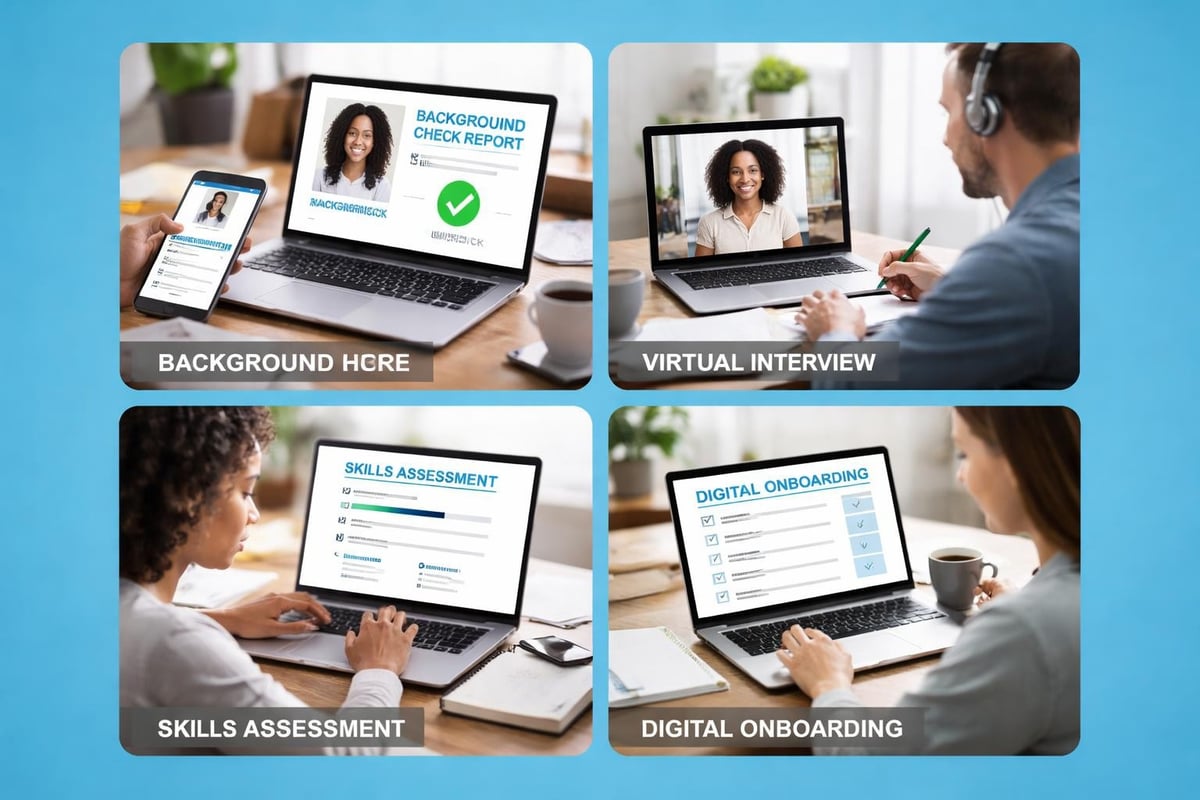
Work from home staffing companies operate on fundamentally different principles than traditional placement agencies. The verification protocols, communication infrastructure, and talent qualification standards require completely reimagined processes. Traditional face-to-face interviews have given way to sophisticated video assessment platforms, skills testing software, and comprehensive background verification systems that can authenticate credentials remotely.
The most effective agencies have invested heavily in technology stacks that enable:
- Real-time candidate verification through digital certification databases
- AI-powered skills matching that analyzes job requirements against candidate profiles
- Remote onboarding platforms that complete paperwork, compliance, and training digitally
- Performance monitoring systems that track productivity without invasive surveillance
- Communication hubs that facilitate seamless interaction between clients and remote staff
These technological foundations separate legitimate, high-performing agencies from opportunistic operators who lack the infrastructure to deliver quality remote placements.
Identifying Legitimate Remote Staffing Partners
The remote staffing landscape contains both exceptional partners and problematic operators. Verifying the legitimacy of work-from-home staffing agencies requires examining specific proof points that demonstrate operational credibility and placement success.
Critical verification markers include:
- Transparent fee structures with clear documentation of costs
- Verifiable client references from companies in your industry
- Professional certifications from recognized staffing associations
- Documented placement history with retention rate data
- Clear contractual terms outlining responsibilities and guarantees
The red flags are equally important. Agencies requesting upfront payments from candidates, promising unrealistic salaries, or lacking physical business addresses typically operate outside professional standards. Work from home staffing companies with proven track records maintain the same professional standards as traditional agencies, simply adapted for remote placement.
Core Categories of Remote-Ready Positions
Not every role translates effectively to remote work, and understanding which positions work from home staffing companies can successfully fill determines partnership viability. The categories have expanded significantly beyond customer service and data entry into specialized professional domains.
| Position Category | Remote Viability | Key Requirements |
|---|---|---|
| Administrative Support | Excellent | Secure systems access, communication tools |
| Customer Service | Excellent | Call center software, CRM platforms |
| Software Development | Excellent | Collaborative coding tools, project management |
| Data Analysis | High | Database access, analytics software |
| Sales & Marketing | High | CRM systems, video conferencing |
| Project Management | High | PM software, team coordination tools |
| Industrial Planning | Moderate | CAD access, specification management |
| Field Supervision | Low | Physical presence requirements |
Hybrid Staffing Solutions for Industrial Sectors
The industrial, construction, and maritime sectors present unique challenges for remote staffing models. While welders, pipefitters, and heavy equipment operators require physical presence for execution, significant administrative and coordination functions within these industries translate perfectly to remote work.
Work from home staffing companies specializing in industrial support can provide:
- Project coordinators managing schedules, logistics, and documentation remotely
- Safety compliance specialists conducting virtual audits and certification tracking
- Administrative personnel handling payroll, HR functions, and vendor management
- Procurement specialists managing supplier relationships and materials ordering
- Quality assurance reviewers analyzing inspection reports and compliance documentation
This hybrid approach allows companies to maintain essential field operations while optimizing back-office efficiency through remote staffing. CDR General Services has pioneered this model, combining traditional industrial staffing expertise with strategic administrative support solutions.
The Financial Mathematics of Remote Workforce Deployment
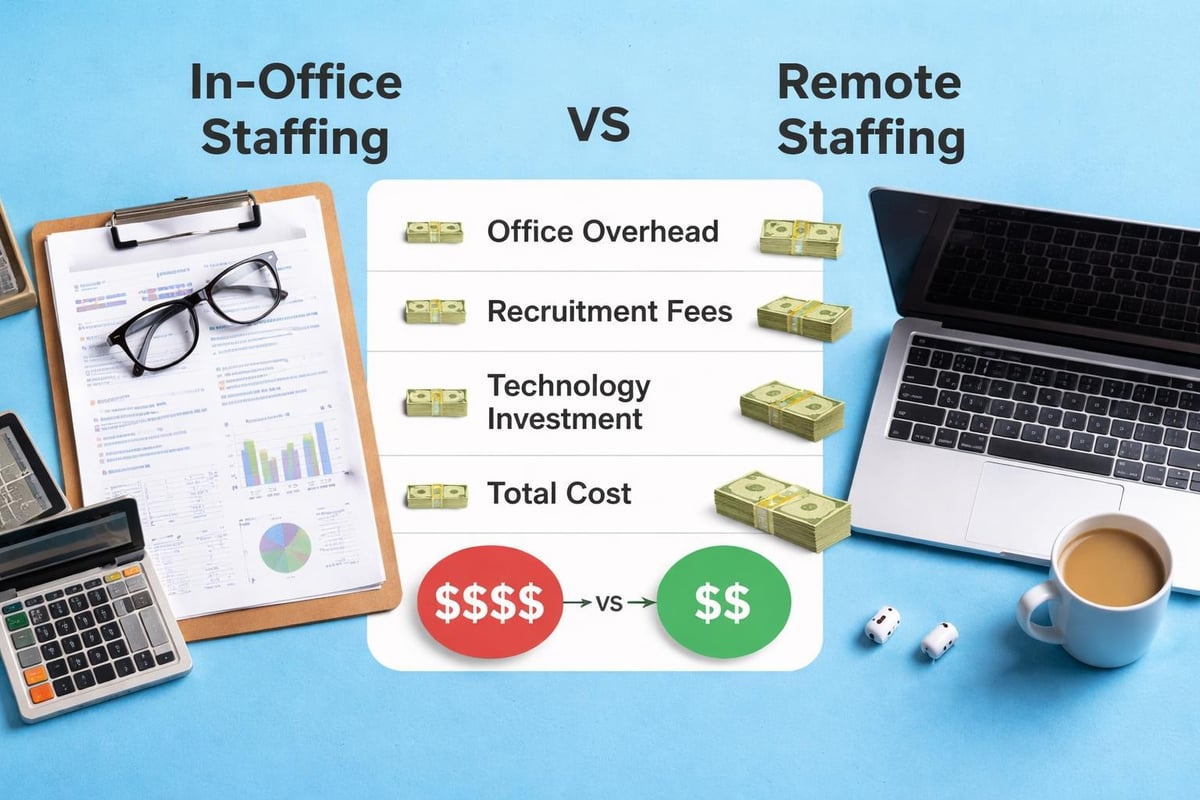
The cost structure of working with work from home staffing companies differs substantially from traditional placement models. Understanding the complete financial picture enables accurate ROI calculations and informed partnership decisions.
Direct cost components:
- Placement fees (typically 15-30% of annual salary for direct hire, or markup on hourly rates for temp-to-hire)
- Technology infrastructure (software licenses, security systems, communication platforms)
- Training and onboarding (remote orientation programs, skills development)
- Management overhead (supervision time, performance tracking, coordination)
Offset savings include:
- Eliminated office space (rent, utilities, furniture, equipment)
- Reduced relocation costs (no geographic limitations on talent sourcing)
- Lower employee benefits (some remote contractors handle their own benefits)
- Decreased turnover (remote flexibility improves retention rates)
- Expanded talent pool (access to nationwide or global candidates)
The mathematics typically favor remote deployment for roles requiring specialized skills in tight labor markets. When local talent for administrative, coordination, or technical positions proves scarce or expensive, work from home staffing companies provide access to qualified professionals regardless of geography.
Vetting Processes That Separate Excellence From Mediocrity
The verification standards work from home staffing companies employ directly determine placement quality and client satisfaction. Agencies operating at professional standards implement multi-layered vetting protocols that exceed traditional hiring processes.
Comprehensive Verification Framework
Background verification stages:
- Identity confirmation through government-issued documentation and digital verification services
- Employment history validation with direct employer contact and reference verification
- Credential authentication confirming certifications, licenses, and educational achievements
- Criminal background screening appropriate to position sensitivity and industry requirements
- Skills assessment testing using industry-specific evaluation tools and practical exercises
Remote-specific qualifications:
- Technology proficiency demonstrated through practical software testing
- Communication capabilities assessed via video interviews and written exercises
- Self-management skills evaluated through behavioral interviewing and work history analysis
- Home office infrastructure verified for adequate internet, equipment, and workspace
- Time zone compatibility confirming availability alignment with client requirements
Top-tier agencies document every verification step, providing clients with complete candidate dossiers that support confident hiring decisions. This transparency builds trust and reduces placement failures.
Industry-Specific Remote Staffing Applications
Different sectors leverage work from home staffing companies in distinct ways, optimizing for their unique operational requirements and talent needs. Understanding the diverse applications of remote staffing across industries reveals strategic deployment opportunities.
Maritime and Port Operations
Maritime companies utilize remote staffing for:
- Documentation specialists managing bills of lading, customs paperwork, and shipping manifests
- Scheduling coordinators organizing vessel arrivals, cargo handling, and crew rotations
- Compliance officers tracking regulatory requirements and certification renewals
- Customer service representatives handling booking inquiries and shipment tracking
Construction Project Management
Construction firms deploy remote staff for:
- Estimators and bid specialists calculating project costs and preparing proposals
- Permit coordinators managing regulatory approvals and documentation
- Subcontractor liaison personnel coordinating schedules and deliverables
- Materials procurement specialists sourcing supplies and managing vendor relationships
Industrial Manufacturing Support
Manufacturing operations benefit from remote:
- Production planners optimizing schedules and resource allocation
- Quality documentation specialists maintaining ISO compliance and audit trails
- Inventory analysts tracking stock levels and ordering cycles
- HR coordinators managing workforce administration and benefits
The pattern across these sectors reveals that administrative, coordination, and planning functions translate effectively to remote execution, while hands-on technical work remains onsite.
Technology Infrastructure Requirements for Remote Teams
Successfully deploying talent sourced through work from home staffing companies demands robust technology infrastructure. Companies lacking these foundations experience communication breakdowns, security vulnerabilities, and productivity losses that negate remote staffing benefits.
Essential technology components:
| System Category | Required Tools | Purpose |
|---|---|---|
| Communication | Slack, Microsoft Teams, Zoom | Real-time messaging, video conferencing |
| Project Management | Asana, Monday.com, Jira | Task tracking, workflow coordination |
| File Sharing | Google Workspace, SharePoint, Dropbox | Document collaboration, version control |
| Security | VPN, 2FA, encryption software | Data protection, access control |
| Time Tracking | Toggl, Harvest, Clockify | Hours documentation, productivity monitoring |
| HR Systems | BambooHR, Workday, ADP | Payroll, benefits, employee management |
The security dimension requires particular attention. Remote workers accessing company systems, customer data, or proprietary information need multi-factor authentication, encrypted connections, and role-based access controls that limit exposure while enabling productivity.
Companies partnering with work from home staffing companies must clearly communicate their technology stack during the requisition process. This allows agencies to screen candidates for specific platform experience and technical proficiency, reducing onboarding friction and accelerating productivity.

Management Strategies for Distributed Workforce Success
Deploying remote staff sourced through work from home staffing companies succeeds or fails based on management execution. Research on remote employment effectiveness demonstrates that structured management approaches dramatically improve productivity, engagement, and retention.
Performance Management Without Micromanagement
Effective remote management principles:
- Outcome-focused metrics that measure results rather than activity
- Regular check-ins scheduled consistently but not excessively
- Clear deliverable definitions with specific completion criteria
- Documented processes providing step-by-step guidance for recurring tasks
- Feedback loops offering constructive input and recognition
The shift from presence-based to output-based evaluation requires managers to define success criteria precisely. Vague expectations like “be responsive” or “stay on top of things” fail remote workers who lack physical proximity cues. Specific metrics like “respond to inquiries within 2 hours” or “complete daily reconciliation by 5 PM EST” create accountability without surveillance.
Building Team Cohesion Across Distance
Remote teams require intentional culture-building efforts that replace casual office interactions:
- Virtual team meetings combining work updates with personal connection
- Digital collaboration spaces for informal communication and knowledge sharing
- Recognition programs celebrating achievements and milestones publicly
- Professional development providing training and growth opportunities
- Occasional in-person gatherings when geography and budget permit
Work from home staffing companies with sophisticated programs often provide management training and best practices guides helping clients optimize remote team performance.
Compliance and Legal Considerations for Remote Staffing
The legal landscape surrounding remote employment contains complexities that work from home staffing companies must navigate on behalf of clients. Multi-state employment, wage and hour regulations, and classification requirements demand expert handling.
Critical compliance domains:
- Multi-state taxation when employees work in different states than company headquarters
- Workers’ compensation coverage requirements varying by jurisdiction
- Wage and hour laws including overtime calculations and break requirements
- Employee vs. contractor classification with strict IRS guidelines
- Data privacy regulations governing handling of customer and employee information
- Accessibility compliance ensuring remote work doesn’t violate ADA requirements
Professional agencies assume responsibility for compliance in their employment model. When agencies employ the worker and contract them to clients, the agency handles tax withholding, benefits administration, and regulatory compliance. This shields clients from complex multi-jurisdiction requirements while ensuring legal protection.
Frequently Asked Questions About Remote Staffing
What exactly do work from home staffing companies do?
Work from home staffing companies specialize in sourcing, vetting, and placing qualified professionals in remote positions across various industries. These agencies maintain databases of pre-screened remote workers, conduct comprehensive background checks and skills assessments, handle employment compliance, and match candidates with client requirements. They manage the entire recruitment lifecycle from job posting through onboarding, enabling companies to access remote talent without building internal recruitment infrastructure.
How do I verify a work from home staffing company is legitimate?
Verify legitimacy by checking for professional certifications from organizations like the American Staffing Association, requesting verifiable client references, confirming physical business addresses and contact information, reviewing transparent fee structures, and examining their online presence for consistent professional branding. Legitimate agencies never charge candidates fees, provide clear contractual terms, and maintain documented placement histories with measurable success metrics.
What types of positions work best with remote staffing agencies?
Administrative roles, customer service positions, data analysis functions, software development, project coordination, accounting and bookkeeping, content creation, sales support, and HR administration translate excellently to remote work. Top work-from-home employment agencies typically specialize in these categories, providing pre-vetted candidates with proven remote work capabilities and necessary technology infrastructure.
How much do work from home staffing companies charge?
Fee structures vary by placement type and industry. Direct hire placements typically cost 15-30% of the candidate’s first-year salary as a one-time fee. Temp-to-hire arrangements usually involve hourly rate markups of 40-75% covering the candidate’s wages plus agency overhead, benefits, and profit margin. Contract staffing operates on similar markup models with rates negotiated based on position complexity and placement duration.
Can industrial and construction companies use remote staffing effectively?
Absolutely. While field positions require physical presence, significant administrative and coordination functions within industrial sectors translate perfectly to remote work. Project coordinators, safety compliance specialists, procurement personnel, quality assurance reviewers, scheduling coordinators, and administrative support roles can all operate remotely while supporting onsite operations effectively.
What technology infrastructure do I need for remote workers?
Essential infrastructure includes reliable video conferencing platforms, project management software, secure file sharing systems, communication tools like Slack or Teams, VPN access for security, time tracking systems, and HR management platforms. Guidance on succeeding in work-from-home roles emphasizes that proper technology foundations determine remote worker productivity and engagement.
How do work from home staffing companies verify candidate qualifications remotely?
Professional agencies employ multi-layered verification including digital identity confirmation through government databases, direct employment history validation with previous employers, credential authentication via issuing institutions, criminal background screening through national databases, skills testing using industry-specific platforms, and video interviews assessing communication capabilities and cultural fit. Documentation for every verification step provides clients with complete candidate transparency.
What are the biggest mistakes companies make with remote staffing?
Common mistakes include inadequate onboarding processes, unclear performance expectations, insufficient technology infrastructure, excessive monitoring creating distrust, poor communication cadence, failing to build team culture, and treating remote workers as second-class compared to office staff. Successful remote deployment requires intentional management strategies specifically designed for distributed teams.
How can CDR General Services help with my staffing needs?
CDR General Services provides industry-leading workforce solutions across industrial, construction, and maritime sectors throughout the Gulf South region. Our unmatched expertise in Spanish-speaking workforce deployment and bilingual personnel delivers decisive competitive advantages that no other agency can match. We combine traditional skilled trades staffing with strategic administrative support solutions, providing safety-certified, reliable personnel backed by deep local expertise and a scalable workforce model tailored to your specific requirements.
The remote work revolution has fundamentally transformed staffing strategy, creating opportunities for companies willing to embrace distributed workforce models with proper infrastructure and management. Work from home staffing companies serve as essential partners in this transition, providing access to qualified talent while managing the complex compliance, verification, and coordination challenges inherent in remote deployment. Whether you need specialized industrial coordination, administrative support, or bilingual personnel to bridge communication gaps across diverse teams, CDR General Services delivers the expertise, safety-first commitment, and unmatched Latino talent specialization that positions your operation for competitive success in 2026 and beyond.