


Blog
Trillium Staffing Jobs: Complete 2026 Industry Guide


The staffing industry in 2026 operates at unprecedented velocity. Employers demand immediate access to safety-certified, skilled workers while navigating labor shortages across industrial, construction, and maritime sectors. Understanding the landscape of trillium staffing jobs and how major staffing firms operate reveals critical insights for businesses seeking workforce solutions. The reality is simple: companies that partner with specialized staffing agencies equipped to deliver bilingual, culturally competent talent gain a decisive competitive advantage. This guide dissects the staffing ecosystem, examines current industry trends, and reveals how strategic workforce partnerships drive measurable results.
Understanding the Staffing Industry Landscape in 2026
The staffing sector has undergone dramatic transformation. According to staffing industry statistics for 2025, the temporary and contract staffing market reached $193 billion, demonstrating sustained growth despite economic headwinds. This expansion reflects fundamental shifts in how businesses approach workforce management.
Key market drivers include:
- Persistent skilled labor shortages in industrial trades
- Increased demand for bilingual workforce solutions
- Safety certification requirements across high-risk industries
- Project-based hiring for construction and maritime sectors
- Technology integration in candidate matching and placement
Trillium staffing jobs represent one segment within this broader ecosystem. Major staffing firms operate across multiple verticals, connecting workers with opportunities in manufacturing, logistics, clerical, and skilled trades. The challenge for employers is identifying partners who deliver specialized expertise rather than generic placement services.
The Reality of Multi-Sector Staffing Operations
Large staffing organizations maintain extensive networks across various industries. Trillium Staffing Solutions operates in industrial, construction, clerical, and technical sectors, offering broad reach for job seekers. For employers, this multi-sector approach provides access to diverse candidate pools.
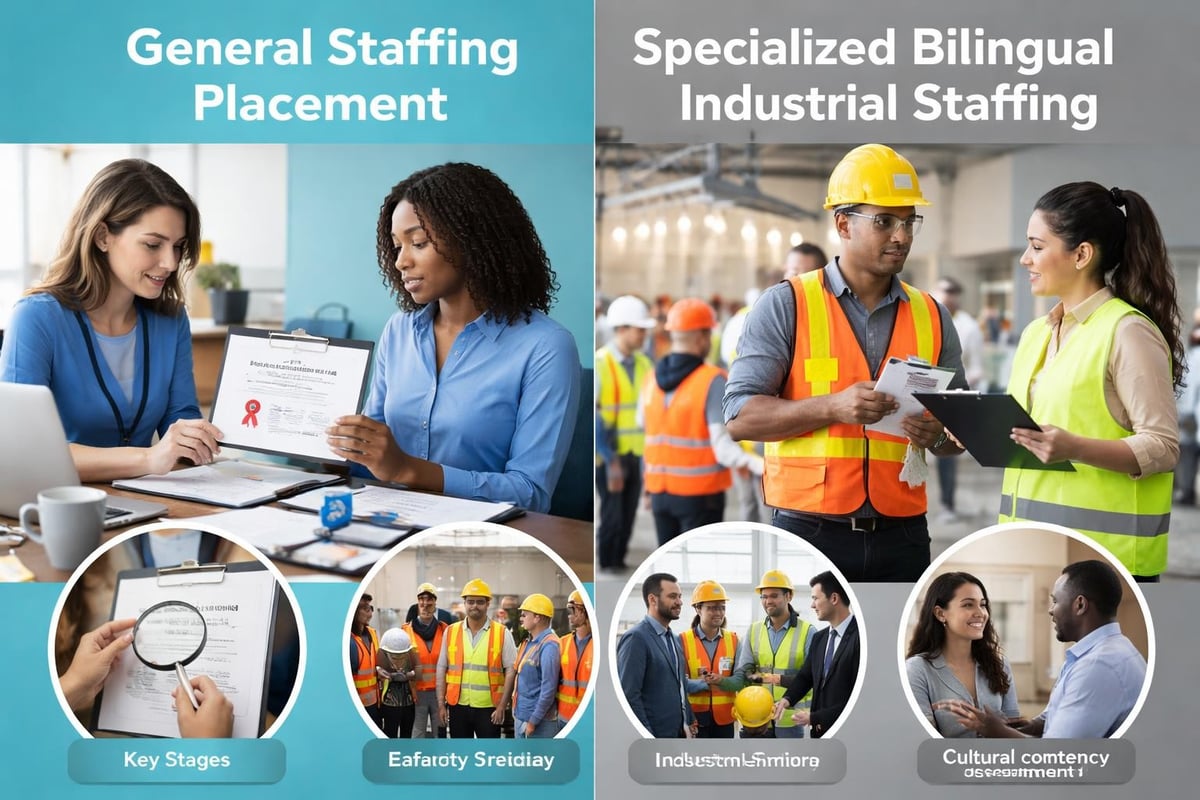
However, breadth doesn’t equal depth. The staffing industry increasingly rewards specialization. Companies requiring Spanish-speaking welders, certified pipefitters, or bilingual forklift operators need partners with proven expertise in these specific niches. Generic staffing firms struggle to deliver the cultural competency and safety certifications that demanding projects require.
| Staffing Approach | Coverage | Specialization | Cultural Competency |
|---|---|---|---|
| Multi-Sector Generalist | Wide | Moderate | Limited |
| Industry-Focused | Targeted | High | Variable |
| Specialty Niche (Latino Workforce) | Focused | Exceptional | Unmatched |
The bottom line: employers must evaluate whether a staffing partner offers genuine expertise or simply volume-based recruitment.
Critical Trends Reshaping Staffing in 2026
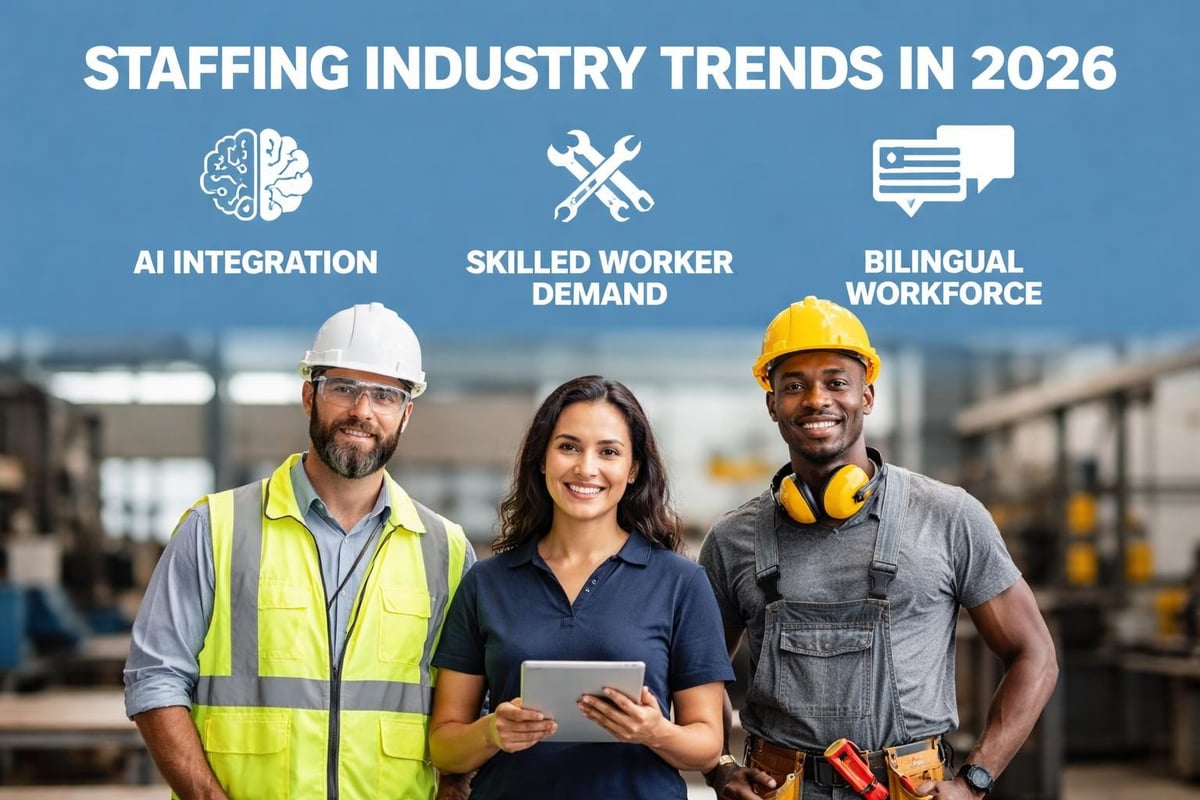
Understanding staffing industry trends and challenges in 2026 reveals where the market is headed. Several forces are redefining how staffing firms operate and deliver value.
Technology Integration and AI-Powered Matching
Artificial intelligence now drives candidate screening and job matching at scale. Ten staffing industry trends reshaping recruitment in 2025 highlight AI-powered tools that accelerate placement timelines. This technology enables faster candidate identification but cannot replace human expertise in assessing cultural fit, safety competency, and specialized skills.
Technology capabilities in modern staffing:
- Automated resume screening for basic qualifications
- Skills-based matching algorithms
- Digital onboarding platforms
- Real-time placement tracking
- Compliance documentation systems
The decisive advantage comes from combining technology with specialized human expertise. AI identifies candidates; experienced staffing professionals validate safety certifications, language proficiency, and cultural alignment.
The Skilled Labor Crisis Intensifies
Industrial, construction, and maritime sectors face unprecedented workforce shortages. Certified welders, experienced pipefitters, and licensed CDL drivers remain in critically short supply. This scarcity elevates the value of staffing partners with established networks in these skilled trades.
Employers searching trillium staffing jobs or similar platforms often encounter a harsh reality: available candidates lack required certifications or bilingual capabilities. Projects demanding Spanish-speaking crews for safety communication face even steeper challenges.
| Skilled Position | 2026 Shortage Level | Bilingual Demand |
|---|---|---|
| Certified Welders | Critical | High |
| Pipefitters | Severe | High |
| CDL Drivers (Class A) | Moderate-High | Moderate |
| Electricians | High | Moderate |
| Forklift Operators | Moderate | High |
Cultural Competency as Competitive Advantage
The workforce grows increasingly diverse, particularly in Gulf South industrial corridors. Louisiana, Mississippi, Alabama, and Kentucky see expanding Latino populations contributing essential skilled labor to construction, manufacturing, and maritime operations. Employers who leverage this talent pool through culturally competent staffing gain measurable productivity advantages.
This is where generic staffing falls short. Placing a Spanish-speaking welder requires more than language matching. It demands understanding of cultural work expectations, safety communication protocols, and team integration strategies. Few staffing firms possess this expertise at scale.
Navigating Job Opportunities Through Major Staffing Firms
For job seekers, platforms like Trillium Staffing’s job board offer access to diverse opportunities across multiple industries. These centralized systems provide visibility into available positions, application processes, and employer requirements.
Benefits for job seekers using large staffing platforms:
- Access to multiple employers through single application
- Exposure to various industries and position types
- Streamlined onboarding processes
- Potential for temp-to-hire conversions
- Skills development opportunities
The employment landscape in 2026 rewards flexibility and continuous skill development. Workers who maintain current safety certifications, pursue bilingual capabilities, and demonstrate reliability command premium placement opportunities.
Evaluating Staffing Opportunities as an Employer
Employers face different considerations when exploring trillium staffing jobs or alternative workforce solutions. The question isn’t whether to use staffing agencies, but which partner delivers specialized expertise aligned with operational needs.
Critical evaluation criteria for employer-staffing partnerships:
- Specialization depth – Does the firm truly understand your industry’s unique requirements?
- Safety compliance – Can they deliver pre-certified, trained personnel?
- Cultural competency – Do they provide bilingual workers and culturally aligned teams?
- Response time – How quickly can they mobilize workforce at scale?
- Local expertise – Do they understand regional labor markets and regulations?
- Quality guarantees – What replacement and performance assurance do they offer?
Generic staffing provides bodies. Specialized staffing delivers strategic workforce solutions that impact your bottom line.
Industrial and Construction Staffing Realities
The industrial and construction sectors demand more than warm bodies. Projects require safety-certified professionals who understand hazardous materials handling, confined space protocols, and equipment operation standards. A single unqualified placement creates liability exposure that far exceeds staffing cost savings.
Safety Certifications That Matter
Essential certifications for industrial staffing:
- OSHA 10/30 Hour certifications
- Confined Space Entry training
- Fall Protection certification
- Forklift operator licenses (OSHA compliant)
- Hazmat handling credentials
- First Aid/CPR certification
- Rigging and signaling certifications
Staffing firms operating in industrial and construction verticals must verify these credentials before placement. The best partners maintain databases of pre-certified workers, enabling rapid mobilization without compromising safety standards.
The Spanish-Speaking Workforce Advantage
Here’s the unvarnished truth: Spanish-speaking workers comprise a massive percentage of skilled labor in Gulf South industrial operations. Welding crews, construction teams, and maritime labor forces increasingly rely on Latino workers who bring exceptional work ethic, specialized skills, and cultural values aligned with demanding project environments.
Measurable advantages of bilingual workforce solutions:
- Enhanced safety communication reducing incident rates
- Improved team cohesion and productivity
- Access to specialized skills unavailable in English-only recruitment
- Cultural work expectations prioritizing reliability and quality
- Reduced turnover in labor-intensive positions
Employers who ignore this demographic reality operate at competitive disadvantage. The firms that win are those partnering with staffing specialists who deliver genuine bilingual workforce expertise-not agencies offering basic translation services.
Regional Workforce Dynamics in the Gulf South
Louisiana, Mississippi, Alabama, and Kentucky present unique labor market characteristics. These states anchor critical industrial corridors including petrochemical manufacturing, shipbuilding, construction, and logistics operations. Understanding regional workforce dynamics separates effective staffing from generic placement services.

Louisiana’s Industrial Corridor
Louisiana hosts extensive petrochemical facilities, offshore support operations, and construction projects demanding specialized labor. The state’s diverse workforce includes significant Spanish-speaking populations concentrated in industrial parishes. Staffing firms without local networks struggle to access this talent pool.
Mississippi and Alabama Manufacturing
Both states have experienced manufacturing expansion, creating sustained demand for certified welders, pipefitters, and production workers. According to key trends that shaped the staffing industry in 2025, market stabilization has enabled strategic workforce planning rather than reactive hiring.
Kentucky’s Logistics Hub
Kentucky’s central location drives logistics and warehouse demand. CDL drivers, forklift operators, and distribution center workers remain in constant need. Bilingual capabilities enhance supervisor-worker communication in diverse warehouse environments.
| State | Primary Industries | Top Staffing Needs | Bilingual Demand Level |
|---|---|---|---|
| Louisiana | Petrochemical, Maritime, Construction | Welders, Pipefitters, Operators | Very High |
| Mississippi | Manufacturing, Logistics | Production Workers, Forklift Operators | High |
| Alabama | Manufacturing, Construction | Skilled Trades, General Labor | High |
| Kentucky | Logistics, Manufacturing | CDL Drivers, Warehouse Staff | Moderate-High |
Strategic Workforce Partnership Selection
Choosing a staffing partner represents a strategic decision, not a transactional vendor relationship. The right partner functions as workforce extension, understanding your operational culture, safety requirements, and business objectives.
Beyond Trillium Staffing Jobs: Evaluating Alternatives
While exploring trillium staffing jobs and similar platforms provides market visibility, employers must assess whether these options deliver the specialized expertise their operations demand. Large multi-sector firms offer scale but may lack deep industry specialization.
Questions to ask potential staffing partners:
- What percentage of your placements are in our specific industry?
- How do you verify safety certifications before placement?
- What is your average response time for urgent workforce needs?
- Can you provide bilingual supervisors and workers simultaneously?
- What replacement guarantees do you offer for underperforming placements?
- How do you maintain quality control across multiple job sites?
- What local market expertise do you possess in our operating region?
The answers reveal whether you’re speaking with order-takers or strategic workforce partners.
The Minority-Owned Business Advantage
Partnering with minority-owned staffing firms offers multiple benefits beyond diversity metrics. These organizations often possess authentic cultural connections to diverse talent pools, enabling access to workers that generic firms cannot reach.
Strategic advantages of minority-owned staffing partnerships:
- Authentic cultural competency in diverse workforce management
- Direct networks into Latino and multicultural talent communities
- Alignment with corporate diversity and inclusion objectives
- Enhanced community relationships in regional labor markets
- Proven track record serving demanding industrial clients
This isn’t corporate social responsibility theater. It’s strategic workforce advantage.
Quality Metrics That Separate Exceptional Staffing
Measuring staffing partner performance requires specific, quantifiable metrics. Feelings and promises don’t move the needle. Data does.
Performance Indicators for Industrial Staffing
Critical metrics to track:
- Fill rate percentage – Positions filled vs. requested
- Time to fill – Days from requisition to worker arrival
- Retention rate – Percentage of placements exceeding 90 days
- Safety incident rate – Incidents per 100 placements
- Replacement rate – Percentage requiring worker substitution
- Certification compliance – Percentage of workers with current credentials
- Bilingual placement accuracy – Language proficiency verification rate
Top-tier staffing firms maintain 95%+ fill rates, sub-48-hour emergency response times, and near-zero safety incidents. Anything less indicates systemic quality problems.
The True Cost of Poor Staffing Decisions
Cheap staffing costs more. An unqualified welder who fails pressure vessel certification wastes mobilization costs, delays project timelines, and creates rework expenses. A forklift operator without proper credentials exposes you to OSHA violations and liability.
Hidden costs of low-quality staffing:
- Project delays from unqualified worker replacements
- Safety incidents and associated Workers’ Compensation claims
- Regulatory fines for certification non-compliance
- Rework costs from substandard workmanship
- Reputation damage with general contractors and clients
- Management time wasted on staffing issues rather than operations
Strategic staffing partners prevent these costs through rigorous pre-screening, certification verification, and quality guarantees.
The staffing landscape demands strategic thinking, not transactional vendor relationships. Understanding how trillium staffing jobs and similar platforms operate provides market context, but exceptional results require specialized expertise. When your operations demand safety-certified, bilingual workers who show up ready to perform, generic staffing falls short. CDR General Services delivers the specialized, culturally competent workforce solutions that drive measurable results across the Gulf South’s most demanding industrial, construction, and maritime projects. Contact us today to experience the decisive advantage of true workforce expertise.