


Blog
Cascade Staffing: Strategic Workforce Solutions for 2026


The industrial landscape across the Gulf South region demands more than traditional recruitment. Cascade staffing represents a strategic approach to workforce deployment that scales with project demands, addresses skill shortages, and delivers specialized talent precisely when operations require maximum efficiency. This methodology transforms how construction, maritime, and industrial sectors access qualified personnel while maintaining rigorous safety standards and operational continuity.
Understanding Cascade Staffing in Industrial Operations
Cascade staffing operates as a tiered workforce deployment system where specialized talent flows through structured channels to meet varying project requirements. The approach prioritizes skill certification, safety compliance, and cultural competency while scaling resources across multiple job sites simultaneously.
This model addresses the fundamental challenge facing Gulf South employers: accessing reliable, qualified workers for projects with fluctuating demands and strict timelines. Unlike traditional staffing that treats each position as an isolated placement, cascade staffing builds interconnected talent pools organized by trade specialty, certification level, and deployment readiness.
The Core Components of Effective Cascade Staffing
Tier-Based Talent Organization
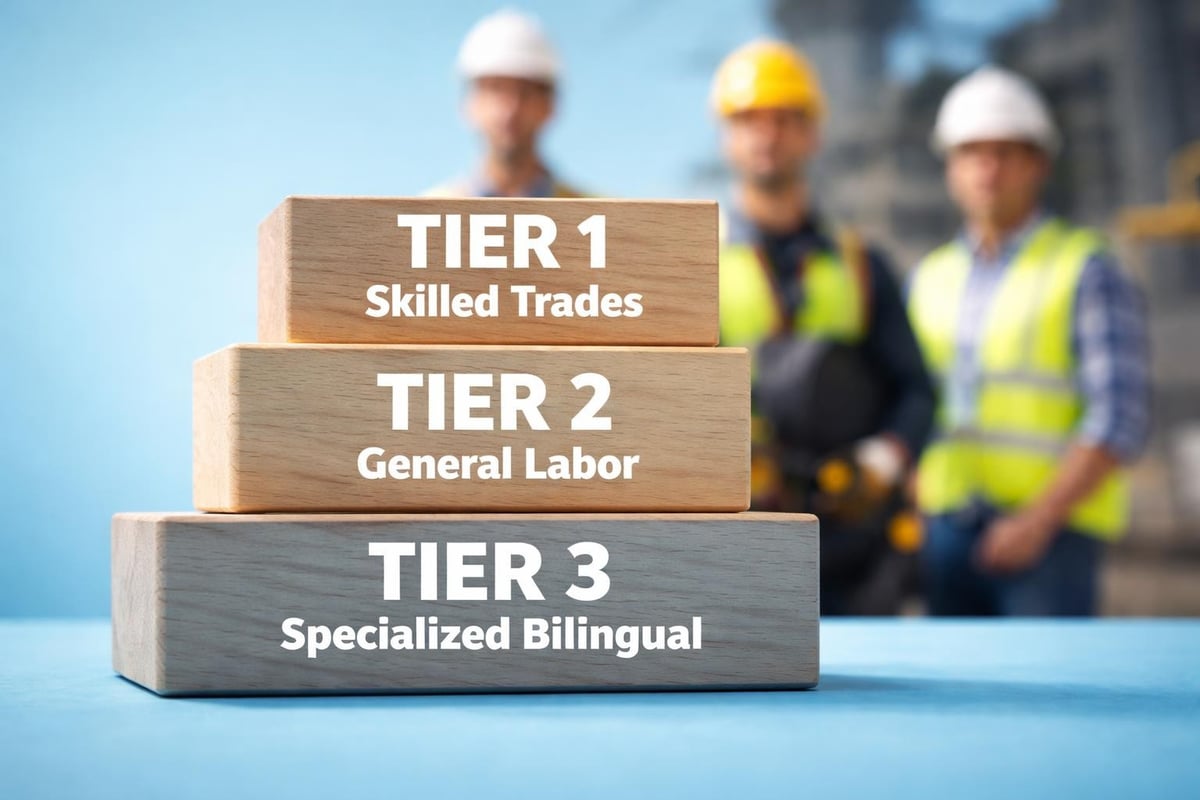
Cascade staffing segments workers into distinct capability tiers. The first tier includes master craftsmen and certified specialists like certified welders, licensed electricians, and experienced pipefitters. The second tier comprises journeyman-level workers with proven track records but developing specializations. The third tier consists of entry-level personnel and general laborers who provide essential support functions.
This structure ensures project managers access precisely the expertise level each task demands without overpaying for unnecessary qualifications or undercutting quality with underqualified workers.
Rapid Deployment Infrastructure
The cascade model maintains pre-screened, safety-certified talent pools ready for immediate deployment. When a construction site needs five additional welders or a maritime facility requires emergency staffing for a shutdown project, cascade staffing delivers within hours, not weeks.
| Deployment Speed | Traditional Staffing | Cascade Staffing |
|---|---|---|
| Initial Contact to Worker On-Site | 5-10 business days | 24-48 hours |
| Safety Certification Verification | 2-3 days | Pre-verified |
| Skill Assessment | Per-placement | Tier-based, ongoing |
| Cultural Competency | Variable | Integrated specialty |
Bilingual and Multicultural Integration
The competitive advantage in 2026’s industrial staffing landscape belongs to agencies offering genuine bilingual capabilities. Cascade staffing incorporating Spanish-speaking workforce expertise eliminates communication barriers that compromise safety and productivity.
Strategic Advantages for Gulf South Industrial Operations
Cascade staffing delivers measurable operational benefits that directly impact project timelines, safety records, and cost efficiency. These advantages compound across long-term partnerships between staffing providers and industrial clients.
Scalability Without Compromise
Industrial projects experience predictable workforce fluctuations. A refinery turnaround might require 200 workers for three weeks, then scale down to 50 for maintenance. Construction sites ramp up for foundation work, plateau during framing, then surge again for finishing trades.
Cascade staffing absorbs these fluctuations without forcing employers to maintain excess permanent headcount or compromise on worker quality during surge periods. The tiered talent pool flexes up or down while maintaining consistent expertise standards.
Key scalability features include:
- Pre-qualified talent reserves across all major industrial trades
- Established relationships with certified specialists who prefer project-based work
- Coordinated deployment across multiple simultaneous job sites
- Seamless integration of Spanish-speaking crews for projects requiring bilingual communication
- Safety compliance maintained regardless of staffing volume
Cost Optimization Through Strategic Placement
Traditional staffing overspends by placing overqualified workers in roles requiring less expertise or delays projects by filling specialized positions with underqualified personnel. Cascade staffing matches precise skill levels to specific tasks.
A construction project might need master electricians for complex industrial controls but can utilize journeyman electricians for standard branch circuit installation. General laborers handle material staging while certified forklift operators manage equipment movement.
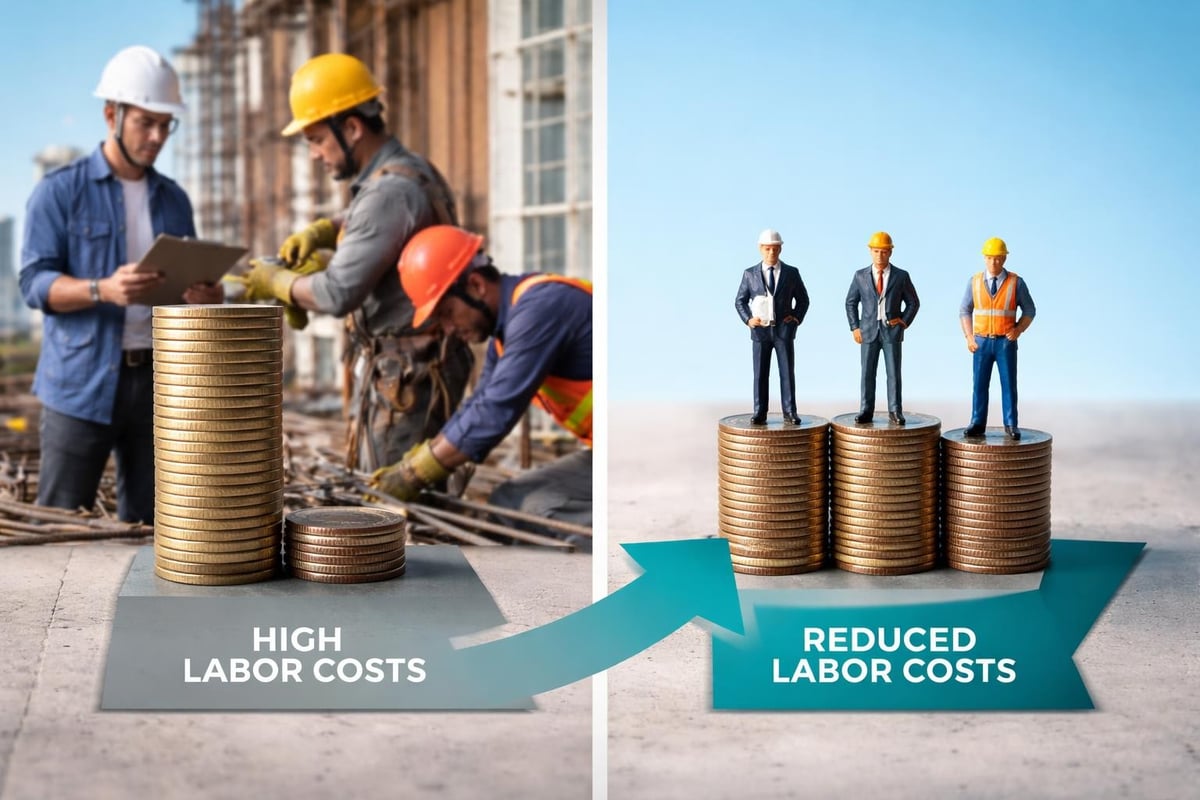
This precision reduces labor costs by 15-25% compared to flat-rate staffing while maintaining or improving project quality and timeline adherence.
Safety Performance and Compliance Management
The Gulf South industrial corridor operates under stringent safety regulations. OSHA compliance, site-specific certifications, and industry safety standards create complex requirements that cascade staffing systematically addresses.
- Pre-Employment Safety Screening: All workers enter the cascade system with verified safety certifications appropriate to their tier and trade specialty
- Ongoing Compliance Monitoring: Certification renewals, additional safety training, and incident tracking occur continuously
- Site-Specific Orientation: Workers receive project-specific safety briefings before deployment
- Bilingual Safety Communication: Spanish-speaking personnel receive safety instructions in their native language, eliminating dangerous misunderstandings
- Performance Tracking: Safety records follow workers through the cascade system, informing future placement decisions
Implementation Framework for Maximum ROI
Deploying cascade staffing requires strategic planning and partnership with staffing providers who understand industrial sector demands. The implementation framework consists of five critical phases.
Phase One: Workforce Needs Assessment
Analyze historical staffing patterns across your projects. Identify recurring skill requirements, seasonal fluctuations, and specialty trades that create bottlenecks. Document current safety incident patterns related to staffing gaps or communication challenges.
This assessment reveals where cascade staffing delivers maximum value. A maritime facility might discover that 60% of contractor safety incidents involve workers who don’t speak English as their primary language, highlighting the ROI of bilingual staffing capabilities.
Phase Two: Tier Definition and Skill Mapping
Define exactly what qualifications separate your talent tiers:
| Tier Level | Industrial Trades | Construction Roles | Maritime Positions |
|---|---|---|---|
| Master/Specialist | 10+ years, multiple certifications, leadership capability | Licensed contractors, specialty trades | Vessel-specific certifications, advanced roles |
| Journeyman | 3-10 years, core certifications, independent work | Skilled trades, proven productivity | Standard maritime operations |
| Entry/Support | <3 years, basic safety certs, supervised work | General labor, material handling | Dock work, cleaning, basic support |
Map your most common projects against these tiers to establish standard workforce compositions. A typical industrial shutdown might require 20% master tier, 45% journeyman tier, and 35% entry tier workers.
Phase Three: Staffing Partner Evaluation
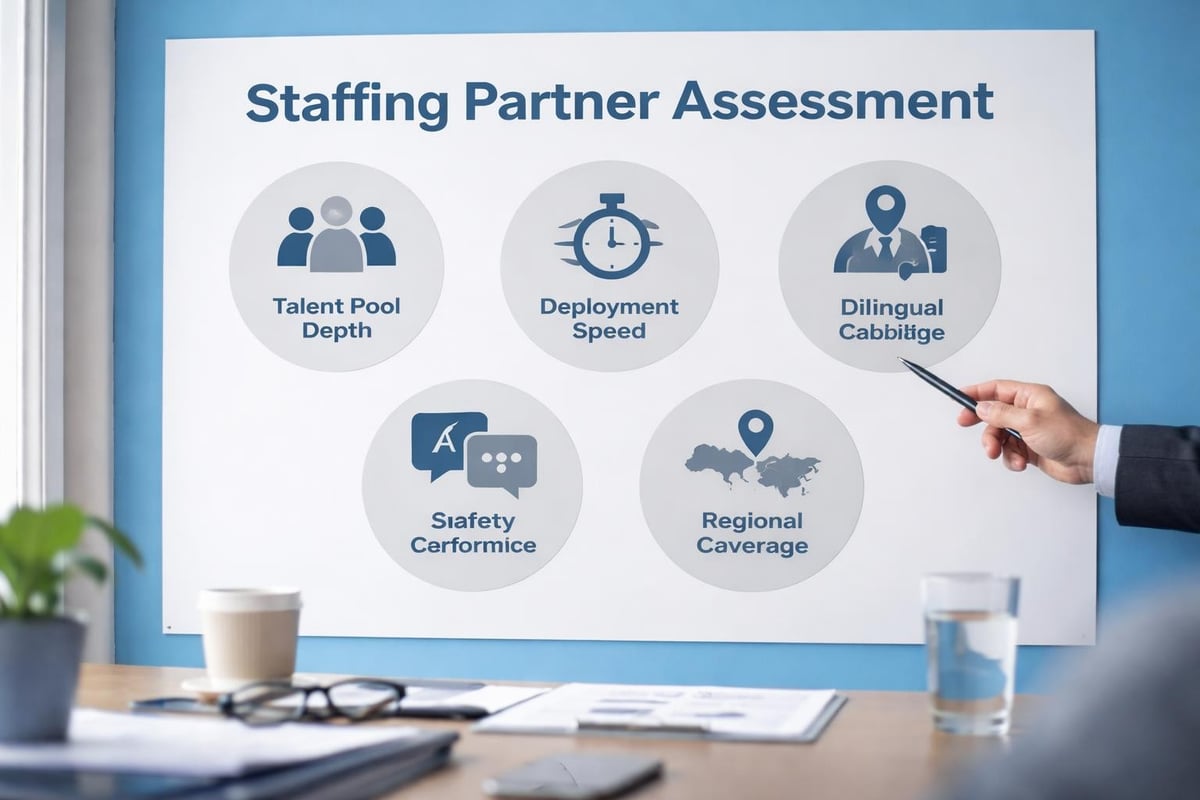
Not every staffing agency operates true cascade staffing systems. Evaluate potential partners on specific capabilities that enable the cascade model:
- Documented talent pool size in each tier for your required trades
- Average deployment speed from request to worker arrival on-site
- Safety incident rates among placed workers over the past 24 months
- Bilingual workforce availability and cultural competency programs
- Technology platforms supporting real-time workforce scaling
- Regional coverage across your operational footprint
The Gulf South region presents unique requirements. Your cascade staffing partner must maintain deep talent pools across Louisiana, Mississippi, Alabama, and Kentucky while understanding sector-specific regulations and cultural dynamics.
Phase Four: Integration and Testing
Begin cascade staffing implementation with a pilot project that represents typical workforce challenges. Deploy workers across all three tiers and monitor performance against traditional staffing outcomes.
Critical metrics to track during pilot implementation:
- Time from staffing request to worker arrival
- Safety incidents per 200,000 hours worked
- Project timeline adherence compared to historical benchmarks
- Communication effectiveness ratings from site supervisors
- Worker retention rates throughout project duration
- Total labor cost per unit of work completed
Successful pilots demonstrate 20-40% improvement in at least three of these metrics, validating the cascade staffing investment.
Phase Five: Optimization and Expansion
After pilot validation, expand cascade staffing across additional projects while continuously refining tier definitions and deployment processes. Establish quarterly reviews with your staffing partner to analyze performance data and adjust talent pool composition.
The optimization phase identifies opportunities to develop specialized sub-tiers. You might discover that bilingual pipefitters with both ASME and AWS certifications represent a high-value micro-tier deserving dedicated recruitment and retention programs.
Bilingual Workforce as Competitive Differentiator
The industrial workforce across the Gulf South increasingly includes Spanish-speaking professionals who bring exceptional work ethic, specialized skills, and cultural perspectives that strengthen team performance. Cascade staffing that integrates bilingual capabilities as a core feature rather than an afterthought delivers substantial competitive advantages.
Communication Efficiency and Safety Enhancement
When safety briefings, work instructions, and emergency communications flow in workers’ native language, comprehension reaches near 100%. This eliminates the dangerous gaps that occur when non-native speakers nod in agreement without full understanding.
Bilingual site supervisors and crew leads bridge communication between English-speaking project management and Spanish-speaking craftsmen, creating cohesive teams that execute complex industrial work with precision.
Access to Specialized Talent Pools
Latino workers represent a growing percentage of skilled tradespeople in welding, concrete work, pipefitting, and other industrial specialties. Cascade staffing with dedicated bilingual recruitment pipelines accesses this talent before competitors even know these workers exist.
A staffing partner with genuine Spanish-language expertise, cultural competency, and established relationships within Latino professional communities delivers workers who would never respond to English-only job postings or feel comfortable with agencies lacking bilingual staff.
Cultural Competency as Performance Multiplier
Effective cascade staffing recognizes that cultural competency extends beyond language. Understanding work preferences, communication styles, and professional values within different cultural groups creates more productive, stable teams.
Spanish-speaking workers often prefer crew-based deployment where they work alongside familiar colleagues. They value clear expectations, consistent scheduling, and respectful treatment over marginally higher hourly rates. Staffing partners who understand these preferences build more reliable, loyal talent pools that outperform transactional recruitment approaches.
Technology Integration in Modern Cascade Staffing
Advanced cascade staffing leverages technology platforms that manage talent pools, track certifications, coordinate deployments, and provide real-time workforce visibility. These systems transform staffing from administrative burden to strategic asset.
Core technology capabilities include:
- Digital skills inventories with searchable certification databases
- Automated compliance monitoring with expiration alerts
- Mobile deployment coordination connecting available workers with immediate opportunities
- Performance tracking systems that inform tier placement decisions
- Bilingual interfaces supporting both English and Spanish-speaking workers and administrators
- Integration with client workforce management systems for seamless coordination
The most sophisticated platforms provide predictive analytics that anticipate staffing needs based on historical patterns, seasonal trends, and project pipeline data. This enables proactive talent pool development rather than reactive scrambling when projects suddenly demand workers.
Regional Considerations for Gulf South Implementation
Cascade staffing across Louisiana, Mississippi, Alabama, and Kentucky requires understanding regional workforce dynamics, industry concentrations, and regulatory environments specific to these markets.
Louisiana Industrial Corridor Demands
The concentration of petrochemical facilities, refineries, and maritime operations along Louisiana’s industrial corridor creates intense competition for certified welders, pipefitters, and specialized trades. Cascade staffing must maintain particularly deep talent pools in these specialties.
Louisiana’s bilingual workforce requirements exceed other Gulf South states due to substantial Latino populations in construction and industrial trades. Staffing solutions that integrate Spanish-speaking expertise deliver decisive advantages in this market.
Mississippi and Alabama Construction Growth
Commercial and industrial construction expansion across Mississippi and Alabama drives demand for scalable workforce solutions that can staff multiple simultaneous projects. Cascade staffing’s tier-based deployment excels in these scenarios.
Kentucky Manufacturing and Logistics
Kentucky’s automotive manufacturing, logistics centers, and bourbon production facilities require specialized staffing for both skilled industrial positions and warehouse operations. CDL drivers, forklift operators, and production workers represent critical talent pools.
Measuring Cascade Staffing Performance
Quantifiable metrics separate effective cascade staffing from agencies simply using trendy terminology without delivering substantive value. Establish clear KPIs before implementation and track consistently.
| Performance Metric | Baseline (Traditional Staffing) | Cascade Staffing Target | Elite Performance |
|---|---|---|---|
| Deployment Speed | 7-10 days | 2-3 days | 24-48 hours |
| Safety Incident Rate | Industry average | 25% below average | 50% below average |
| Worker Retention (Project Duration) | 75-80% | 90-95% | 95%+ |
| Skill Match Accuracy | 80-85% | 95%+ | 98%+ |
| Cost Per Unit Labor | Baseline | 15-20% reduction | 25%+ reduction |
These metrics should trend positively over the first 12-18 months of cascade staffing implementation as processes mature and talent pool quality improves.
Common Implementation Challenges and Solutions
Even well-planned cascade staffing implementations encounter predictable challenges. Anticipating these obstacles and preparing solutions accelerates success.
Challenge: Resistance from existing permanent workforce
Solution: Frame cascade staffing as surge capacity that protects permanent positions rather than threatens them. Temporary workers handle fluctuations while permanent employees maintain stable employment.
Challenge: Inconsistent quality across tiers
Solution: Implement rigorous tier qualification standards with objective assessments. Remove workers who don’t meet tier standards regardless of availability pressures.
Challenge: Communication gaps with bilingual workers
Solution: Require bilingual supervisors or crew leads for any team with Spanish-speaking workers. Invest in translated safety materials and job-specific instructions.
Challenge: Client resistance to tiered pricing
Solution: Demonstrate total project cost savings despite varied hourly rates. Higher-tier workers complete tasks faster with fewer errors, delivering better overall value.
Challenge: Regulatory compliance complexity
Solution: Partner with staffing agencies that assume compliance responsibility and maintain systems tracking certifications, training, and regulatory requirements.
Cascade staffing transforms workforce management from reactive scrambling to strategic advantage through tiered talent deployment, rapid scalability, and precision skill matching. The methodology delivers measurable improvements in safety performance, cost efficiency, and project timeline adherence when implemented with qualified partners who maintain deep regional talent pools. CDR General Services brings proven cascade staffing expertise combined with unmatched bilingual workforce capabilities across Louisiana, Mississippi, Alabama, and Kentucky, delivering the specialized, safety-certified, culturally competent talent your industrial, construction, and maritime operations demand.