


Blog
Mobile Staffing Agency Solutions for 2026


The workforce landscape has fundamentally shifted. Employers no longer wait weeks to fill critical positions. A mobile staffing agency delivers immediate access to qualified, safety-certified personnel through smartphone technology and real-time deployment systems. This operational model transforms how industrial, construction, and maritime companies secure talent, particularly in the Gulf South region where project timelines demand instant workforce scalability. The competitive edge lies not just in speed but in specialized capabilities like bilingual staffing and cultural competency that traditional agencies cannot match.
The Mobile Staffing Agency Revolution
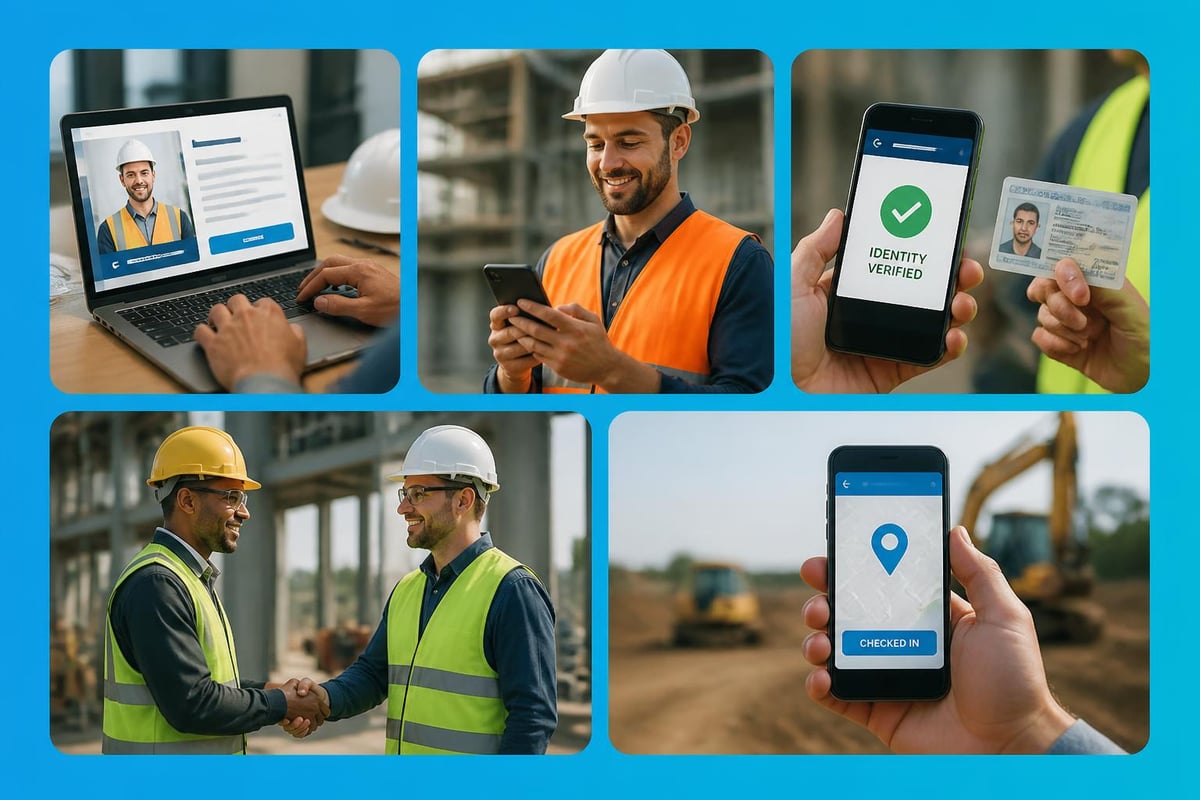
A mobile staffing agency operates through digital platforms that connect employers with available workers in real time. This approach eliminates the traditional friction points of phone calls, faxes, and email chains that delay placements.
The core differentiators include:
- Instant notifications to workers about available shifts and projects
- GPS-verified check-in and time tracking for accountability
- Real-time credential verification for safety certifications and licenses
- Digital onboarding that reduces administrative overhead by 60-70%
- Immediate communication between field supervisors and staffing coordinators
The technology backbone enables what was impossible five years ago: placing a certified welder on a Mississippi shipyard within 2-4 hours of the request. Traditional staffing required 48-72 hours minimum for the same placement.
Market Dynamics Driving Mobile Adoption
Industry data shows substantial pressure on staffing agencies from sectors experiencing rapid talent fluctuations. Construction and industrial manufacturing lead this volatility, creating urgent demand for mobile solutions that respond faster than traditional models.
The numbers validate the shift. According to comprehensive staffing statistics, the U.S. staffing industry generates over $180 billion annually, with mobile platforms capturing an accelerating market share. Companies that adapted mobile staffing technology in 2024-2025 report 40% faster fill rates and 35% better worker retention.
| Metric | Traditional Staffing | Mobile Staffing Agency |
|---|---|---|
| Average Time to Fill | 48-72 hours | 2-8 hours |
| Worker Engagement Rate | 35-45% | 65-80% |
| No-Show Rate | 15-25% | 5-12% |
| Administrative Cost per Placement | $250-400 | $80-150 |
| Real-Time Visibility | Limited | Complete |
Critical Components of Mobile Staffing Infrastructure
Building an effective mobile staffing agency requires more than downloading an app. The infrastructure must handle complex workforce scenarios that industrial and construction sectors demand.
Worker Qualification Management
Every mobile platform must verify credentials instantly. For CDL drivers, this means real-time DMV record checks. For welders, it requires current certification validation through AWS or equivalent bodies. Forklift operators need OSHA compliance documentation readily accessible.
The verification stack includes:
- Digital credential wallet where workers store licenses and certifications
- Automated expiration alerts preventing non-compliant placements
- Third-party verification integrations with licensing authorities
- Safety training documentation accessible to compliance officers
- Drug screening status updated within the mobile system
A mobile staffing agency that cannot instantly confirm a pipefitter's qualifications creates liability exposure that destroys client trust. The system must be bulletproof.
Bilingual Communication Capabilities
The decisive competitive advantage in Gulf South staffing is bilingual workforce access. A mobile staffing agency must support seamless Spanish-English communication across every touchpoint.
This means job descriptions, safety alerts, schedule changes, and payroll notifications all deliver in the worker's preferred language. The technology enables what traditional agencies struggle to provide: culturally competent staffing that respects and leverages Latino talent pools.
Employers requiring Spanish-speaking teams for construction projects in Louisiana or Mississippi gain immediate access to qualified workers who bring both technical skills and language capabilities. This dual competency eliminates communication barriers that cause safety incidents and productivity losses.
Operational Excellence Through Mobile Technology
Emerging trends in 2026 emphasize AI-driven recruitment and skills-based hiring. Mobile staffing agencies integrate these capabilities into workforce deployment systems that make better matches faster.

Real-Time Workforce Visibility
Project managers and HR directors demand transparency. Where are workers? Did they arrive on time? Are they completing assigned tasks?
Mobile staffing technology provides answers through:
- GPS check-in verification confirming worker arrival at job sites
- Geofencing alerts notifying coordinators of early departures
- Digital timesheets eliminating payroll disputes
- Performance ratings from site supervisors captured immediately after shifts
- Safety incident reporting through mobile forms with photo documentation
This visibility transforms workforce management from reactive firefighting to proactive optimization. When a heavy equipment operator doesn't show up, the system immediately notifies backup workers and fills the gap before the delay impacts the project timeline.
Scalability for Fluctuating Demand
Construction and industrial projects rarely maintain consistent labor needs. A shipyard might require 50 welders this week and 120 next week. Traditional staffing struggles with this volatility.
A mobile staffing agency handles demand spikes through:
- Broadcast notifications to qualified worker pools
- Tiered worker classifications (preferred, regular, on-call)
- Automated scheduling that fills shifts based on availability and qualifications
- Rapid onboarding for new workers entering the system
- Performance-based prioritization giving top workers first access to premium shifts
The growth of on-demand staffing in 2026 reflects employer recognition that workforce flexibility is not optional. It is the baseline expectation.
Specialized Staffing Categories
Different industries require distinct approaches within the mobile staffing framework.
Industrial and Skilled Trades
Certified welders, pipefitters, electricians, and heavy equipment operators represent the highest-value placements. These workers command premium rates and require extensive verification.
Key considerations include:
- Multiple certification levels (AWS D1.1, API 1104 for welders)
- Union vs. non-union worker pools
- Specialized equipment operation credentials
- Industry-specific safety training (OSHA 10, OSHA 30, Confined Space)
- Background check requirements for refinery and chemical plant access
A mobile staffing agency serving this sector must maintain detailed skill profiles that go far beyond basic job categories. The difference between a 6G position welder and a basic stick welder is $20-30 per hour and project success or failure.
Construction and General Labor
Ready-to-work construction teams need different mobile functionality. Speed matters more than extensive credentialing for general laborers, though safety training remains non-negotiable.
The mobile system must handle:
- Large-scale deployments (20-100+ workers for single projects)
- Multiple shift rotations across extended project timelines
- Site-specific orientations documented through mobile check-in
- Tool and equipment tracking assigned to individual workers
- Weather-related schedule changes communicated instantly
| Worker Type | Average Hourly Rate | Credential Requirements | Typical Deployment Time |
|---|---|---|---|
| General Laborer | $15-22 | OSHA 10, Drug Screen | 4-8 hours |
| Skilled Carpenter | $25-38 | OSHA 30, Trade Certificate | 8-24 hours |
| Certified Welder | $35-65 | AWS Certification, Multiple Tests | 24-48 hours |
| Heavy Equipment Operator | $30-55 | NCCCO Certification, Equipment-Specific | 12-36 hours |
Transportation and Logistics
Licensed CDL drivers and warehouse personnel require unique mobile features. For Class A and Class B drivers, comprehensive industry statistics show persistent shortages that make mobile deployment capabilities essential.
Critical transportation staffing elements:
- DOT medical certification tracking
- Hours of service (HOS) compliance monitoring
- Vehicle inspection report management
- Route and load assignment through mobile interface
- Forklift certification levels (Classes I-VII)
The mobile staffing agency advantage is immediate driver availability when regular employees call out or unexpected freight arrivals require additional capacity.
Administrative and Clerical Mobile Solutions

Professional office staff placements through mobile systems focus on different metrics than industrial staffing. Response time matters less than candidate quality and cultural fit.
Key Performance Indicators
Administrative staffing success requires tracking:
- Candidate skill assessments completed through mobile platforms
- Reference verification documented digitally
- Client satisfaction scores captured after placements
- Long-term placement conversion rates (temp-to-hire)
- Professional development tracking for upskilling opportunities
A mobile staffing agency serving this market combines technology efficiency with relationship management that software alone cannot replace.
Integration with Client Systems
Enterprise clients demand staffing integrations with existing HR and project management platforms. The mobile staffing agency must connect seamlessly to:
- Vendor management systems (VMS) like Fieldglass or Beeline
- Applicant tracking systems (ATS) for direct hire conversions
- Payroll and invoicing systems for automated billing
- Project management platforms like Procore for construction
- Safety management systems for incident reporting and compliance
These integrations eliminate duplicate data entry and create unified workforce visibility across internal and external staff.
Compliance and Risk Management
Mobile staffing increases velocity but cannot compromise compliance. Every placement must meet legal, safety, and contractual requirements.
Critical Compliance Areas
Workers' compensation coverage verified through mobile insurance certificates
I-9 employment eligibility documented with E-Verify integration
State-specific licensing for occupations requiring local permits
OSHA safety training validated before site access
Background checks completed within required timeframes
The mobile platform must enforce compliance rules automatically. A system that allows an uninsured worker on a job site creates catastrophic liability.
AI and Automation in Mobile Staffing
Best practices for AI phone screening show how automation enhances rather than replaces human judgment in staffing decisions.
Effective AI applications include:
- Initial candidate screening based on objective qualifications
- Interview scheduling optimization across time zones and availability
- Predictive analytics for worker reliability and performance
- Natural language processing for bilingual candidate communication
- Automated reference checking with verification workflows
The technology handles repetitive tasks while recruiters focus on relationship building and complex placement scenarios that require human expertise.
Cultural Competency as Competitive Advantage
The mobile staffing agency that understands and serves diverse workforce populations wins the Gulf South market. Spanish-speaking workers represent a massive, underutilized talent pool that traditional agencies cannot access effectively.
This advantage manifests through:
- Bilingual recruiters who build trust with Latino worker communities
- Spanish-language mobile interfaces and notifications
- Cultural awareness training for client companies
- Community connections that traditional agencies lack
- Proven track record deploying bilingual teams successfully
When a Louisiana construction company needs 30 workers who can follow Spanish safety instructions and communicate effectively with their existing crew, the staffing partner with genuine Latino talent access wins that contract every time.
Regional Market Focus: Gulf South
Louisiana, Mississippi, Alabama, and Kentucky present unique workforce dynamics. The maritime, petrochemical, and construction sectors dominate regional employment, creating specialized staffing requirements.
State-Specific Considerations
| State | Key Industries | Primary Worker Types | Unique Requirements |
|---|---|---|---|
| Louisiana | Maritime, Oil & Gas, Petrochemical | Welders, Pipefitters, Operators | TWIC cards, Refinery access |
| Mississippi | Shipbuilding, Manufacturing, Logistics | Welders, CDL Drivers, Assembly | Shipyard security clearance |
| Alabama | Automotive, Steel, Construction | Equipment Operators, Skilled Trades | Union relationships |
| Kentucky | Logistics, Manufacturing, Construction | Forklift Operators, General Labor | Background check standards |
A mobile staffing agency with deep Gulf South expertise understands these nuances and maintains worker pools with appropriate credentials for each state and industry combination.
Measuring Mobile Staffing Success
Performance metrics separate effective mobile staffing agencies from technology platforms that add minimal value.
Essential KPIs
Fill rate speed measures average hours from request to worker placement. Excellence is under 12 hours for most positions, under 4 hours for general labor.
Worker retention tracks how many placements extend beyond initial assignment. Strong performance exceeds 70% retention through 90 days.
Client satisfaction captured through Net Promoter Score surveys after placements. Top agencies maintain NPS above 60.
Safety incident rate per 100,000 worker hours deployed. Best-in-class agencies achieve rates below general industry averages.
Credential compliance percentage of placements with all required certifications and documentation verified. Anything below 100% is unacceptable.
The mobile technology must track these metrics automatically and surface trends before they become problems.
Frequently Asked Questions
What is a mobile staffing agency?
A mobile staffing agency uses smartphone technology and digital platforms to connect employers with qualified workers in real time. Instead of traditional phone calls and paperwork, the entire process from job posting to worker placement to time tracking happens through mobile applications that provide instant communication and verification.
How quickly can a mobile staffing agency fill positions?
Modern mobile staffing agencies can fill general labor positions in 2-8 hours and skilled trades positions in 8-48 hours depending on credential requirements. This is 60-80% faster than traditional staffing methods that rely on phone trees and manual processes.
What industries benefit most from mobile staffing solutions?
Industrial manufacturing, construction, maritime, logistics, and warehouse operations benefit significantly because they require rapid workforce scaling and have high turnover rates. Any industry with fluctuating labor demand or last-minute staffing needs gains competitive advantage through mobile staffing technology.
How does mobile staffing ensure worker qualifications?
Mobile platforms maintain digital credential wallets where workers store licenses, certifications, and safety training documentation. The system verifies these credentials through third-party integrations with licensing authorities and automatically alerts when certifications approach expiration, ensuring compliance at every placement.
What makes bilingual staffing capability important?
Bilingual staffing eliminates communication barriers that cause safety incidents, productivity losses, and team friction. In the Gulf South region, access to qualified Spanish-speaking workers provides immediate competitive advantage for construction and industrial projects requiring cultural competency and language-matched teams.
Can mobile staffing integrate with existing HR systems?
Yes, enterprise-grade mobile staffing platforms integrate with vendor management systems (VMS), applicant tracking systems (ATS), payroll platforms, and project management software. These integrations eliminate duplicate data entry and create unified workforce visibility across internal and external staff.
How does mobile staffing reduce no-show rates?
Mobile platforms use automated reminders, GPS verification, and immediate replacement notifications to reduce no-shows by 50-60% compared to traditional staffing. Workers receive shift confirmations and reminders on their phones, and the system instantly alerts backup workers if someone fails to check in.
What safety compliance features should mobile staffing include?
Essential features include OSHA training verification, drug screening status tracking, site-specific orientation documentation, incident reporting workflows, and automated compliance checks that prevent unqualified workers from accessing job sites. The platform should enforce all safety requirements before allowing placement.
How can CDR General Services help with my staffing needs?
CDR General Services combines mobile staffing technology with unmatched bilingual workforce access across Louisiana, Mississippi, Alabama, and Kentucky. Our Spanish specialty staffing delivers safety-certified, ready-to-work teams for industrial, construction, maritime, and logistics projects that traditional agencies cannot match.
Why choose a minority-owned staffing agency?
Minority-owned staffing agencies like CDR General Services bring cultural competency and diverse talent access that mainstream agencies lack. This translates to better workforce matches, stronger community connections, and access to qualified bilingual workers who bridge communication gaps on diverse project teams.
The Technology Stack Behind Mobile Excellence
Key trends shaping staffing in 2025 emphasize technology adoption as a survival requirement, not optional enhancement.
Essential platform components:
- Mobile-first worker and client applications (iOS and Android)
- Cloud-based data management for scalability
- API integrations with third-party verification services
- Real-time notification engines for instant communication
- Advanced analytics dashboards for performance tracking
- Secure payment processing for automated payroll
- Compliance automation for regulatory requirements
The mobile staffing agency must invest heavily in technology infrastructure or partner with proven platforms that deliver these capabilities reliably.
Future-Proofing Mobile Staffing Operations
The 2026 workforce landscape continues evolving rapidly. Successful platform implementations demonstrate that agencies must continuously adapt technology and service delivery.
Emerging capabilities include:
- Predictive analytics forecasting client staffing needs before they request workers
- Machine learning models improving worker-to-job matching accuracy over time
- Blockchain-based credential verification providing tamper-proof certification records
- Augmented reality training delivered through mobile devices for skill development
- Voice-activated interfaces for hands-free communication on job sites
The agencies that embrace these innovations will dominate their markets. Those clinging to legacy systems will lose market share to more agile competitors.
Mobile staffing agencies represent the definitive evolution of workforce deployment, combining technology efficiency with specialized talent access that traditional methods cannot match. When you need safety-certified, bilingual teams deployed rapidly across Louisiana, Mississippi, Alabama, or Kentucky for industrial, construction, maritime, or logistics projects, CDR General Services delivers the decisive competitive advantage through our unmatched Spanish specialty staffing and proven Gulf South expertise.