


Blog
Temp Hiring: The Ultimate Guide for Workforce Solutions


The workforce landscape in 2026 demands agility, and temp hiring has become the definitive solution for businesses navigating fluctuating labor demands, seasonal peaks, and specialized project requirements. Companies across industrial, construction, and maritime sectors are leveraging temporary staffing strategies not as a stopgap measure, but as a core component of their competitive advantage. Whether you're managing a construction site in Louisiana, scaling operations at a maritime facility in Mississippi, or coordinating logistics across Alabama and Kentucky, understanding the strategic deployment of temp hiring separates industry leaders from those scrambling to meet deadlines with inadequate crews.
The Strategic Business Case for Temp Hiring
Temporary staffing isn't just about filling seats. It's about building a responsive workforce ecosystem that adapts to your operational reality. The growing momentum of temporary staffing has positioned it as a sustainable growth engine, particularly as permanent placement trends show volatility.
Operational Flexibility That Drives Bottom-Line Results
Temp hiring delivers measurable business advantages:
- Immediate workforce scalability for project surges without long-term overhead commitments
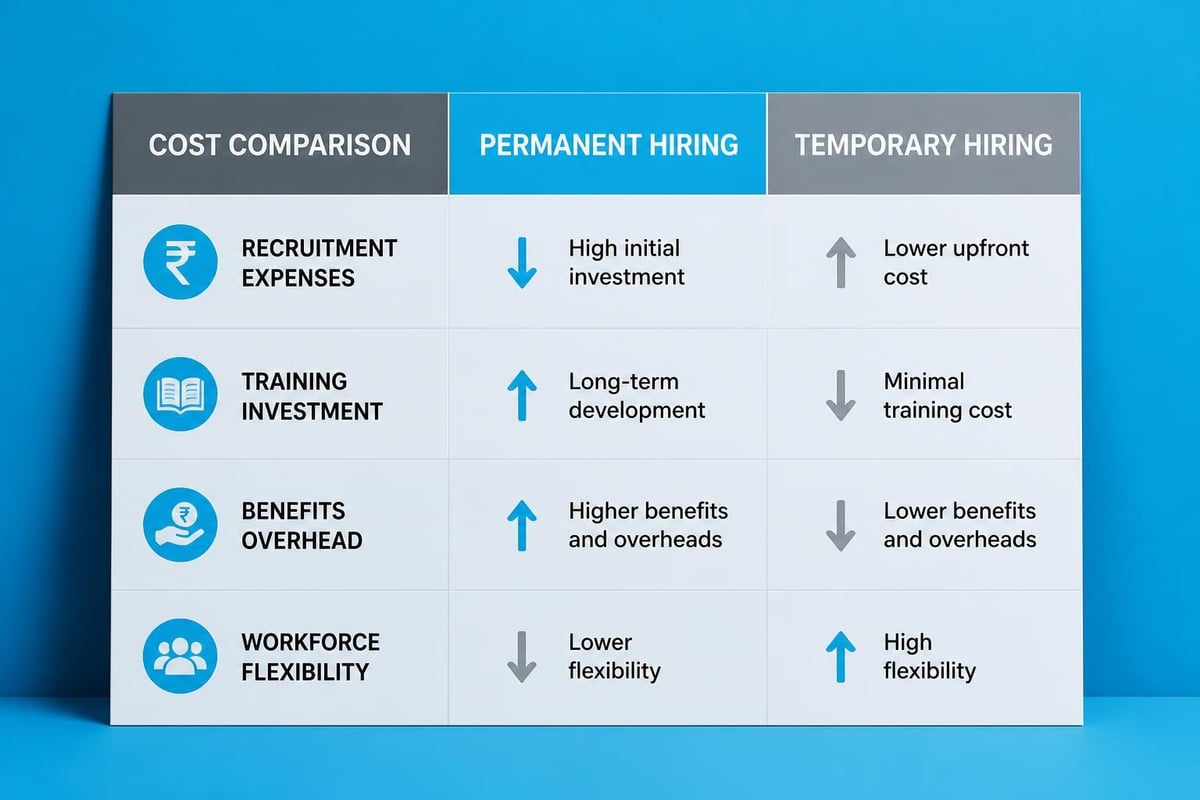
- Reduced recruitment costs through streamlined hiring processes and shortened time-to-fill metrics
- Risk mitigation during economic uncertainty or market fluctuations
- Access to specialized skills for short-duration, high-complexity projects
The numbers tell the story. Businesses utilizing temporary workforce strategies report 30-40% faster project initiation compared to companies relying solely on permanent hiring cycles. When you need certified welders for a three-month pipeline installation or bilingual forklift operators for a seasonal logistics push, temp hiring eliminates the recruitment bottleneck.
Industry-Specific Applications Across the Gulf South
Construction sites demand labor surges that permanent staffing simply cannot accommodate efficiently. A commercial build in New Orleans might require 50 general laborers for foundation work, then shift to 20 skilled electricians and pipefitters for infrastructure installation. Temp hiring enables this workforce choreography.
Maritime operations present unique challenges. Port facilities need CDL drivers during peak shipping seasons, while maintenance windows require specialized heavy equipment operators. The ability to deploy safety-certified personnel precisely when needed, without maintaining year-round payroll for cyclical demand, transforms operational efficiency.
Legal Compliance and Worker Protections in Temporary Employment
Understanding temporary employee rights and protections is non-negotiable. Both staffing agencies and host employers share legal responsibilities that, when mismanaged, create liability exposure.
The Joint Employer Responsibility Framework
Federal law establishes clear parameters. Temporary workers are entitled to the same workplace protections as permanent employees, including:
- Fair Labor Standards Act (FLSA) compliance for wages, overtime, and recordkeeping
- Occupational Safety and Health Administration (OSHA) standards for workplace safety
- Equal Employment Opportunity (EEO) protections against discrimination
- Workers' compensation coverage for job-related injuries
The OSHA temporary worker initiative explicitly outlines that staffing agencies and host employers must coordinate to ensure comprehensive safety training, hazard communication, and injury reporting. This shared accountability means industrial sites cannot defer safety obligations to the staffing partner.
Documentation and Compliance Best Practices
| Compliance Area | Staffing Agency Responsibility | Host Employer Responsibility |
|---|---|---|
| Safety Training | General industry safety protocols | Site-specific hazard training |
| Equipment Certification | Verify credentials and licenses | Provide equipment-specific training |
| Wage & Hour | Ensure FLSA compliance, timekeeping | Accurately report hours worked |
| Injury Reporting | Workers' comp claims processing | Immediate incident notification |
Smart businesses recognize that partnering with staffing agencies demonstrating robust compliance infrastructure protects against regulatory penalties and reputational damage. When evaluating temp hiring partners, demand evidence of safety certification processes, background screening protocols, and documented training programs.
The Evolving Temporary Workforce Landscape in 2026
Temporary workers aren't just filling gaps. They're shaping how businesses approach workforce strategy. The 2025 temporary workforce report reveals critical insights about what temporary employees value: flexibility, trust, local support, and clear communication.
Generational Preferences and Workforce Dynamics
Temp hiring strategies must address multi-generational workforce expectations:
- Gen Z workers (ages 18-27) prioritize digital onboarding, mobile-first communication, and rapid assignment placement
- Millennials (ages 28-43) seek work-life integration, career development opportunities, and transparent scheduling
- Gen X and Boomers (ages 44+) value stability, respectful treatment, and recognition of their expertise
Construction and industrial sectors benefit significantly when staffing partners understand these dynamics. A bilingual millennial pipefitter values different engagement approaches than an experienced Gen X heavy equipment operator. Effective temp hiring acknowledges these distinctions.

Technology Integration and Recruitment Innovation
The temporary recruitment trends for 2025 highlight how AI and automation are transforming candidate matching, skills verification, and deployment logistics. Advanced staffing platforms now enable:
- Real-time skills matching between job requirements and certified candidate pools
- Automated compliance tracking for certifications, licenses, and safety training
- Predictive analytics forecasting workforce demand patterns
- Mobile workforce management allowing instant scheduling and communication
For Gulf South industrial operations, this translates to faster placement of Spanish-speaking certified welders, immediate deployment of bilingual warehouse teams, and seamless coordination across multi-site construction projects.
Strategic Temp Hiring for Industrial and Construction Operations
Understanding why temporary employment is popular with employers requires examining the operational realities of industrial sectors. Construction timelines compress, maritime shipping schedules shift, and manufacturing cycles fluctuate. Permanent staffing models cannot absorb these variations without significant waste.
Building a Scalable Workforce Strategy
Successful temp hiring implementation follows a systematic approach:
- Forecast workforce demand using historical project data, seasonal trends, and pipeline visibility
- Define skill requirements precisely including certifications, language requirements, and experience levels
- Partner with specialized staffing agencies demonstrating industry expertise and compliance rigor
- Establish clear onboarding protocols covering safety training, site orientation, and performance expectations
- Monitor performance metrics tracking productivity, safety incidents, and retention rates
The critical factor is specialization. A staffing partner providing generic labor cannot deliver the nuanced expertise required for industrial welding, heavy equipment operation, or maritime logistics. Sector-specific staffing expertise, particularly with bilingual capabilities for diverse crews, creates operational advantages competitors cannot match.
The Competitive Advantage of Bilingual Temporary Workforces
Gulf South industrial operations increasingly require Spanish-speaking personnel. Construction sites, maritime facilities, and manufacturing plants benefit from bilingual crews that enhance communication, improve safety outcomes, and accelerate project timelines.
Temp hiring strategies incorporating bilingual staffing address:
- Safety communication ensuring every worker understands hazard warnings and emergency protocols
- Team coordination enabling seamless collaboration between diverse crew members
- Compliance documentation maintaining accurate recordkeeping across language barriers
- Productivity optimization eliminating communication delays that stall project progress
When a construction foreman can communicate directly with Spanish-speaking laborers, or a warehouse supervisor can coordinate with bilingual forklift operators, operational efficiency improves measurably. This isn't just convenience. It's competitive differentiation.
Financial Performance and Market Trends in Temporary Staffing
Industry data provides crucial context for temp hiring strategies. While the staffing industry faced seasonal decline in Q1 2025, subsequent quarters demonstrated resilience. The employment and sales rebound in Q4 validates temporary staffing as a sustainable workforce solution.
Healthcare Sector Parallels and Broader Implications
Even specialized sectors show increased temporary workforce utilization. The 25% jump in locum tenens usage in healthcare mirrors trends across industrial sectors. When permanent hiring cannot meet demand velocity, temporary solutions fill critical gaps.
Key market indicators for 2026:
| Metric | Trend | Business Impact |
|---|---|---|
| Temporary placement volume | Increasing 8-12% YoY | Higher demand for qualified temp workers |
| Average assignment duration | Extending 15-20% | Greater workforce stability |
| Specialized skills premium | Rising 10-15% | Increased value of certified, bilingual personnel |
| Safety compliance focus | Intensifying regulation | Higher standards for staffing partner selection |
These trends confirm that businesses investing in strategic temp hiring partnerships gain market advantages. Companies treating temporary staffing as transactional labor procurement miss the opportunity to build responsive, scalable workforce ecosystems.

Selecting the Right Temp Hiring Partner for Your Business
Not all staffing agencies deliver equal value. The difference between mediocre and exceptional temp hiring outcomes lies in partner selection criteria.
Critical Evaluation Factors
When assessing temporary staffing partners, demand evidence in these areas:
- Industry specialization with demonstrated expertise in your sector (construction, industrial, maritime, logistics)
- Safety certification programs including OSHA training, equipment certifications, and documented safety records
- Bilingual capabilities providing Spanish-speaking personnel and culturally competent workforce solutions
- Compliance infrastructure showing robust systems for legal requirements, wage/hour compliance, and worker protections
- Local presence with deep understanding of Gulf South labor markets, regional regulations, and community connections
- Scalability proven ability to deploy 10 or 100+ workers based on project demands
- Technology platforms enabling efficient communication, scheduling, and performance tracking
A staffing partner meeting these criteria transforms temp hiring from administrative burden to strategic advantage. Agencies lacking sector expertise, safety rigor, or bilingual capacity create operational risk rather than solving workforce challenges.
The Spanish Specialty Staffing Advantage
For Gulf South operations, Spanish-speaking workforce access is not optional. It's essential. Construction sites across Louisiana, Mississippi, Alabama, and Kentucky increasingly rely on Latino talent. Manufacturing facilities need bilingual warehouse teams. Maritime operations require Spanish-speaking heavy equipment operators.
Temp hiring partners providing authentic bilingual capabilities, cultural competence, and deep Latino talent networks deliver measurable advantages:
- Faster placement through established relationships with qualified Spanish-speaking candidates
- Higher retention when workers feel culturally respected and linguistically supported
- Improved safety from clear communication of hazards, procedures, and emergency protocols
- Enhanced productivity eliminating language barriers that slow project progress
The competitive reality is simple: businesses accessing specialized bilingual temporary workforces outperform competitors struggling with communication gaps and limited talent pools.
Frequently Asked Questions About Temp Hiring
What is temp hiring and how does it work?
Temp hiring is the process of employing workers through a staffing agency for a specific duration, project, or seasonal need. Businesses partner with staffing agencies to quickly access qualified personnel without the long-term commitment of permanent employment. The staffing agency handles recruitment, screening, payroll, and compliance, while the host employer manages day-to-day work assignments and supervision.
What are the main benefits of using temp hiring for industrial projects?
Temp hiring provides immediate workforce scalability, eliminates recruitment delays, reduces overhead costs, and offers access to specialized skills precisely when needed. For construction, maritime, and industrial operations, temporary staffing enables rapid response to project demands without maintaining excess permanent headcount during slower periods.
How do temp workers' rights compare to permanent employees?
Temporary workers are entitled to the same workplace protections as permanent employees under federal law, including fair wages, safe working conditions, anti-discrimination protections, and workers' compensation coverage. Both staffing agencies and host employers share responsibility for ensuring these protections are maintained.
What industries benefit most from temp hiring strategies?
Construction, industrial manufacturing, maritime operations, logistics, and warehousing see significant advantages from temp hiring. These sectors experience cyclical demand, project-based work, and seasonal fluctuations that make temporary staffing economically efficient and operationally necessary.
How quickly can a staffing agency deploy temporary workers?
Timeline depends on skill requirements and certification needs. For general labor positions, deployment can occur within 24-48 hours. Specialized roles requiring specific certifications (certified welders, CDL drivers, heavy equipment operators) typically take 3-7 days, though established staffing partners with pre-qualified talent pools can accelerate placement.
What safety responsibilities do employers have for temporary workers?
Host employers must provide site-specific safety training, hazard communication, appropriate personal protective equipment, and safe working conditions. Staffing agencies are responsible for general industry safety training and verifying certifications. OSHA explicitly requires coordination between both parties to ensure comprehensive worker protection.
Why is bilingual staffing important for Gulf South operations?
The Gulf South workforce includes substantial Spanish-speaking talent, particularly in construction, maritime, and industrial sectors. Bilingual capabilities improve safety communication, enhance team coordination, accelerate project timelines, and expand the available talent pool. Companies without access to bilingual temporary workers face competitive disadvantages in workforce acquisition and operational efficiency.
How does temp hiring affect long-term workforce planning?
Strategic temp hiring complements permanent staffing by providing flexibility for demand fluctuations while maintaining core permanent teams. Many businesses use temporary assignments as extended interviews, converting high-performing temp workers to permanent positions. This "temp-to-hire" approach reduces hiring risk and improves long-term retention.
What should I look for in a temp hiring partner?
Prioritize staffing agencies with industry specialization, documented safety programs, bilingual capabilities, compliance infrastructure, local market expertise, scalability, and technology platforms for efficient coordination. For Gulf South industrial operations, demand evidence of Spanish-speaking workforce access and cultural competency in serving diverse teams.
How can CDR General Services help with my temporary staffing needs?
CDR General Services specializes in providing safety-certified temporary personnel across industrial, construction, and maritime sectors throughout Louisiana, Mississippi, Alabama, and Kentucky. Our unmatched Spanish specialty staffing expertise delivers bilingual, culturally competent workforces that solve your most challenging temp hiring requirements. Contact us to access the Gulf South's premier source for reliable, ready-to-work temporary personnel.
What certifications should temporary industrial workers have?
Requirements vary by role. Welders need AWS certifications, electricians require state licensing, heavy equipment operators need NCCCO certification, CDL drivers must hold appropriate commercial licenses, and forklift operators need OSHA compliance training. Reputable staffing agencies verify all certifications before placement and maintain documentation for compliance auditing.
Strategic temp hiring in 2026 requires specialized expertise, compliance rigor, and access to diverse, qualified talent pools. Companies across the Gulf South need staffing partners who understand industrial demands, maintain safety-first commitments, and deliver bilingual workforce solutions that competitors cannot match. CDR General Services provides exactly that advantage: minority-owned excellence, Spanish specialty staffing, and unparalleled expertise across construction, industrial, and maritime sectors. Partner with us to transform your temporary workforce from operational necessity to competitive weapon.