
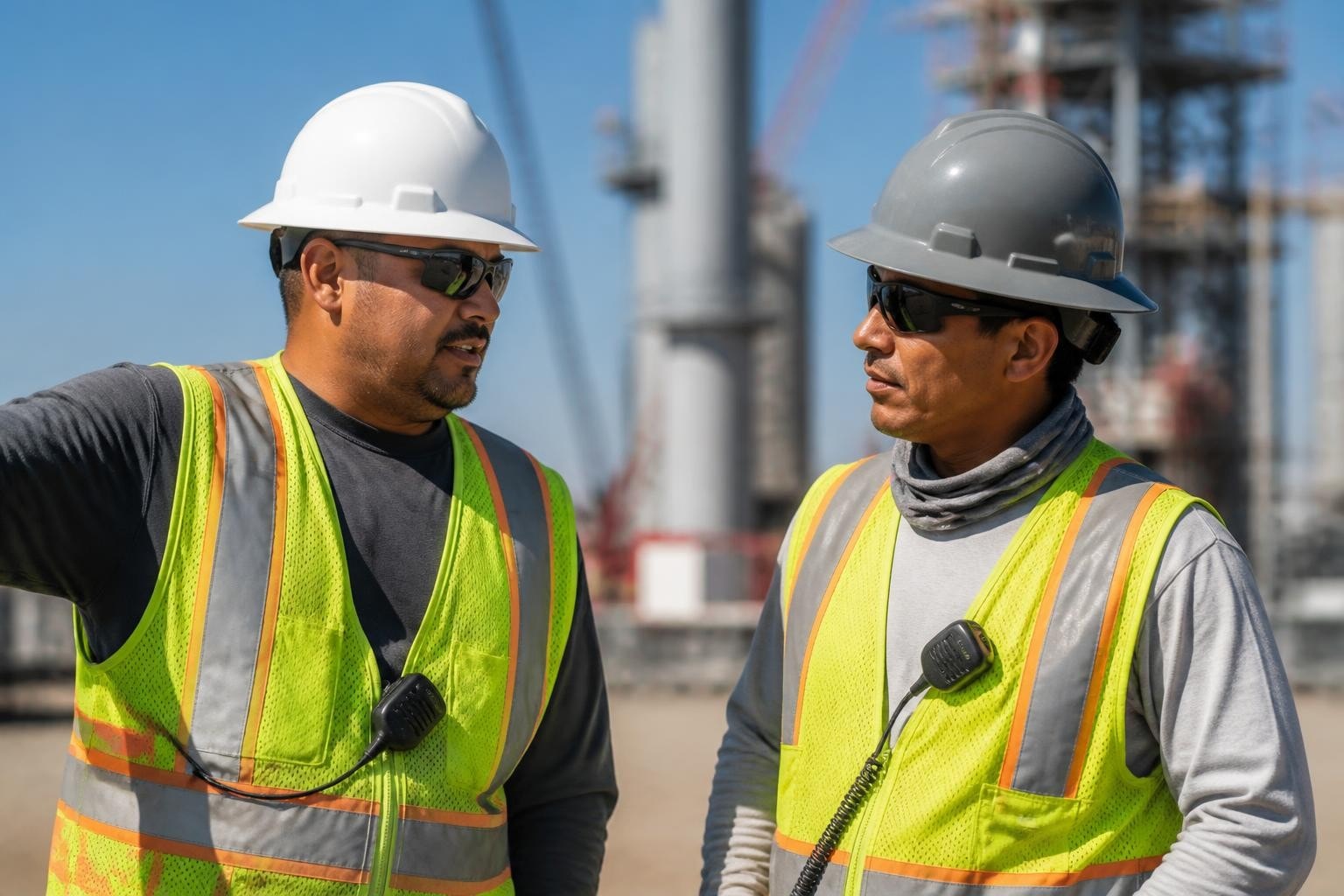
The Capital City workforce landscape is undergoing seismic shifts that demand attention from every employer serious about competitive advantage. Understanding baton rouge staffing trends 2026 isn't optional anymore-it's the baseline requirement for building teams that deliver results. The industrial, construction, and maritime sectors face unprecedented talent challenges, and only employers who adapt to these realities will thrive.
The Baton Rouge Workforce Landscape in 2026
Baton Rouge's labor market reflects a fundamental transformation driven by industrial expansion, infrastructure investment, and demographic evolution. The region continues to anchor the petrochemical corridor while diversifying into advanced manufacturing and logistics operations.
Key market drivers shaping demand:
- Petrochemical facilities expanding capacity and modernizing operations
- Infrastructure projects requiring specialized construction crews
- Port and maritime activity increasing logistics workforce needs
- Manufacturing diversification creating new skilled trades positions
The Baton Rouge Regional Labor Market Area workforce development report confirms sustained demand across industrial occupations, with particular emphasis on safety-certified personnel and bilingual capabilities. This data validates what forward-thinking employers already know: talent acquisition strategy must evolve or fail.

Regional Employment Dynamics
The reality is straightforward: Baton Rouge employers compete in a candidate-driven market where skilled workers have options. The unemployment rate remains low across technical and skilled positions, creating fierce competition for certified welders, electricians, pipefitters, and equipment operators.
| Occupation Category | Demand Level | Competition Intensity | Typical Fill Time |
|---|---|---|---|
| Certified Welders | Very High | Extreme | 45-60 days |
| Electricians | High | High | 30-45 days |
| CDL Class A Drivers | Very High | Extreme | 30-60 days |
| Pipefitters | High | High | 45-60 days |
| Forklift Operators | Moderate | Moderate | 15-30 days |
These metrics underscore the critical importance of strategic workforce partnerships. Employers who rely on traditional hiring methods face extended vacancies and project delays that directly impact profitability.
The Bilingual Talent Imperative
Here's what most staffing discussions ignore: cultural competency and language capabilities now determine project success or failure. The baton rouge staffing trends 2026 data reveals accelerating demand for Spanish-speaking personnel across every sector we serve.
Why bilingual staffing matters:
- Safety communication: Instructions, warnings, and protocols must be understood perfectly
- Team cohesion: Mixed-language crews require seamless coordination
- Productivity: Eliminating language barriers accelerates task completion
- Compliance: OSHA and regulatory requirements demand clear communication
The Latino workforce represents the fastest-growing demographic in Gulf South industrial sectors. Employers who tap this talent pool gain immediate competitive advantages that traditional staffing approaches cannot deliver. This isn't about checking diversity boxes-it's about accessing skilled, motivated, safety-conscious workers who show up ready to perform.
The Cultural Competency Gap
Most staffing agencies talk about diversity. Few actually deliver culturally competent workforce solutions that integrate seamlessly into existing operations. The difference between placement and performance lies in understanding both the technical requirements and the cultural dynamics that drive team success.
Spanish-speaking welders, equipment operators, and construction personnel bring exceptional work ethic combined with specialized skills. The challenge is finding a staffing partner with genuine expertise in this market segment, not surface-level recruiting capabilities.
Industrial Sector Staffing Realities
The industrial sector demands absolute precision in talent acquisition. One unqualified welder creates safety hazards and project delays that cascade through entire operations. One uncertified electrician risks regulatory violations and worker safety. There's no margin for error.
Critical certifications and qualifications employers require:
- Welding certifications: 6G pipe welding, structural welding, specialty alloy experience
- Electrical licenses: Journeyman and master electrician credentials, industrial experience
- Safety certifications: OSHA 30, confined space, fall protection, H2S awareness
- Equipment operation: Certified crane operators, heavy equipment licenses, inspection qualifications
- Trade-specific credentials: Pipefitter certifications, instrumentation expertise, rigging qualifications
The job posting trends in regional markets demonstrate persistent demand for these specialized positions. Baton Rouge mirrors national patterns where skilled trades openings remain elevated despite broader economic fluctuations.

Petrochemical and Refinery Staffing
Petrochemical facilities operate on tight schedules where downtime costs millions. Turnaround projects require surge capacity-teams of certified craftspeople mobilized quickly, working safely, and delivering quality results. The baton rouge staffing trends 2026 show increased turnaround frequency as facilities age and regulatory requirements intensify.
Standard hiring processes cannot meet these demands. Employers need staffing partners who maintain ready-to-deploy talent pools, pre-screen for certifications, and understand petrochemical safety culture. The difference between successful turnarounds and costly delays often comes down to workforce quality and reliability.
Construction Workforce Solutions
Construction projects face compounding challenges: labor shortages, schedule pressures, and quality requirements that accept no compromises. General contractors and specialty subcontractors need scalable workforce solutions that adapt to project phases and activity fluctuations.
Construction staffing must address:
- Project ramp-up requiring rapid team deployment
- Specialized trades for mechanical, electrical, and structural work
- General labor for site preparation, material handling, and support tasks
- Bilingual supervision and crew coordination
- Safety compliance and site-specific training
The commercial and industrial construction boom across Baton Rouge creates sustained demand for construction personnel. Employers who secure reliable workforce partners gain bidding advantages and project execution capabilities that competitors cannot match.
Skilled Trades Shortage Impact
The skilled trades gap isn't improving-it's intensifying. Experienced journeymen retire faster than apprentices complete training programs. Community colleges and technical schools produce graduates, but not enough to meet regional demand. Smart employers recognize this reality and build relationships with staffing partners who invest in talent development and certification programs.
| Trade Position | Regional Shortage Severity | Average Age | Replacement Challenge |
|---|---|---|---|
| Pipefitters | Critical | 47 years | Very High |
| Welders (Certified) | Critical | 44 years | Very High |
| Electricians | Severe | 46 years | High |
| HVAC Technicians | Moderate | 43 years | Moderate |
| Equipment Operators | Severe | 48 years | High |
These demographics explain why baton rouge staffing trends 2026 emphasize retention as much as recruitment. Every qualified tradesperson matters, and employers who create positive work experiences build reputational advantages that attract talent.
Transportation and Logistics Workforce Needs
CDL driver shortages dominate transportation discussions, but the logistics workforce challenge extends beyond over-the-road positions. Baton Rouge's strategic location creates consistent demand for warehouse personnel, forklift operators, freight handlers, and distribution center staff.
Transportation and logistics positions in high demand:
- CDL Class A drivers: Long-haul, regional, and dedicated route positions
- CDL Class B drivers: Local delivery, utility trucks, and specialized vehicles
- Forklift operators: Certified operators for warehouses and distribution centers
- Warehouse personnel: Order pickers, shipping/receiving, inventory management
- Logistics coordinators: Bilingual staff for international freight and documentation
Port activity and intermodal freight movement through Baton Rouge require personnel who understand safety protocols, quality standards, and efficiency requirements. The overlap between maritime operations and ground transportation creates unique staffing needs that generic agencies cannot address effectively.

Maritime Sector Considerations
Maritime operations demand specialized workforce knowledge that few staffing agencies possess. Vessel loading and unloading, cargo handling, port facility maintenance, and maritime construction projects require safety-conscious personnel familiar with waterfront environments. The baton rouge staffing trends 2026 indicate growing maritime activity as energy sector investment continues and port infrastructure expands.
TWIC credentials, crane certifications, and maritime safety training become baseline requirements. Employers need staffing partners who understand these specifications and maintain qualified talent pools ready for immediate deployment.
Administrative and Professional Staffing Evolution
Industrial, construction, and maritime operations require administrative support that understands sector-specific requirements. Generic office staffing doesn't cut it when positions demand knowledge of safety regulations, project management systems, procurement processes, and compliance documentation.
Professional staffing needs across sectors:
- Project coordinators: Bilingual capabilities for multicultural team management
- Safety administrators: OSHA recordkeeping and compliance tracking
- Procurement specialists: Vendor management and materials coordination
- Quality control staff: Inspection documentation and regulatory reporting
- Administrative assistants: Industry-literate support for operations management
The administrative workforce supports operational excellence. Positions require technical literacy, attention to detail, and ability to communicate across organizational levels. Bilingual administrative personnel deliver particular value in organizations with diverse workforces.
Safety-First Culture and Compliance
Safety isn't negotiable in industrial, construction, and maritime operations. Every worker must understand safety protocols, recognize hazards, and follow procedures without exception. The challenge intensifies with multicultural workforces where language differences create communication barriers.
Effective safety culture requires:
- Clear communication: Safety instructions delivered in workers' primary languages
- Comprehensive training: OSHA-compliant programs with cultural adaptation
- Ongoing reinforcement: Daily toolbox talks, safety meetings, and hazard awareness
- Incident prevention: Proactive identification and mitigation of risks
- Regulatory compliance: Documentation and reporting meeting all requirements
The baton rouge staffing trends 2026 show employers prioritizing safety records and incident rates when evaluating staffing partners. Your workforce partner's safety performance directly impacts your EMR, insurance costs, and regulatory standing. This reality demands ruthless selectivity in choosing staffing agencies.
Bilingual Safety Communication
Here's the unvarnished truth: English-only safety programs fail with Spanish-speaking crews. Period. Effective safety communication requires native-language delivery, cultural adaptation, and verification of understanding. Half-measures create liability exposure and worker injuries that destroy companies.
Quality staffing partners provide bilingual safety supervision, translated materials, and culturally competent training programs. This isn't an add-on service-it's fundamental to workforce safety and operational excellence.
Workforce Scalability and Flexibility
Project-based operations require workforce scalability that traditional employment models cannot provide. Surge capacity for turnarounds, seasonal construction peaks, and logistics volume fluctuations demand flexible staffing solutions with rapid deployment capabilities.
Scalability benefits employers need:
- Quick ramp-up for project mobilization
- Workforce right-sizing as project phases change
- Specialized skills available on-demand
- Reduced overhead during slow periods
- Access to diverse talent pools
Strategic staffing partnerships transform workforce management from fixed cost to variable investment aligned with business activity. This flexibility creates competitive advantages that directly impact profitability and project success rates.
Technology Integration in Staffing Operations
Modern staffing operations leverage technology for candidate screening, credential verification, scheduling, and communication. However, technology serves human expertise-it doesn't replace it. The baton rouge staffing trends 2026 reveal that while digital platforms improve efficiency, successful placements still require industry knowledge and relationship management.
| Technology Application | Primary Benefit | Limitation |
|---|---|---|
| Applicant tracking systems | Organized candidate pipeline | Cannot assess cultural fit |
| Digital credential verification | Faster qualification confirmation | Doesn't validate actual skill |
| Mobile scheduling apps | Real-time workforce coordination | Requires user adoption |
| Safety training platforms | Consistent program delivery | Needs language customization |
| Performance tracking tools | Objective worker evaluation | Misses qualitative factors |
Smart employers seek staffing partners who combine technological efficiency with human judgment and industry expertise. The goal is faster, better placements-not just digital processes.
Competitive Advantages Through Strategic Staffing
Every employer faces the same talent constraints. The differentiator is execution-how effectively you access, deploy, and retain quality personnel. Strategic staffing partnerships create sustainable competitive advantages that generic hiring approaches cannot deliver.
Decisive competitive edges strategic staffing provides:
- Speed to deployment: Mobilizing qualified teams faster than competitors
- Quality assurance: Pre-screened, certified personnel reducing project risks
- Cultural competency: Bilingual capabilities enabling diverse team integration
- Safety performance: Lower incident rates protecting workers and reducing costs
- Workforce reliability: Consistent attendance and productivity from motivated personnel
The Louisiana workforce development landscape rewards employers who build comprehensive talent strategies rather than reactive hiring tactics. Understanding regional employment characteristics informs smarter workforce planning and competitive positioning.
Companies that invest in quality staffing partnerships win more contracts, complete projects profitably, and build reputations that attract both clients and talent. This virtuous cycle separates industry leaders from struggling competitors.
Regional Expertise and Local Market Knowledge
Baton Rouge's workforce dynamics differ from New Orleans, Lake Charles, or northern Louisiana markets. Regional expertise matters because local knowledge drives recruitment effectiveness, candidate quality, and cultural fit. Staffing partners must understand neighborhood demographics, transportation patterns, wage expectations, and competitive dynamics specific to the Capital Region.
Local market knowledge delivers practical advantages:
- Targeted recruitment: Knowing where qualified candidates live and work
- Competitive compensation: Understanding prevailing wages by position and sector
- Transportation logistics: Addressing commute patterns and accessibility issues
- Community connections: Leveraging relationships with training programs and community organizations
- Regulatory environment: Navigating local permitting, licensing, and compliance requirements
Generic national staffing chains lack this granular market intelligence. Regional specialists deliver superior results because they understand the territory and maintain established talent networks.
Frequently Asked Questions
What are the most in-demand positions in Baton Rouge staffing for 2026?
The most critical positions include certified welders (especially 6G pipe welders), licensed electricians with industrial experience, CDL Class A drivers, pipefitters, heavy equipment operators, and bilingual supervisors. The petrochemical, construction, and maritime sectors drive sustained demand for these specialized roles with safety certifications and proven track records.
Why is bilingual staffing becoming essential in Baton Rouge industrial sectors?
Bilingual staffing addresses both safety and productivity imperatives. Spanish-speaking workers represent significant portions of industrial and construction workforces, and effective communication in their native language ensures proper understanding of safety protocols, task instructions, and quality requirements. Companies with bilingual capabilities reduce incidents, improve team cohesion, and access larger talent pools.
How long does it typically take to fill specialized industrial positions in Baton Rouge?
Certified welders and CDL Class A drivers typically require 45-60 days through traditional hiring methods. Electricians and pipefitters average 30-45 days. However, employers working with specialized staffing partners maintaining pre-qualified talent pools can reduce these timelines to 7-14 days for immediate deployment.
What safety certifications are most important for industrial staffing in 2026?
OSHA 30-hour certification remains fundamental across all industrial positions. Additional critical certifications include confined space entry, fall protection, H2S awareness, lockout/tagout, and forklift operation. Trade-specific requirements include welding certifications, electrical licenses, crane operator credentials, and rigging qualifications. Safety-conscious employers verify all certifications before deployment.
How does workforce scalability benefit project-based operations?
Scalability enables rapid team deployment for project ramp-up, workforce adjustment as project phases change, and cost control during slow periods. Employers access specialized skills on-demand without carrying fixed overhead, creating financial flexibility while maintaining capability to execute large contracts and respond to opportunity.
What role does cultural competency play in workforce performance?
Cultural competency directly impacts safety, productivity, and team cohesion. Understanding cultural norms, communication styles, and work expectations enables better supervision, reduces misunderstandings, and creates inclusive environments where all workers perform optimally. Employers with culturally competent staffing partners experience measurably better outcomes.
How do Baton Rouge staffing trends compare to other Gulf South markets?
Baton Rouge mirrors broader Gulf South patterns with sustained industrial demand, skilled trades shortages, and growing bilingual workforce requirements. However, the Capital Region's petrochemical concentration and port activity create unique workforce needs. Regional specialization and local market knowledge prove essential for effective talent acquisition.
What advantages do minority-owned staffing agencies offer?
Minority-owned agencies often provide superior cultural competency, deeper community connections, and authentic relationships with diverse talent pools. These agencies understand multicultural workforce dynamics from experience, not theory, delivering more effective recruitment, better candidate fit, and stronger worker retention across diverse teams.
How can employers ensure staffing partners deliver quality, safety-certified personnel?
Employers should verify staffing partners' safety records, certification verification processes, training programs, and client references. Request EMR history, incident rates, and examples of successful placements in similar roles. Quality partners provide transparent documentation, stand behind their placements, and demonstrate industry expertise through detailed knowledge of your operational requirements.
Why should I choose CDR General Services for my Baton Rouge staffing needs?
CDR General Services delivers unmatched Spanish specialty staffing combined with comprehensive industrial, construction, and maritime workforce solutions. Our safety-first approach, pre-certified talent pools, and deep Gulf South market expertise enable rapid deployment of quality personnel who perform. We understand your operational demands and deliver reliable, scalable workforce solutions that traditional agencies cannot match.
What is the typical retention rate for staffed positions in industrial sectors?
Industry-wide retention rates vary significantly by position and employer. Quality staffing partnerships typically achieve 70-85% retention beyond 90 days for well-matched placements. Factors affecting retention include competitive compensation, positive work environment, clear expectations, and cultural fit. Bilingual supervision and culturally competent management significantly improve retention across diverse workforces.
Baton rouge staffing trends 2026 demand strategic workforce partnerships that deliver quality, safety, and cultural competency. The employers who thrive recognize that talent acquisition determines competitive positioning and operational success. CDR General Services provides the decisive advantage through unmatched Spanish specialty staffing, comprehensive Gulf South expertise, and safety-certified personnel ready to perform across industrial, construction, and maritime sectors-contact us to build your competitive workforce advantage.
Published September 21, 2026 by Sanya
All articles