

The maritime industry operates under relentless pressure to maintain fully staffed vessels while navigating a persistent global seafarer shortage, complex regulatory requirements, and increasingly specialized crew needs. Maritime recruitment agencies serve as the critical bridge between shipping companies demanding certified professionals and the qualified maritime workforce required to keep vessels operational. In 2026, these specialized staffing partners have evolved beyond simple crew placement to become strategic workforce solution providers offering comprehensive talent management, compliance oversight, and culturally competent staffing expertise that directly impacts operational efficiency and safety outcomes.
The Strategic Role of Maritime Recruitment Agencies in Modern Shipping
Maritime recruitment agencies function as specialized workforce solution providers uniquely positioned to address the complex staffing challenges facing the shipping industry. These agencies maintain extensive databases of certified seafarers, licensed officers, and specialized maritime professionals ready for immediate deployment across various vessel types and operational requirements.
The core value proposition extends far beyond basic crew placement. Professional maritime staffing partners bring industry-specific knowledge, regulatory compliance expertise, and established vetting processes that ensure every candidate meets stringent certification requirements and safety standards. This specialized focus becomes essential when considering the technical complexity and safety-critical nature of maritime operations.

Why Shipping Companies Partner with Maritime Recruitment Agencies
Operational efficiency drives the decision to work with maritime recruitment agencies. Maintaining an in-house recruitment infrastructure capable of sourcing, vetting, and deploying maritime professionals globally represents a significant resource commitment that diverts attention from core shipping operations.
Consider these compelling advantages:
- Access to pre-vetted, certified maritime professionals with verified credentials and sea time
- Reduced time-to-hire for critical crew positions that would otherwise leave vessels short-staffed
- Regulatory compliance assurance through agencies specializing in STCW, MLC, and flag state requirements
- Global reach enabling crew sourcing from optimal labor markets while managing visa and documentation complexities
- Risk mitigation through comprehensive background checks, medical screenings, and competency verification
The emerging trends in maritime recruitment demonstrate how technology integration and data-driven talent matching are transforming how agencies identify and deploy maritime professionals.
Critical Maritime Positions Filled Through Specialized Agencies
Maritime recruitment agencies specialize in sourcing talent across the complete spectrum of vessel operations, from bridge officers to engine room specialists and deck crew to hospitality staff on passenger vessels.
Licensed Officers and Senior Crew
The most critical shortage areas in 2026 remain licensed deck officers (Master, Chief Officer, Second Officer, Third Officer) and engineering officers (Chief Engineer, Second Engineer, Third Engineer). These positions require extensive certification, documented sea time, and proven competency in vessel operations.
Maritime recruitment agencies maintain relationships with maritime academies, training institutions, and experienced seafarers actively seeking advancement opportunities. This network access proves invaluable when urgent officer replacements become necessary due to medical emergencies, contract completions, or unexpected departures.
Specialized Technical Positions
Modern vessels incorporate sophisticated systems requiring specialized technical expertise beyond traditional maritime roles:
- Dynamic Positioning Operators for offshore support vessels and drilling units
- Electro-Technical Officers managing integrated bridge systems and automation
- LNG/LPG specialists trained in gas carrier operations and safety protocols
- Offshore wind technicians supporting the expanding renewable energy maritime sector
| Position Category | Typical Certification Requirements | Average Time-to-Fill |
|---|---|---|
| Licensed Deck Officers | STCW certification, flag state endorsements, radar/ARPA | 21-45 days |
| Marine Engineers | Engineering degree, STCW engine room certifications | 30-60 days |
| AB Seamen/Ratings | Basic STCW, seafarer medical, flag state documents | 7-14 days |
| Hospitality Staff | Food safety, customer service, medical clearance | 14-21 days |
| Specialized Technicians | Trade certifications, offshore training, specialized endorsements | 45-90 days |
Bilingual and Culturally Diverse Maritime Professionals
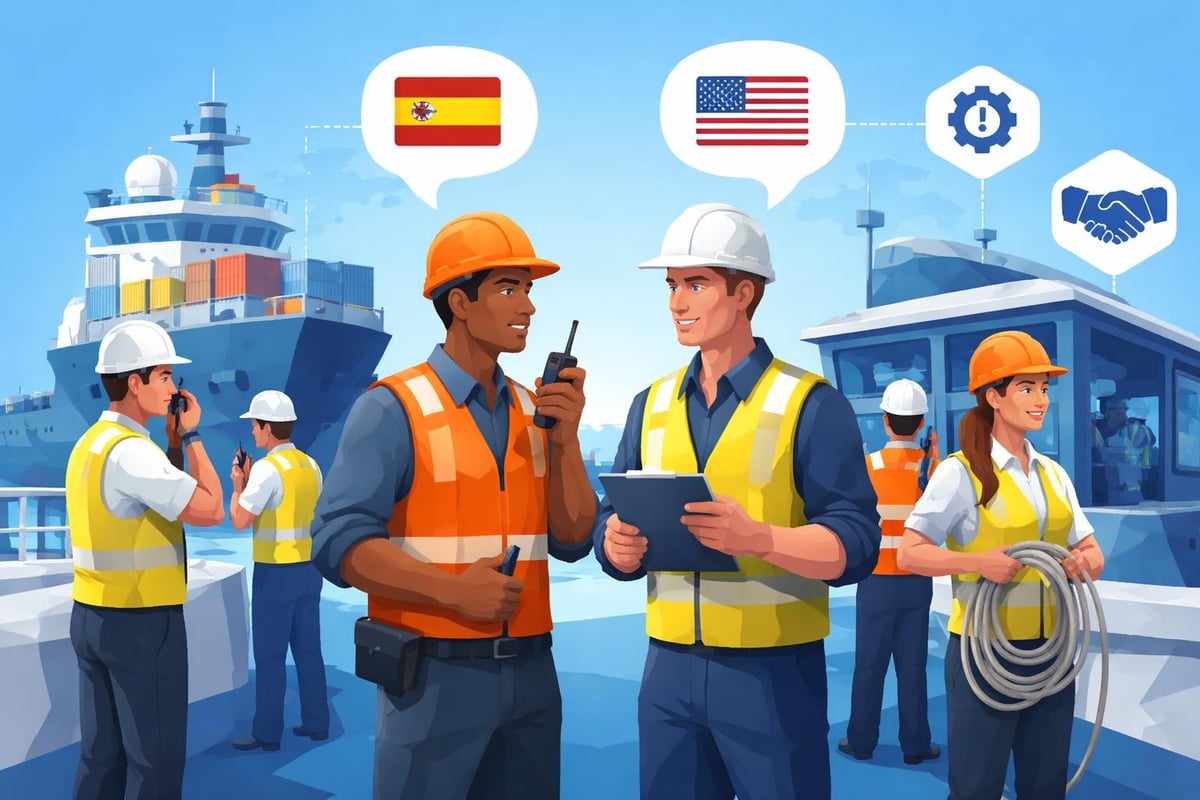
The maritime industry operates as a fundamentally multicultural environment where effective communication directly impacts safety and operational efficiency. Spanish-speaking maritime professionals represent particularly valuable assets in the Gulf of Mexico region, Caribbean operations, and Central/South American trade routes.
Agencies specializing in bilingual maritime staffing provide distinct competitive advantages for vessels operating in Spanish-speaking regions or requiring Spanish-English communication capabilities for international cargo operations and port interactions. This cultural competence extends beyond simple language skills to include understanding regional work practices, regulatory nuances, and communication styles that enhance crew cohesion.
The Maritime Recruitment Process: From Requisition to Deployment
Understanding how maritime recruitment agencies operate reveals why specialized staffing partners deliver superior outcomes compared to generalist employment agencies attempting to serve maritime clients.
Initial Needs Assessment and Position Specification
Professional maritime recruitment begins with comprehensive understanding of the specific crew requirements, vessel type, operational profile, and company culture. Generic job descriptions fail in maritime staffing because each vessel presents unique operational demands, equipment configurations, and crew dynamic considerations.
Top-tier maritime recruitment agencies invest time understanding rotation schedules, compensation structures, vessel locations, port call patterns, and career development opportunities before beginning candidate searches. This detailed specification ensures candidate alignment with both technical requirements and cultural fit factors.
Candidate Sourcing and Database Management
Maritime recruitment agencies maintain proprietary databases containing thousands of active seafarer profiles, continuously updated with current certifications, availability status, and performance records from previous placements. These databases represent years of relationship building with maritime professionals at various career stages.
Beyond database searches, agencies employ multiple sourcing strategies:
- Active recruitment through maritime training institutions and certification programs
- Referral networks leveraging satisfied candidates recommending qualified colleagues
- Digital platforms including maritime-specific job boards and professional networks
- International partnerships with agencies in key seafarer supply markets
The strategies for successful maritime staffing emphasize building strong employer brands and maintaining robust candidate pipelines to reduce time-to-fill for critical positions.
Comprehensive Vetting and Compliance Verification
This phase separates professional maritime recruitment agencies from general staffing providers. Every maritime candidate undergoes rigorous verification processes:
- Certification authentication confirming STCW endorsements, flag state approvals, and specialty certifications
- Sea service verification validating documented time aboard vessels and position claims
- Background screening including criminal record checks appropriate to vessel operations and ports of call
- Medical examination ensuring compliance with maritime medical fitness standards
- Reference checks contacting previous employers, masters, and chief engineers
- Drug and alcohol screening meeting company policies and regulatory requirements
Maritime recruitment agencies maintain updated knowledge of changing regulatory requirements across multiple flag states, ensuring candidates possess current documentation before deployment.
Deployment Logistics and Onboarding Support
Once candidate selection is finalized, maritime recruitment agencies coordinate the complex logistics of crew changes:
Travel arrangements coordinating international flights, ground transportation, and vessel meeting logistics regardless of port location. Documentation management ensuring passports, visas, seafarer books, and port passes are current and properly executed. Pre-joining briefings preparing crew members for vessel-specific procedures, equipment, and company policies.
Selecting the Right Maritime Recruitment Agency Partner
Not all maritime recruitment agencies deliver equivalent value. Shipping companies must evaluate potential staffing partners against specific criteria that predict successful long-term relationships and consistent crew quality.
Industry Specialization and Track Record
Maritime-exclusive focus indicates deeper industry knowledge, established seafarer networks, and understanding of unique maritime staffing challenges. Agencies attempting to serve maritime clients as one of many industries lack the specialized expertise required for consistent quality placements.
Evaluate potential agency partners by examining:
- Years exclusively serving maritime clients
- Number of successful crew placements annually
- Vessel types and flag states regularly served
- Geographic coverage and local market knowledge
- Client retention rates and long-term partnerships
The evaluation of top maritime recruiters provides insights into distinguishing characteristics of leading agencies and their specialized capabilities.
Compliance Infrastructure and Quality Assurance
Professional maritime recruitment agencies invest heavily in compliance infrastructure ensuring every placement meets regulatory requirements. This includes dedicated compliance personnel monitoring changing regulations, automated certification tracking systems, and documented verification processes.
Quality assurance programs should include post-placement follow-up, performance monitoring, and continuous improvement based on client feedback. Agencies providing ongoing support after crew deployment demonstrate commitment to placement success beyond simply filling positions.
Cultural Competence and Specialized Workforce Access
The Gulf South maritime industry increasingly recognizes the value of culturally diverse, bilingual maritime professionals who enhance operational effectiveness and crew dynamics. Maritime recruitment agencies with established networks in Latino maritime communities provide access to highly skilled, safety-conscious Spanish-speaking professionals.
This specialized workforce access becomes particularly valuable for:
- Offshore operations in the Gulf of Mexico requiring bilingual communication
- Port operations in Louisiana, Texas, and Florida with significant Spanish-speaking populations
- Vessel operations conducting Caribbean and Central American trade
- Multinational crews benefiting from bilingual leadership and communication bridges
Current Maritime Recruitment Challenges in 2026
The maritime industry faces persistent workforce challenges that competent maritime recruitment agencies must navigate while delivering consistent staffing solutions.
The Global Seafarer Shortage
The maritime crew management services market analysis confirms the ongoing global shortage of qualified seafarers, particularly licensed officers. This supply-demand imbalance creates recruitment competition and drives the need for agencies with established candidate relationships and effective retention strategies.
Demographic factors compound the shortage as experienced seafarers retire faster than new entrants complete training and gain necessary sea time. Maritime recruitment agencies address this gap through relationships with maritime academies and cadet programs, creating talent pipelines for future needs.
Retention and Career Development
Recruitment success means nothing without retention. The comprehensive strategies for recruiting and retaining seafarers emphasize competitive compensation, clear career progression, and work-life balance considerations that reduce turnover and stabilize crew rosters.
Forward-thinking maritime recruitment agencies partner with shipping companies to develop retention programs including:
- Structured career advancement pathways
- Competitive rotation schedules balancing sea time with home leave
- Professional development and additional certification opportunities
- Family support programs reducing personal pressures on seafarers
- Recognition and reward systems acknowledging exceptional performance

Technology Integration and Digital Transformation
The maritime recruitment trends heading into 2026 highlight how technology reshapes recruitment processes through AI-enhanced candidate matching, digital credential verification, and virtual interviewing capabilities that accelerate hiring timelines.
Progressive maritime recruitment agencies invest in technology platforms that:
- Automate certification tracking alerting to upcoming expirations before documents lapse
- Enable digital onboarding reducing paperwork and accelerating crew readiness
- Facilitate virtual assessments allowing technical evaluations regardless of candidate location
- Provide real-time availability showing qualified candidates ready for immediate deployment
Regional Expertise: Maritime Staffing in the Gulf South
The Gulf of Mexico represents one of the world’s most active maritime regions, encompassing offshore energy operations, international shipping, inland waterways, and shipyard activities. Maritime recruitment agencies serving this region require specific local expertise and workforce access.
Gulf South Maritime Workforce Characteristics
Louisiana, Mississippi, Alabama, and the Texas Gulf Coast host concentrated maritime activity requiring specialized crew members familiar with regional operations, weather patterns, and regulatory environments. The workforce demonstrates strong safety culture, practical experience with Gulf conditions, and often multi-generational maritime family backgrounds.
Spanish-speaking maritime professionals represent a significant and growing component of the Gulf South maritime workforce. Bilingual crew members provide operational advantages in ports from Brownsville to Mobile, facilitate communication in diverse crews, and reflect the regional demographic realities of coastal communities.
Offshore Energy Sector Requirements
Gulf of Mexico offshore operations demand specialized maritime professionals beyond traditional merchant marine roles:
- Offshore Installation Managers (OIMs) overseeing platform safety and operations
- Dynamic positioning operators certified for deepwater drilling support
- Supply vessel crews experienced in cargo operations and platform transfers
- Construction support vessel specialists for offshore wind and platform installation
Maritime recruitment agencies with Gulf South expertise maintain relationships with professionals holding these specialized certifications and understand the unique rotation schedules, safety requirements, and operational demands of offshore work.
Strategic Benefits of Long-Term Maritime Recruitment Partnerships
The most successful shipping companies view maritime recruitment agencies as strategic workforce partners rather than transactional crew suppliers. This relationship evolution delivers measurable business advantages.
Workforce Planning and Forecasting
Proactive recruitment planning prevents the crisis staffing situations that compromise operations and inflate costs. Maritime recruitment agencies working closely with shipping partners develop crew rotation forecasts, anticipate certification renewal timelines, and maintain ready candidate pools for predictable needs.
This strategic approach enables:
- Scheduled crew changes coordinating with operational requirements
- Reduced premium costs associated with emergency placements
- Consistent crew quality through planned selections rather than urgent compromises
- Better crew morale through reliable rotation schedules and advance notice
Performance Data and Continuous Improvement
Professional maritime recruitment agencies track placement performance metrics providing valuable insights into crew effectiveness, retention rates, and areas requiring recruitment strategy adjustments.
| Performance Metric | Industry Benchmark | Strategic Value |
|---|---|---|
| Time-to-fill (officers) | 30-45 days | Operational continuity planning |
| Time-to-fill (ratings) | 7-14 days | Rapid response capability |
| 90-day retention rate | 85-92% | Placement quality indicator |
| Certification compliance | 100% | Regulatory risk management |
| Client satisfaction score | 4.5+/5.0 | Service quality benchmark |
This data-driven approach identifies successful recruitment patterns, highlights improvement opportunities, and demonstrates agency value through measurable outcomes.
Specialized Workforce Solutions
Strategic maritime recruitment partnerships enable access to specialized workforce solutions addressing unique operational requirements. The talent acquisition strategies for the offshore marine sector emphasize investing in training partnerships and apprenticeship programs that develop future talent pipelines.
Companies requiring bilingual maritime crews benefit from agencies maintaining dedicated Spanish-speaking candidate networks. This specialized access proves particularly valuable when communication effectiveness directly impacts safety, operational efficiency, and crew cohesion.
Quality Indicators of Professional Maritime Recruitment Agencies
Distinguishing professional maritime recruitment agencies from substandard providers requires evaluating specific quality indicators that predict reliable performance and placement success.
Transparent Communication and Responsive Service
Premium maritime recruitment agencies maintain consistent communication throughout the recruitment cycle, providing regular updates on candidate pipeline development, realistic timelines, and proactive problem-solving when challenges arise.
Red flags indicating potential service issues:
- Vague responses about candidate availability or qualifications
- Reluctance to provide client references or placement track records
- Pressure to accept candidates without adequate vetting time
- Limited understanding of vessel-specific requirements
- Poor responsiveness to questions or concerns
Comprehensive Candidate Presentation
Professional agencies present candidates with complete documentation packages including verified certifications, detailed sea service records, comprehensive reference checks, and clear explanations of candidate strengths relative to position requirements.
Substandard agencies present minimal candidate information, resist requests for additional verification, or pressure quick hiring decisions before thorough evaluation. This approach creates risks of bad placements, compliance failures, and operational disruptions.
Post-Placement Support and Problem Resolution
The agency relationship extends beyond placement to include ongoing support addressing questions, documentation issues, or unexpected challenges. Premium maritime recruitment agencies stand behind their placements, offering replacement guarantees for candidates who fail to perform or meet expectations.
This commitment to placement success demonstrates genuine partnership rather than transactional mindset focused solely on commission generation. The smart crewing approach to recruiting and retaining maritime talent emphasizes continuous support and development that extends well beyond initial placement.
The Future of Maritime Recruitment: Trends Shaping 2026 and Beyond
Maritime recruitment agencies must continuously evolve to address changing industry dynamics, emerging technologies, and shifting workforce expectations that reshape maritime careers.
Emphasis on Soft Skills and Cultural Fit
Technical competence remains essential, but maritime recruitment increasingly emphasizes soft skills including communication effectiveness, adaptability, teamwork, and cultural sensitivity. Modern vessels operate with multinational crews requiring professionals who navigate cultural differences and contribute to positive onboard environments.
Assessment methodologies evolve beyond simple certification verification to include behavioral interviews, cultural competence evaluations, and team dynamic considerations. Maritime recruitment agencies investing in comprehensive candidate assessment deliver better long-term placement success.
Sustainability and Environmental Competence
The maritime industry’s environmental transformation requires crew members understanding emissions reduction technologies, fuel efficiency optimization, and environmental compliance protocols. Maritime recruitment agencies must identify candidates with relevant training and commitment to sustainable operations.
Diversity and Inclusion Initiatives
Progressive shipping companies recognize that diverse crews bring varied perspectives, enhanced problem-solving capabilities, and better representation of global maritime operations. Maritime recruitment agencies supporting diversity initiatives access broader talent pools and help companies build inclusive maritime workforces.
Women in maritime represents a particularly important recruitment focus, with agencies developing specialized programs to attract, support, and retain female maritime professionals across all position levels. Similarly, agencies providing access to multicultural, bilingual professionals enable companies to build crews reflecting the diversity of modern global shipping.
Maritime recruitment agencies deliver essential workforce solutions connecting qualified seafarers with vessels requiring certified professionals, but the quality differential between agencies dramatically impacts outcomes. Successful shipping operations demand recruitment partners offering specialized maritime expertise, comprehensive compliance infrastructure, and access to diverse, qualified candidates including bilingual professionals who enhance operational effectiveness. When you need safety-certified maritime personnel, ready-to-deploy specialized crews, or Spanish-speaking maritime professionals for Gulf South operations, partner with CDR General Services for industry-leading workforce solutions that deliver results.
Published February 26, 2026 by CDR
All articles

