


Blog
Skilled Trades Staffing: Your 2026 Hiring Edge

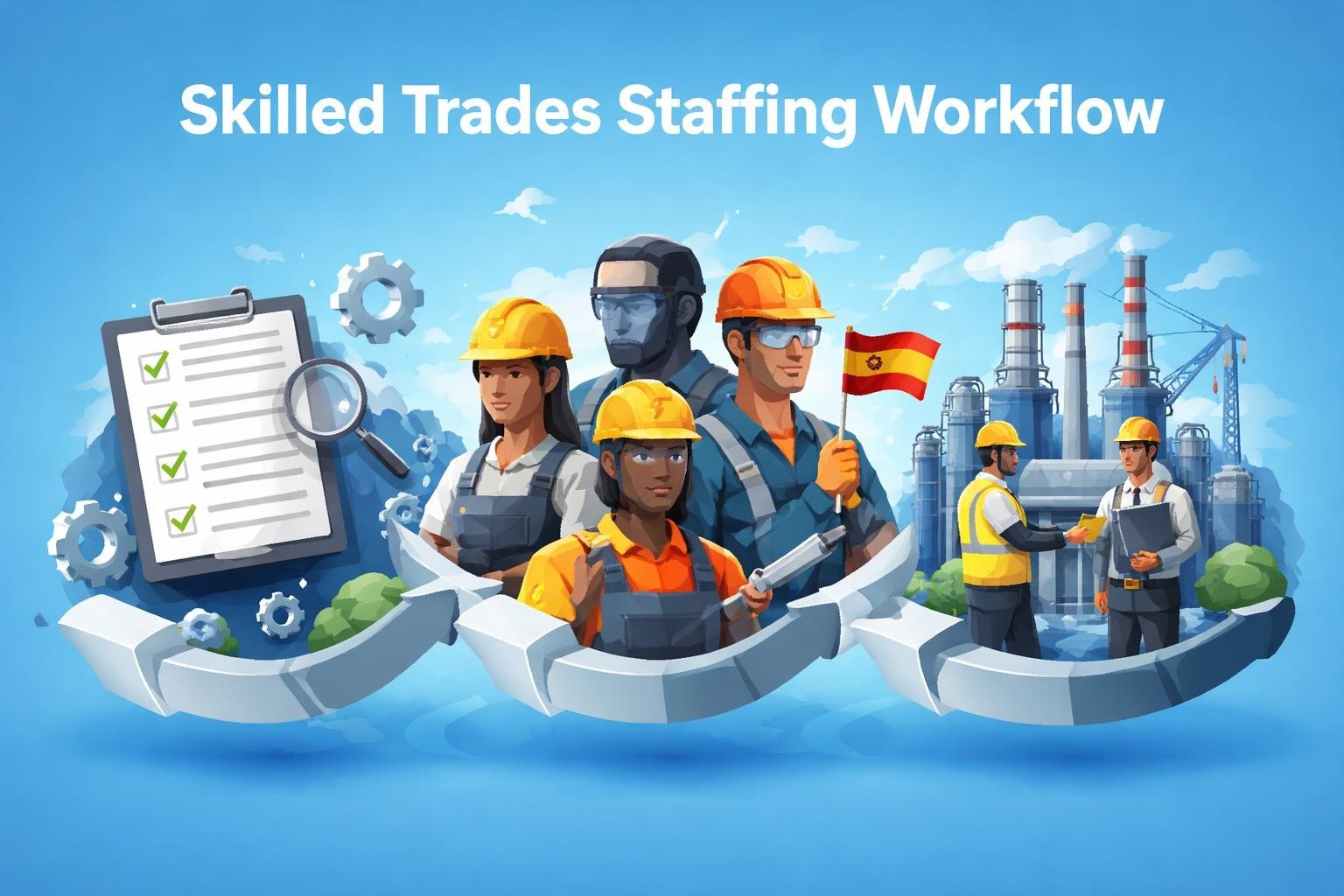
The skilled trades crisis gripping American industry isn’t going away. Contractors, industrial facilities, and construction firms across the Gulf South face unprecedented challenges securing qualified electricians, welders, pipefitters, and heavy equipment operators. Yet the companies winning in 2026 aren’t the ones with the biggest budgets-they’re the ones with the smartest skilled trades staffing strategies. If you’re serious about operational excellence, you need to understand what separates elite workforce solutions from amateur hour.
The Critical Reality of Skilled Trades Staffing in 2026
Every industrial operation depends on one non-negotiable factor: qualified hands executing the work. Skilled trades staffing determines whether your project delivers on time or hemorrhages money through delays.
The numbers tell a brutal story. The construction industry alone faces a shortage exceeding 650,000 workers in 2026, with welders, electricians, and pipefitters topping the deficit list. Manufacturing and maritime sectors compound this challenge, competing for the same limited talent pool.
Why Traditional Recruiting Fails
Most companies approach workforce acquisition like it’s 2010. Post a job. Wait for applications. Interview. Hire.
That strategy is dead.
The modern skilled trades market demands:
- Real-time access to pre-screened, safety-certified talent
- Bilingual workforce capabilities for diverse project teams
- Scalable staffing models that adjust to project phases
- Deep local market knowledge and cultural competency
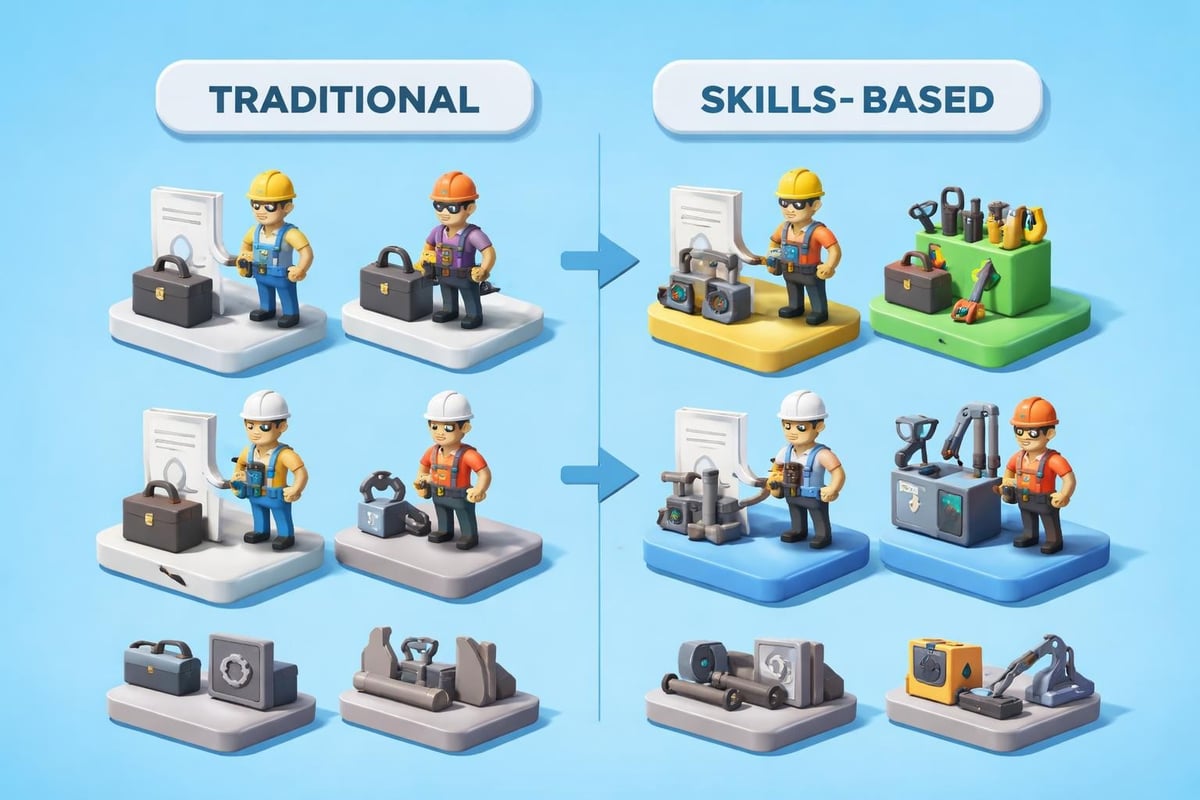
Your competition already figured this out. Research on skill-based hiring trends demonstrates that forward-thinking employers prioritize verified competencies over traditional credential screening, fundamentally reshaping how trades professionals enter the workforce.
Building Your Competitive Advantage Through Strategic Staffing
The staffing partner you choose directly impacts your bottom line. Period.
Smart operators in Louisiana, Mississippi, Alabama, and Kentucky understand that skilled trades staffing excellence requires more than warm bodies with tool belts. It requires strategic partnership with agencies that deliver certified, safety-compliant, ready-to-work professionals.
The Spanish Specialty Difference
Here’s what your current staffing agency won’t tell you: you’re losing productivity and profit by ignoring the Latino trades workforce.
Why bilingual skilled trades matter:
- Expanded talent access – Latino workers represent 31% of the construction workforce nationwide, with even higher concentrations in welding and pipefitting specialties
- Safety improvements – Bilingual crews communicate hazards faster and more accurately, reducing incident rates
- Project efficiency – Teams operating in their native language execute tasks with 23% fewer errors
- Cultural competency – Diverse teams bring different problem-solving approaches to complex trades challenges
The reality? Most staffing agencies treat bilingual capability as an afterthought. Elite agencies make it a core competency, delivering Spanish-speaking electricians, welders, and operators who integrate seamlessly into existing crews.
Core Skilled Trades Categories That Drive Industrial Success
Understanding which trades categories matter most helps you prioritize your workforce strategy. Not all positions carry equal weight in operational outcomes.
| Trade Category | Critical Skills | Typical Certifications | Market Demand (2026) |
|---|---|---|---|
| Certified Welders | TIG, MIG, Stick, Pipe | AWS D1.1, ASME IX | Extremely High |
| Pipefitters | Blueprint reading, Threading, Pressure testing | NCCER, UA Local | High |
| Electricians | Industrial wiring, Motor controls, PLC | Journeyman/Master License | Extremely High |
| Heavy Equipment Operators | Crane, Excavator, Loader operation | NCCCO, OSHA 10/30 | High |
Industrial and Skilled Trades Staffing Essentials
Your industrial facility doesn’t run on generic labor. It runs on precision expertise.
Certified welders form the backbone of manufacturing, maritime, and petrochemical operations throughout the Gulf South. A qualified welder doesn’t just join metal-they understand metallurgy, read complex blueprints, and maintain certification compliance across multiple processes.
Pipefitters ensure fluid systems operate safely under pressure. These professionals measure twice, cut once, and think three steps ahead. The difference between an adequate pipefitter and an exceptional one? The exceptional one prevents the shutdown before it happens.
Electricians keep power flowing and equipment operational. Industrial electricians troubleshoot motor controls, program PLCs, and maintain high-voltage systems that general contractors won’t touch. Strategies for addressing skilled labor shortages emphasize investing in specialized training programs that elevate electrician competency.
Heavy equipment operators move earth, materials, and massive components with millimeter precision. An experienced operator maximizes equipment utilization while minimizing fuel costs and mechanical wear.
Construction and General Labor Workforce Solutions
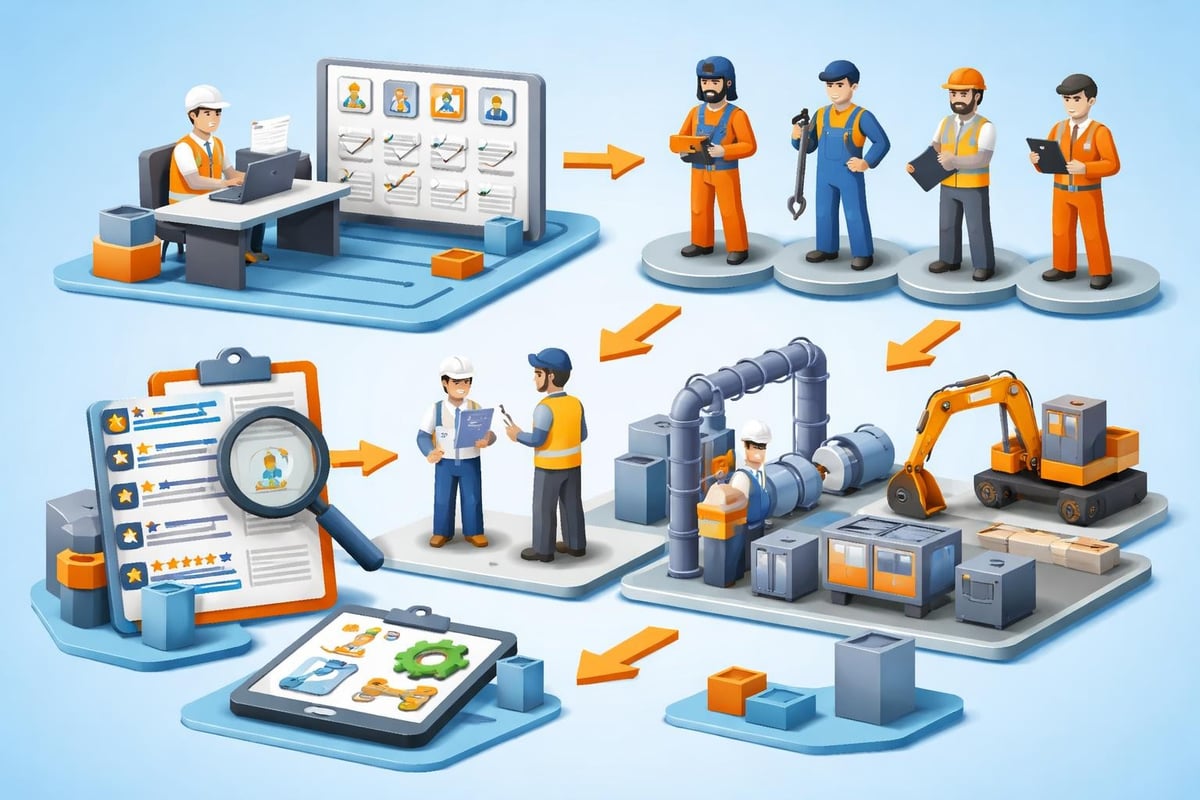
Construction projects demand flexible, scalable teams that ramp up and down with project phases. Skilled trades staffing for construction sites requires understanding the rhythm of build schedules.
Ready-to-Work Team Characteristics
The best construction labor teams share specific attributes:
- Safety certifications current and verified (OSHA 10, OSHA 30, site-specific training)
- Tool proficiency across multiple applications
- Transportation reliability to remote job sites
- Weather resilience for Gulf South climate conditions
- Communication capability in English and Spanish
Construction general labor isn’t unskilled labor. It’s foundational labor that supports skilled trades execution. Your framers, concrete finishers, and material handlers make or break project timelines.
Logistics and Site Coordination
Material flow determines construction velocity. Explore our service locations to understand how regional logistics networks support workforce deployment across Louisiana, Mississippi, Alabama, and Kentucky.
Warehouse operations, material staging, and job site logistics require coordination between forklift operators, material handlers, and site supervisors. Bilingual capability in these roles eliminates miscommunication that causes expensive delays.
Transportation and Logistics Staffing Excellence
Supply chain disruptions taught every operator a hard lesson: transportation workforce reliability matters as much as equipment reliability.
CDL drivers (Class A and Class B) keep materials moving and products delivering. But not all CDL holders deliver equal value.
What Separates Elite Drivers From Average Ones
| Driver Quality Tier | Characteristics | Business Impact |
|---|---|---|
| Elite | Clean record, hazmat certified, bilingual, 5+ years experience | Zero delays, premium customer service, reduced insurance costs |
| Professional | Clean record, standard certifications, 2-5 years experience | Reliable delivery, adequate communication, standard insurance rates |
| Entry-Level | Recent certification, limited experience, basic English | Higher supervision needs, increased training costs |
Forklift operators in warehouse and distribution environments directly impact throughput. An experienced operator moves 30% more material per shift than an inexperienced one, while maintaining superior safety records.
Warehouse personnel managing inventory, order picking, and shipping coordination need more than physical capability. They need organizational systems thinking and attention to detail that prevents costly shipping errors.
Artificial intelligence applications in skilled trades staffing now match driver qualifications and route requirements with unprecedented precision, optimizing fleet utilization.
Administrative Support for Trades Operations
Skilled tradespeople execute the work. Administrative professionals make execution possible.
Project coordinators track schedules, manage documentation, and coordinate between field teams and management. Bilingual coordinators bridge communication gaps between Spanish-speaking crews and English-speaking project owners.
Safety administrators maintain compliance documentation, coordinate training, and track certification renewals across dozens or hundreds of workers. One missed certification renewal can shut down an entire project.
HR and payroll specialists ensure workers get paid accurately and on time-the foundation of workforce retention. Processing bilingual payroll and managing diverse benefit programs requires cultural competency beyond basic accounting skills.

Safety-First Workforce Culture
Safety isn’t a program. It’s a culture. And culture starts with the people you hire.
Every skilled trades staffing decision carries safety implications. A certified welder who ignores hot work permits creates catastrophic risk. An electrician who shortcuts lockout-tagout procedures kills people.
Building Safety Into Your Staffing Process
Pre-employment screening must verify:
- Current safety certifications (OSHA, industry-specific)
- Drug testing compliance
- Physical capability assessments
- Safety record review from previous employers
- Bilingual safety communication proficiency
Safety communication in workers’ native languages isn’t politically correct-it’s operationally essential. A worker who doesn’t fully understand a hazard warning is a worker heading toward an incident.
The best staffing partners don’t just verify certifications. They cultivate safety-first mindsets through continuous training, toolbox talks in multiple languages, and accountability systems that reward safe behaviors.
The Gulf South Regional Advantage
Louisiana, Mississippi, Alabama, and Kentucky share industrial DNA: petrochemical facilities, maritime operations, heavy manufacturing, and large-scale construction. Understanding regional workforce dynamics delivers competitive advantage.
Regional workforce characteristics include:
- Strong trade school pipelines in welding and electrical work
- Multi-generational trades families passing down skills
- Growing Latino workforce concentration in construction and industrial sectors
- Right-to-work state frameworks affecting labor relations
- Weather resilience and hurricane recovery experience
Local market knowledge separates staffing partners who deliver from those who disappoint. National agencies parachuting into Gulf South markets miss cultural nuances, compensation expectations, and relationship networks that unlock talent.
Recruitment Process Outsourcing for Skilled Trades
Some companies need more than temporary staffing. They need complete workforce acquisition transformation.
Recruitment Process Outsourcing solutions provide transparent talent pipelines, career development frameworks, and strategic workforce planning that goes beyond filling immediate openings.
When RPO Makes Strategic Sense
Consider RPO for skilled trades when:
- You’re scaling operations by 25% or more annually
- Turnover exceeds 40% in critical trades positions
- Internal recruiting teams lack trades-specific networks
- You need bilingual workforce development programs
- Compliance burden overwhelms current HR capacity
RPO partners become extensions of your HR function, managing everything from sourcing to onboarding to retention programming. For large industrial facilities and major construction firms, this model delivers ROI through reduced time-to-fill and improved quality-of-hire metrics.
Scalable Workforce Models That Win
Market demand fluctuates. Your workforce model must flex accordingly.
Three scalability approaches dominate skilled trades:
Temporary-to-Permanent Staffing
Test workers in actual job conditions before making permanent offers. This “try before you buy” model reduces bad hires while giving workers opportunity to prove capabilities.
Temporary assignments typically run 90-180 days. Top performers transition to permanent payroll. Underperformers separate without complicated termination processes.
Project-Based Team Deployment
Large projects need immediate workforce surges. Elite staffing partners deploy complete teams-welders, pipefitters, electricians, operators, and support staff-mobilized and ready.
Project teams scale up during critical phases and scale down as work completes. This approach controls labor costs while maintaining access to specialized talent.
Embedded Workforce Solutions
Some operations need permanent staffing partner presence on-site. Embedded models place staffing agency coordinators at your facility, managing worker performance, scheduling, and real-time replacements.
This premium service level suits high-volume operations requiring 50+ contract workers continuously.
Workforce Technology Integration
Spreadsheets and phone calls don’t cut it anymore. Modern skilled trades staffing requires technology infrastructure.
Essential technology capabilities:
- Mobile time tracking with GPS verification
- Digital certification management and expiration alerts
- Bilingual mobile communication platforms
- Real-time worker availability dashboards
- Predictive analytics for workforce demand forecasting
Technology doesn’t replace relationships-it amplifies them. The best staffing partners combine high-tech systems with high-touch service, using data to improve decision-making while maintaining personal accountability.
Quality Control and Performance Management
How do you know your staffing partner delivers quality? You measure.
Key performance indicators for skilled trades staffing:
| Metric | Target | Impact |
|---|---|---|
| Time-to-Fill | < 48 hours emergency, < 7 days planned | Project timeline adherence |
| Quality-of-Hire | > 90% supervisor satisfaction | Reduced rework, higher productivity |
| Retention Rate | > 85% through project completion | Lower training costs, team cohesion |
| Safety Incident Rate | < industry average | Workers’ comp costs, reputation protection |
| Certification Compliance | 100% current | Regulatory compliance, risk management |
Demand transparency from your staffing partner. Monthly scorecards, quarterly business reviews, and continuous improvement discussions separate elite partnerships from transactional relationships.
Making the Skilled Trades Staffing Decision
You’ve got three choices: build internal recruiting capability, muddle through with your current approach, or partner with specialists who live and breathe trades workforce solutions.
Building internal capability requires years of relationship development, market knowledge accumulation, and technology investment. Most companies lack the volume to justify this investment.
Muddling through means accepting mediocre fill rates, quality inconsistency, and competitive disadvantage.
Partnering with skilled trades staffing specialists who understand your industry, your region, and your cultural requirements? That’s the play that wins.
The right partner brings more than workers. They bring workforce strategy, safety culture reinforcement, bilingual communication capability, and scalability that matches your growth trajectory.
Don’t settle for staffing agencies that treat trades positions like commodity fulfillment. Demand partners who understand that a certified welder isn’t just a welder-they’re the professional whose work either passes X-ray inspection or causes catastrophic failure.
Your workforce defines your capability. Choose accordingly.
Skilled trades staffing success in 2026 demands more than access to workers-it requires strategic partnership with agencies that deliver safety-certified, culturally competent, ready-to-work professionals exactly when you need them. Whether you need bilingual welders for Gulf South industrial projects, certified electricians for complex installations, or scalable construction teams that ramp with your build schedule, CDR General Services delivers the decisive workforce advantage your operations demand.