

The staffing search landscape in 2026 demands precision, speed, and strategic expertise. Companies across industrial, construction, and maritime sectors face unprecedented talent shortages while project timelines compress and safety requirements intensify. A successful staffing search isn't just about filling positions. It's about securing certified, safety-trained, and culturally competent personnel who deliver results from day one. The difference between a mediocre hire and an exceptional one often determines project success, client satisfaction, and your bottom line.
What Defines Effective Staffing Search in 2026
Staffing search has evolved far beyond posting jobs and waiting for resumes. Today's market requires a multi-pronged approach combining traditional recruiting methods with modern technology, cultural intelligence, and deep industry specialization. The most effective staffing search strategies prioritize three core elements: speed to placement, quality of candidates, and cultural fit.
According to SHRM's 2025 talent trends research, the average time-to-fill for skilled trades positions has increased by 28% since 2023, creating significant operational challenges for employers. This reality makes partnering with specialized agencies essential for companies needing immediate workforce solutions.
The Industrial Sector Staffing Search Challenge
Industrial staffing search presents unique complexities that generalist recruiters simply cannot address. You need certified welders who understand specific welding processes. You need pipefitters familiar with high-pressure systems. You need electricians with industrial automation experience.
Key industrial staffing search requirements:
- Safety certifications (OSHA 10/30, confined space, etc.)
- Trade-specific licenses and credentials
- Equipment operation certifications
- Bilingual communication capabilities for diverse work crews
- Drug screening and background verification
The challenge intensifies when you consider that many industrial projects operate on compressed schedules with zero tolerance for delays. A failed staffing search doesn't just cost you money. It derails entire project timelines, damages client relationships, and creates safety risks.

Technology-Driven Staffing Search Methods
Modern staffing search leverages technology without sacrificing the human judgment that separates exceptional candidates from merely qualified ones. Deloitte's analysis of AI in talent acquisition highlights how artificial intelligence now assists with candidate sourcing, resume screening, and initial qualification. However, technology serves as an accelerant, not a replacement for experienced recruiters who understand industry nuances.
The most effective staffing search platforms combine:
- Applicant tracking systems (ATS) that manage candidate pipelines efficiently
- Skills assessment tools that verify technical competencies
- Background verification systems that ensure compliance and safety
- Communication platforms that maintain candidate engagement
- Analytics dashboards that track sourcing effectiveness and time-to-fill metrics
These technologies create efficiency, but they cannot replace the judgment required to assess cultural fit, work ethic, and long-term potential. The Harvard Business Review's examination of AI in hiring demonstrates that while automated systems excel at processing volume, human expertise remains critical for final selection decisions.
Balancing Automation with Human Expertise
Smart staffing search integrates technology strategically while maintaining the human touch that builds lasting employer-client relationships. Automated resume screening handles the initial qualification check. AI-powered matching suggests candidates based on skills and experience. But experienced recruiters conduct the interviews, verify references, and make the final judgment calls.
| Staffing Search Component | Technology Role | Human Role |
|---|---|---|
| Initial Sourcing | Job board scraping, database searches | Network activation, referral programs |
| Resume Screening | Keyword matching, qualification filters | Experience interpretation, potential assessment |
| Skills Verification | Online testing platforms | Trade-specific interviews, practical demonstrations |
| Cultural Fit Assessment | Survey tools, personality tests | In-depth conversations, reference checks |
| Final Selection | Data aggregation, scoring | Decision-making, negotiation |
This balanced approach delivers both speed and quality, ensuring your staffing search produces candidates who not only meet technical requirements but also integrate seamlessly into your workforce culture.
The Bilingual Advantage in Modern Staffing Search
Here's the truth most staffing agencies won't tell you: cultural and linguistic diversity isn't just a nice-to-have anymore; it's a competitive necessity. The World Economic Forum's skills outlook for 2025 emphasizes that cross-cultural collaboration and multilingual communication rank among the top workforce competencies for the next decade.
In Gulf South industrial and construction markets, Spanish-speaking talent represents an enormous competitive advantage. Companies that tap into this workforce gain access to:
- Highly skilled tradespeople with extensive construction and industrial experience
- Safety-conscious workers trained in rigorous international standards
- Reliable, accountable personnel with strong work ethics
- Culturally competent teams that improve overall project communication
- Scalable workforce solutions that meet fluctuating project demands
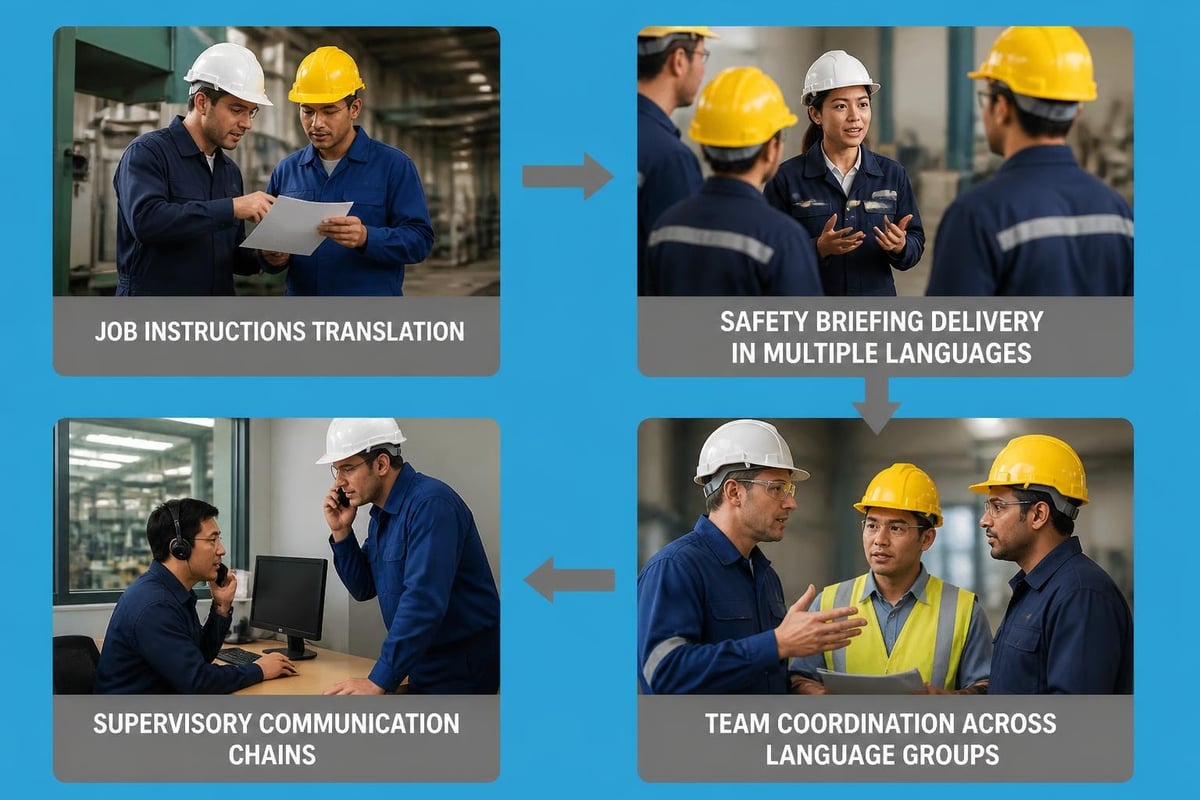
The staffing search process for bilingual positions requires specialized expertise. You cannot simply translate job postings and hope for results. Effective bilingual staffing search demands recruiters who understand both cultures, speak both languages fluently, and maintain deep connections within Latino professional communities. For companies operating in Louisiana, Mississippi, and Alabama, this expertise makes the difference between a successful placement and a failed search.
Construction Staffing Search: Speed Meets Safety
Construction projects operate on tight deadlines with zero margin for staffing errors. Your staffing search must deliver qualified, safety-certified personnel immediately, or you face costly delays and potential safety incidents. The construction staffing search process differs fundamentally from other industries because it must balance three non-negotiable requirements: speed, safety, and scalability.
The Three-Phase Construction Staffing Search Model
Phase One: Rapid Requirement Assessment
Construction staffing search begins with precise position definition. General labor? Specialized trades? Equipment operators? Each category demands different sourcing strategies, qualification criteria, and vetting processes. Effective agencies complete this assessment in hours, not days.
Phase Two: Multi-Channel Candidate Activation
Successful construction staffing search activates multiple candidate sources simultaneously:
- Internal talent databases of pre-vetted, safety-certified workers
- Industry referral networks leveraging existing workforce connections
- Targeted outreach campaigns to passive candidates with specific skills
- Community partnerships with trade schools and training programs
- Bilingual recruitment channels accessing Spanish-speaking construction professionals
Phase Three: Accelerated Vetting and Placement
Speed without quality creates liability. The final phase verifies credentials, confirms certifications, validates references, and ensures cultural fit before placement. Top-tier warehouse recruitment agencies and construction staffing specialists complete this process in 48-72 hours for standard positions.
Maritime Sector Staffing Search Complexities
Maritime staffing search introduces additional layers of complexity that require specialized industry knowledge. You're not just finding workers. You're securing personnel who meet strict Coast Guard requirements, possess specialized marine certifications, and understand the unique demands of port operations, shipyard work, and maritime logistics.
Maritime staffing search success factors include:
- Certification verification (TWIC cards, Maritime Safety certifications)
- Security clearance processes for port and vessel access
- Physical fitness standards for demanding maritime work
- Specialized trade skills (welding, rigging, marine electrical)
- Emergency response training (firefighting, first aid, evacuation)
The maritime sector also faces intense competition for qualified talent. Major ports across the Gulf South compete for the same pool of certified workers, making staffing search strategy critical. Companies that rely on reactive job posting strategies lose the best candidates to employers with proactive talent pipelines.
| Maritime Position Type | Average Time-to-Fill (Industry) | Specialized Staffing Search Time-to-Fill |
|---|---|---|
| Marine Welder | 45-60 days | 10-14 days |
| Rigging Specialist | 30-45 days | 7-10 days |
| Port Equipment Operator | 20-30 days | 5-7 days |
| Maritime Electrician | 50-65 days | 12-18 days |
| General Maritime Labor | 10-15 days | 2-4 days |
These dramatic time differences explain why employers increasingly partner with specialized agencies rather than attempting maritime staffing search internally.
Building Long-Term Staffing Search Partnerships
The most successful companies don't treat staffing search as a transactional vendor relationship. They build strategic partnerships with agencies that understand their culture, anticipate their needs, and maintain ready talent pipelines for recurring requirements. This partnership approach transforms staffing search from a reactive scramble into a proactive workforce strategy.
Partnership benefits over transactional staffing search:
- Pre-vetted candidate pools ready for immediate deployment
- Customized recruitment strategies aligned with your specific needs
- Cultural integration support for diverse workforce management
- Ongoing talent pipeline development for future requirements
- Dedicated account management ensuring consistency and responsiveness
Strategic staffing search partnerships also provide valuable market intelligence. Your agency partner becomes a resource for compensation benchmarking, skills availability trends, and competitive recruiting insights that inform your broader workforce planning.
When evaluating potential staffing search partners, assess these critical capabilities:
- Industry specialization: Do they truly understand your sector's unique requirements?
- Geographic coverage: Can they source talent across your operational footprint?
- Cultural competency: Do they access diverse talent pools including bilingual candidates?
- Safety commitment: Do they prioritize safety certifications and compliance?
- Technology infrastructure: Do they leverage modern tools for efficiency?
- Placement track record: Can they demonstrate consistent, successful placements?

Compliance and Legal Considerations in Staffing Search
Effective staffing search must navigate increasingly complex legal and regulatory requirements. The EEOC's guidance on AI and automated systems in hiring emphasizes that employers remain legally responsible for discriminatory outcomes even when using third-party recruiting technology or staffing agencies.
Your staffing search process must ensure:
- Non-discriminatory candidate screening that complies with EEOC regulations
- Proper classification of employees versus independent contractors
- Immigration verification through I-9 compliance and E-Verify
- Background check compliance following FCRA requirements
- Drug testing protocols that meet industry and legal standards
- Workers' compensation coverage and liability protection
Professional staffing search partners assume much of this compliance burden, but employers must still verify that their agencies maintain appropriate standards. The UK Government's responsible AI in recruitment guide offers valuable international perspective on governance and risk management applicable to U.S. staffing search practices.
Data Privacy in Staffing Search Operations
Staffing search inherently involves collecting, storing, and processing sensitive candidate information. Your staffing search partner must maintain robust data security practices protecting candidate privacy while ensuring information accessibility for legitimate business purposes. This balance becomes particularly critical when working with bilingual staffing solutions serving diverse candidate populations who may have heightened privacy concerns.
Industry-Specific Staffing Search Strategies
Different industries demand fundamentally different staffing search approaches. What works for office administration fails completely for skilled trades. What succeeds in construction proves inadequate for maritime operations. Let's examine proven strategies across key sectors.
Industrial Staffing Search Strategy
Industrial staffing search prioritizes certification verification and safety culture fit above all else. Your search begins by defining precise technical requirements, then activates specialized recruiting channels targeting certified tradespeople. The most effective industrial staffing search leverages:
- Trade union partnerships and referral networks
- Technical school and apprenticeship program relationships
- Industry association connections
- Veteran transition programs (military skills often transfer perfectly to industrial trades)
- Bilingual outreach to Spanish-speaking skilled tradesperson communities
Construction Staffing Search Strategy
Construction staffing search demands speed and scalability while maintaining unwavering safety standards. Projects ramp up quickly, and delays cost thousands daily. Successful construction staffing search maintains:
- Pre-qualified talent pools across all major trade categories
- Rapid deployment systems for general labor requirements
- Specialized recruiter networks for hard-to-fill positions
- Multi-language candidate communication for diverse crews
- Safety certification tracking and renewal management
Transportation and Logistics Staffing Search
Transportation staffing search centers on licensing verification and driving record assessment. Every CDL driver represents significant liability exposure, making thorough vetting non-negotiable. Effective transportation staffing search includes:
- MVR (motor vehicle record) review and ongoing monitoring
- DOT physical examination coordination
- Drug and alcohol testing program management
- CDL endorsement verification for specialized cargo
- Bilingual driver pools for improved logistics flexibility
The best staffing agencies maintain established processes across all these industry-specific requirements, delivering consistent quality regardless of sector complexity.
Measuring Staffing Search Effectiveness
You cannot improve what you don't measure. Effective staffing search demands rigorous performance tracking across multiple metrics that reveal both efficiency and quality outcomes. Research from Stanford's policy institute demonstrates that data-driven hiring approaches consistently outperform intuition-based methods.
Critical staffing search performance metrics:
| Metric | Target Benchmark | Strategic Importance |
|---|---|---|
| Time-to-Fill | 10-14 days (skilled trades) | Speed indicator, operational impact |
| Quality-of-Hire | 85%+ retention at 90 days | Long-term placement success |
| Source Effectiveness | 60%+ from top 3 sources | Channel optimization, ROI focus |
| Candidate Experience Score | 4.0+ (5-point scale) | Employer brand, future pipeline |
| Cost-per-Hire | Industry-competitive | Financial efficiency |
| Safety Incident Rate | Zero tolerance | Risk management, compliance |
| Cultural Fit Assessment | 90%+ positive manager feedback | Team integration, retention |
These metrics provide objective evidence of staffing search performance, enabling continuous improvement and strategic refinement. Your staffing search partner should provide transparent reporting across all relevant metrics, demonstrating value and identifying optimization opportunities.
Frequently Asked Questions
What is staffing search and how does it differ from traditional recruiting?
Staffing search is a specialized, proactive approach to identifying, vetting, and placing qualified candidates for specific workforce needs. Unlike traditional recruiting that relies primarily on job postings and applicant flow, staffing search actively pursues candidates through multiple channels including direct outreach, industry networks, referral systems, and specialized talent databases. Staffing search emphasizes speed, quality, and industry-specific expertise, particularly for hard-to-fill positions requiring certifications, specialized skills, or cultural competencies.
How long does an effective staffing search typically take?
Staffing search timelines vary significantly based on position complexity, industry requirements, and market conditions. General labor positions typically fill within 48-72 hours through established staffing search processes. Skilled trades positions requiring specific certifications generally require 7-14 days for comprehensive vetting and placement. Highly specialized roles with uncommon skill combinations may extend to 3-4 weeks. Agencies with robust talent pipelines and proactive staffing search strategies consistently deliver 40-60% faster placements than companies conducting internal searches.
What makes bilingual staffing search particularly valuable?
Bilingual staffing search unlocks access to highly skilled Spanish-speaking professionals who bring exceptional trade expertise, strong work ethics, and safety consciousness to industrial, construction, and maritime projects. This specialized staffing search approach requires cultural competency, Spanish fluency among recruiters, and deep connections within Latino professional communities. Companies leveraging bilingual staffing search gain competitive advantages through improved team communication, enhanced workplace safety, greater workforce scalability, and access to talent pools competitors cannot reach effectively.
How do safety certifications factor into industrial staffing search?
Safety certifications are non-negotiable requirements in industrial staffing search processes. Effective staffing search verifies OSHA certifications, confined space training, equipment-specific credentials, emergency response qualifications, and industry-specific safety programs before placement. Professional staffing search partners maintain certification tracking systems, coordinate renewal training, and ensure continuous compliance. This rigorous approach to safety in staffing search protects employers from liability, reduces workplace incidents, and ensures project continuity.
What technology improvements are transforming staffing search in 2026?
Modern staffing search leverages applicant tracking systems for pipeline management, AI-powered candidate matching for initial screening, skills assessment platforms for competency verification, automated reference checking tools, and analytics dashboards for performance tracking. However, successful staffing search maintains human expertise for final candidate evaluation, cultural fit assessment, and relationship management. Technology accelerates staffing search processes without replacing the judgment and industry knowledge that separate exceptional placements from adequate ones.
How can I evaluate staffing search agencies before partnering?
Evaluate potential staffing search partners by examining their industry specialization depth, geographic coverage alignment with your needs, safety commitment and compliance track record, bilingual capabilities for diverse workforce access, technology infrastructure supporting efficient processes, and verifiable placement success rates. Request specific examples of similar staffing search projects, speak with current clients about their experiences, and assess the agency's cultural competency and responsiveness. Superior staffing search agencies demonstrate expertise through case studies, transparent metrics, and industry recognition.
What role does cultural fit play in effective staffing search?
Cultural fit represents a critical staffing search component that significantly impacts retention, team cohesion, and long-term success. Effective staffing search assesses work style compatibility, communication preferences, safety culture alignment, and team collaboration capabilities alongside technical qualifications. This holistic staffing search approach reduces turnover, minimizes workplace conflicts, and accelerates new hire productivity. Cultural fit assessment requires experienced recruiters who understand both client company culture and candidate backgrounds thoroughly.
Why should I choose CDR General Services for my staffing search needs?
CDR General Services delivers unmatched staffing search expertise across industrial, construction, and maritime sectors throughout the Gulf South region. Our specialized staffing search approach combines safety-first commitment, rigorous certification verification, and unparalleled access to bilingual Spanish-speaking talent pools that competitors simply cannot match. We maintain ready-to-deploy candidate pipelines, complete staffing search projects 50% faster than industry averages, and provide culturally competent workforce solutions that seamlessly integrate into your operations. Our minority-owned agency brings deep local expertise and accountability that transforms staffing search from a vendor transaction into a strategic partnership.
What are the most common staffing search mistakes companies make?
Common staffing search failures include relying exclusively on job postings instead of proactive candidate pursuit, prioritizing speed over quality leading to poor retention, neglecting cultural fit assessment resulting in team conflicts, ignoring bilingual talent pools that offer competitive advantages, failing to verify safety certifications creating liability risks, and treating staffing search as transactional rather than building strategic partnerships. Successful companies avoid these mistakes by partnering with specialized agencies that bring expertise, established processes, and proven staffing search methodologies.
How can CDR General Services accelerate my staffing search timeline?
CDR General Services accelerates your staffing search through pre-vetted talent databases maintained across all major trade categories, established relationships within industrial, construction, and maritime professional communities, bilingual recruiting capabilities accessing Spanish-speaking talent pools unavailable to competitors, streamlined certification verification systems, and dedicated account management ensuring immediate responsiveness. Our proactive staffing search approach means candidates are ready for deployment when you need them, not weeks later after lengthy recruiting cycles. Contact us today to experience the decisive difference that specialized staffing search expertise delivers for your critical workforce needs.
Mastering staffing search in 2026 requires specialized expertise, industry knowledge, and access to diverse talent pools that deliver immediate results. CDR General Services combines unmatched bilingual staffing capabilities with safety-first commitment and deep Gulf South regional expertise across industrial, construction, and maritime sectors. Our proactive staffing search methodology maintains ready-to-deploy candidate pipelines that eliminate costly delays and ensure project success. Contact CDR General Services today to transform your workforce strategy with staffing search solutions that competitors simply cannot match.
Published November 3, 2026 by Sanya
All articles