


Superior Safety-Certified Skilled Trades: The 2025 Guide


The demand for superior safety-certified skilled trades is reaching new heights in 2025, reshaping how industries hire and operate. Unqualified labor is no longer an option—industrial, construction, and maritime sectors face real risks when safety standards are ignored.
Employers and workers now recognize that superior safety certification is the standard, not a bonus. This comprehensive guide gives you a direct roadmap to sourcing, training, and maintaining the best workforce.
You will learn how to define what makes safety certification “superior,” navigate regulatory changes, find and keep top talent, leverage technology, and future-proof your team. Let’s set the new benchmark for safety together.
What Defines “Superior Safety-Certified” Skilled Trades in 2025?
In 2025, the demand for superior safety-certified skilled trades is setting a new gold standard for what it means to be a top-tier tradesperson. Employers, clients, and regulators are no longer satisfied with basic compliance. Instead, they expect elevated credentials, continuous learning, and proof of competence across diverse, high-risk environments. Let’s break down what this truly means for your workforce.

Evolving Safety Standards and Certifications
The landscape for superior safety-certified skilled trades is rapidly advancing. Essential certifications like OSHA, NCCER, and MSHA are now baseline expectations, but 2025 brings expanded requirements. New credentials in robotics safety, digital compliance, and high-risk energy sectors are emerging.
A 2024 survey found that 86 percent of employers require at least one advanced safety certification. Third-party verification and digital credentialing are now routine. Bilingual and multicultural training is integrated into the certification process, ensuring every worker can access and understand critical safety protocols.
Key Skills and Competencies for Modern Tradespeople
Technical expertise is only one part of the equation for superior safety-certified skilled trades in 2025. Today’s job sites demand fluency in automation, digital tools, and data-driven safety systems.
Just as vital are soft skills: communication, teamwork, adaptability, and problem-solving. Safety leadership and peer accountability are non-negotiable. Multicultural competence and language skills are powerful assets, proven to reduce incident rates by 25 percent for multilingual teams. Building these competencies is essential for any organization committed to excellence.
Industry-Specific Certification Requirements
Superior safety-certified skilled trades must meet sector-specific requirements. In construction, expect scaffold, confined space, fall protection, and electrical safety certifications. The industrial sector prioritizes lockout/tagout, hazardous materials, and machine guarding. Maritime trades require STCW, HAZWOPER, and vessel security credentials. Transportation roles demand DOT, FMCSA, and heavy equipment operator safety.
Regional and employer-specific rules add another layer, making it crucial to stay updated and invest in ongoing credentialing for every skilled worker.
Superior Safety Culture: Beyond Certification
Certification is the starting line, not the finish. For superior safety-certified skilled trades, the real game changer is a mature safety culture. This means toolbox talks, near-miss reporting, and engaged safety committees are the norm. Leadership must show visible buy-in and empower every employee.
Companies with mature safety cultures report 60 percent fewer recordable incidents. The right culture not only protects lives—it keeps your best people on the job and builds long-term loyalty.
The ROI of Superior Safety Certification
Investing in superior safety-certified skilled trades delivers measurable returns. Fewer injuries mean lower costs, less downtime, and higher productivity. Enhanced reputation and client trust follow, alongside compliance with insurance and legal standards.
For every dollar invested in safety, businesses see four dollars in savings, according to the National Safety Council. Want more proof? Check out the latest Workplace Safety Statistics 2023 to see how top performers set themselves apart. Superior safety is a smart business move.
Navigating Regulatory Changes and Compliance in 2025
Navigating the regulatory landscape in 2025 is more complex than ever for anyone responsible for superior safety-certified skilled trades. Staying ahead of evolving rules is not just about avoiding fines, but about building a workforce that leads the industry in compliance and safety performance.
Major Regulatory Updates Impacting Skilled Trades
In 2025, regulatory agencies are raising the bar for superior safety-certified skilled trades. OSHA’s new standards prioritize digital record-keeping, stricter enforcement, and expanded coverage for emerging risks like automation and remote work. State-level rules, especially in the Gulf South, require updated certifications for high-risk tasks. Maritime and transportation sectors face compliance shifts around vessel security and hazardous materials.
Louisiana’s recent changes mean construction employers must document all safety training and certifications digitally. To understand where most companies fall short, review the Top OSHA Violations 2024, which highlights compliance blind spots for safety-certified trades.
Meeting and Exceeding Compliance Requirements
To remain competitive, you need to audit your current safety programs for alignment with new regulations. Start by reviewing all documentation and ensuring digital record retention. Use technology to track compliance in real time, and implement third-party audits for unbiased verification. Superior safety-certified skilled trades programs often leverage compliance management software to streamline processes.
Best practices include:
- Digitizing all certification records
- Scheduling regular compliance reviews
- Training staff on new regulatory requirements
By integrating these steps, your team will exceed minimum standards, setting a new benchmark for safety.
Penalties and Risks of Non-Compliance
Failing to comply with 2025 regulations can devastate your business. Penalties include hefty fines, site shutdowns, and contract losses. Legal liability grows if an incident reveals lapsed or invalid credentials among your superior safety-certified skilled trades. Insurance premiums can spike, and your reputation may suffer irreparable damage.
For example, a major Gulf Coast contractor was fined $250,000 for certification lapses that led to project delays. Most companies fined in 2024 lacked digital compliance systems, underscoring the need for robust credential tracking.
Building a Proactive Compliance Strategy
Winning organizations appoint compliance officers and empower safety champions on every team. Ongoing training, regular refresher courses, and active worker engagement are essential for superior safety-certified skilled trades. Use predictive analytics to spot compliance risks before they escalate.
A Mississippi industrial firm reduced incident rates by 40 percent through proactive compliance—proof that leadership and technology drive real results. Building a culture of continuous improvement ensures your workforce stays ahead of regulatory changes and remains the gold standard in safety.
Sourcing and Retaining Superior Safety-Certified Talent
Building a workforce of superior safety-certified skilled trades is the foundation of operational excellence in 2025. With talent shortages and rising standards, finding and keeping these professionals is both art and science. Let’s break down what works.

Where to Find Top Safety-Certified Skilled Trades
If you want to hire the best, you need to know where to look. Superior safety-certified skilled trades are found through a blend of traditional and modern channels:
- Partner with accredited training institutions and trade schools that emphasize advanced safety protocols.
- Tap into industry associations and apprenticeship programs, which often prioritize up-to-date certifications.
- Explore digital talent marketplaces designed for trades, giving you access to a broader pool of pre-qualified candidates.
- Work with local workforce boards and community colleges for diverse, community-rooted hires.
- Leverage referral networks—60 percent of skilled trades hires in 2024 came from trusted referrals.
Every sourcing method should align with your commitment to superior safety-certified skilled trades, ensuring each hire brings not just skills, but a safety-first mindset.
Evaluating and Verifying Candidate Credentials
Screening for superior safety-certified skilled trades requires more than a resume check. Start with best practices:
- Use digital credentialing platforms and blockchain verification for authenticity.
- Request supporting documentation and verify through issuing organizations.
- Ask targeted interview questions to assess candidates’ safety mindset and practical knowledge.
- Watch for red flags, such as expired, forged, or unverifiable credentials.
- Implement a robust credential check system—one company avoided $100,000 in liability by catching a lapse early.
The goal is clear: only bring on superior safety-certified skilled trades who can prove their credentials and live up to your safety expectations.
Creating an Attractive Value Proposition for Skilled Tradespeople
If you want to attract and keep superior safety-certified skilled trades, your offer must stand out. Here’s what top talent values:
- Competitive pay and comprehensive benefits tailored for certified professionals.
- Ongoing training, upskilling, and support for advanced certifications.
- Recognition programs that celebrate safety excellence and achievement.
- An inclusive workplace culture with real opportunities for career growth.
- Data shows 78 percent of tradespeople prefer ongoing education over pay raises, making development non-negotiable.
Build an employee value proposition that matches the ambition and standards of superior safety-certified skilled trades.
CDR General Services: Your Source for Safety-Certified, Diverse Talent
CDR General Services is the Gulf South’s authority in supplying superior safety-certified skilled trades. Our specialty? Multicultural, bilingual staffing that bridges communication gaps, especially in Spanish-speaking teams.
Every candidate undergoes rigorous safety training and thorough certification verification. We deliver:
- Flexible, scalable workforce solutions for industrial, construction, and maritime projects.
- Deep market knowledge and a relentless safety-first approach.
- Reliable, accountable staffing with a proven track record in superior safety-certified skilled trades.
When you need a workforce that exceeds both safety and diversity expectations, CDR General Services delivers.
Retention Strategies for Superior Talent
Retaining superior safety-certified skilled trades is a long game. The best companies invest in:
- Career development and clear leadership pathways.
- Mentorship programs and structured peer learning.
- Employee engagement, feedback loops, and wellness initiatives.
- Safety and health incentives that reward commitment and results.
Companies with strong development programs see retention rates 30 percent higher. For more actionable ideas, explore these employee retention strategies for 2025. Keep your superior safety-certified skilled trades engaged, growing, and loyal.
Addressing Workforce Diversity and Inclusion
Diversity is a competitive edge, especially in safety-sensitive environments. Superior safety-certified skilled trades teams thrive when inclusion is prioritized:
- Build multicultural crews to leverage a broader range of perspectives.
- Overcome language barriers with bilingual safety training and materials.
- Foster cultural competence through ongoing initiatives and open dialogue.
- Data shows diverse teams are 35 percent more likely to outperform peers on safety metrics.
The best safety outcomes come from superior safety-certified skilled trades teams who reflect the communities they serve.
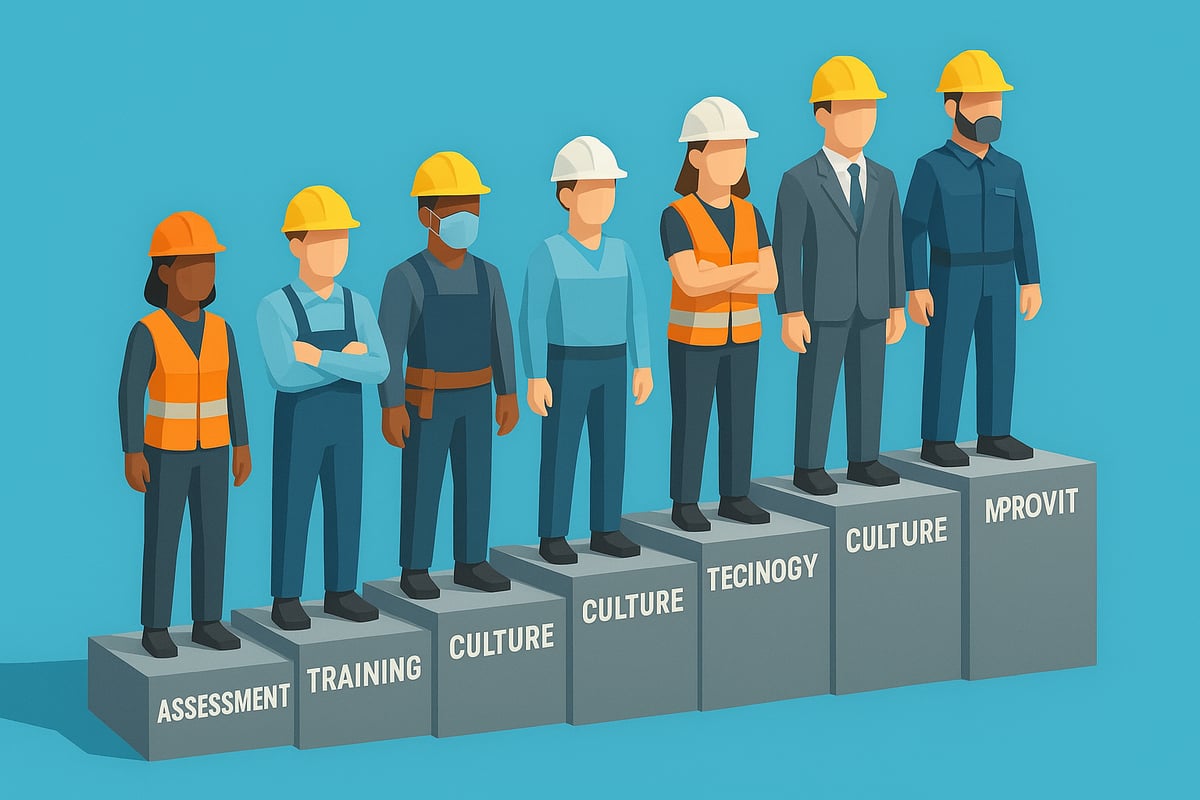
Step-by-Step Guide to Building a Superior Safety-Certified Workforce
Creating a team of superior safety-certified skilled trades is not just a box to check. It is a strategic move that drives safety, productivity, and your bottom line. Here is your roadmap for building a workforce that leads in 2025.
Step 1: Assess Current Workforce and Safety Gaps
Start with a clear-eyed audit. Review every employee’s certifications and training records. Identify high-risk positions and where compliance may be lacking. Use surveys and interviews to gather frontline feedback about your safety culture.
Compare your team’s credentials against the latest industry benchmarks. This process often uncovers that 20 percent of staff lack updated credentials. Addressing these gaps is the first step to building superior safety-certified skilled trades and reducing risk across your projects.
Step 2: Develop a Comprehensive Safety Training Plan
Design a training plan that aligns with current regulations and best practices. Include scenario-based learning so workers face real-world challenges in a controlled environment. Integrate bilingual and multicultural training to ensure every worker understands safety protocols.
Regular refresher courses and hands-on drills are essential. Companies that invest in annual training for their superior safety-certified skilled trades see incidents drop by half. Make training a cornerstone of your safety strategy, not an afterthought.
Step 3: Implement Advanced Certification Programs
Take certification to the next level. Partner with accredited providers to deliver advanced courses relevant to your industry. Use online and hybrid platforms to boost accessibility and flexibility.
Track every credential digitally, making it easy to verify and renew as needed. Cross-train your superior safety-certified skilled trades so teams can handle multiple roles. This approach increases efficiency and reduces project delays.
Step 4: Foster a Superior Safety Culture
A safety culture is more than compliance, it is how your team lives safety every day. Leadership must champion safety, setting the tone from the top. Empower employees to report hazards and near-misses without fear.
Recognize and reward safe behaviors, making safety part of daily routines and meetings. Companies with a strong culture around superior safety-certified skilled trades see lower absenteeism and higher morale, driving retention and performance.
Step 5: Leverage Technology for Safety and Compliance
Harness technology to elevate your safety game. Use mobile apps for instant hazard reporting and wearable devices for real-time monitoring. Automate compliance tracking, so certifications and documents never lapse.
Analyze safety data to spot trends and prevent incidents before they happen. Wearables have reduced fall incidents by 30 percent at some sites, a testament to what technology can do for superior safety-certified skilled trades.
Step 6: Recruit and Onboard Safety-Certified Talent
Streamline hiring with digital applications and credential verification tools. During onboarding, focus on safety protocols from day one. Assign mentors to guide new hires and reinforce expectations for ongoing certification.
For construction-specific needs, leverage Construction staffing solutions to quickly access superior safety-certified skilled trades who are vetted and ready to perform. Structured onboarding boosts retention by 25 percent, ensuring you keep your best talent.
Step 7: Monitor, Evaluate, and Continuously Improve
Set clear KPIs for safety and certification. Conduct regular audits and performance reviews to keep your team on track. Solicit input from your workforce to identify improvements and stay agile as standards evolve.
Continuous improvement is non-negotiable for superior safety-certified skilled trades. Firms that commit to this process often cut incident rates in half within a year, securing both safety and business success.
The Future of Safety-Certified Skilled Trades: Trends and Innovations
The landscape for superior safety-certified skilled trades is evolving faster than ever. Tomorrow’s workforce demands new skills, fresh perspectives, and innovative tools. Let’s break down the key trends shaping the future—and how you can stay ahead.
Technological Advancements Shaping Safety Certification
Technology is driving transformation across superior safety-certified skilled trades. Virtual reality and augmented reality are now standard tools for immersive safety training, making complex scenarios real and memorable. Artificial intelligence is optimizing risk assessment and compliance, reducing human error on job sites.
Digital badges and blockchain credentialing ensure every worker’s qualifications are transparent and tamper-proof. According to the Safety Technology Report 2024, VR-based training in skilled trades increased knowledge retention by 40 percent in pilot programs. These innovations are not optional—they’re the new baseline for a superior safety-certified skilled trades workforce.
The Growing Importance of Multicultural and Bilingual Workforces
Demographics in the trades are shifting. Multicultural and bilingual teams are becoming the backbone of superior safety-certified skilled trades. Regulatory agencies are requiring bilingual safety materials, making language skills a must-have safety asset.
Cultural competence boosts team communication and reduces incidents. Recent data shows bilingual crews reported 20 percent fewer communication-related safety issues. Companies that invest in multicultural training see a direct impact on productivity and safety outcomes. Embracing diversity is no longer just good business—it’s essential for superior safety-certified skilled trades success.
Evolving Employer Expectations and Worker Demands
Employers are rethinking what they expect from superior safety-certified skilled trades. Flexibility is in demand, with project-based staffing models replacing rigid schedules. Workers now prioritize career development, upskilling, and wellness support over traditional perks.
Firms offering flexible schedules attract twice as many applicants and retain talent longer. Superior safety-certified skilled trades professionals want opportunities to learn, grow, and lead. Meeting these expectations is crucial for attracting and retaining the best in the business.
Sustainability and Environmental Safety in Skilled Trades
Sustainability is now a core component of superior safety-certified skilled trades. Green certifications and eco-friendly site practices are becoming industry standards. Safety protocols must adapt to renewable energy, sustainable construction, and environmental compliance requirements.
The intersection of safety and sustainability is clear: green-certified job sites see 15 percent fewer safety violations. Companies that lead in both environmental and safety standards are positioned as industry benchmarks. Superior safety-certified skilled trades teams must be ready for this dual challenge.
Preparing for the Next Generation of Skilled Tradespeople
The next generation of superior safety-certified skilled trades is tech-savvy, diverse, and purpose-driven. Gen Z and Millennials expect digital recruitment, interactive training, and workplaces committed to diversity, equity, and inclusion.
Modern apprenticeship programs with digital components are boosting enrollment by 30 percent. To attract and develop top talent, companies must integrate technology, mentorship, and inclusive practices into every layer of their safety programs. The future belongs to those who invest in the next wave of superior safety-certified skilled trades leaders.
Maximizing the Value of Safety-Certified Skilled Trades for Your Business
When it comes to your bottom line, superior safety-certified skilled trades are more than a compliance checkbox. They are a catalyst for operational excellence, risk reduction, and long-term growth. Let us break down exactly how investing in this level of workforce pays off across every dimension of your business.
Boosting Productivity and Reducing Downtime
Superior safety-certified skilled trades deliver results you can measure. Certified workers follow best practices, spot hazards instantly, and keep projects moving. This expertise means fewer stoppages, less rework, and more uptime.
Want to see the numbers? Certified teams regularly finish projects 10 percent faster than uncertified crews. Companies with superior safety-certified skilled trades also win 20 percent more contracts by consistently meeting deadlines and exceeding safety expectations. If you want to maximize uptime and efficiency, invest in the right talent from the start.
Enhancing Brand Reputation and Client Trust
In a competitive market, your reputation is everything. Superior safety-certified skilled trades are the backbone of trust with clients and partners. Transparent safety records, third-party audits, and visible credentials set you apart.
For maritime projects, working with a provider focused on maritime staffing for safety standards ensures your crews meet the strictest sector requirements, giving clients peace of mind. Firms with public safety records attract three times more repeat business, turning safety into your most valuable marketing asset.
Lowering Insurance and Legal Costs
Insurance companies know the value of superior safety-certified skilled trades. Certified teams drive down premiums, reduce claims, and cut legal risks. Here is how the numbers stack up:
| Benefit | Impact |
|---|---|
| Insurance Premiums | 12% reduction |
| Legal Claims | Fewer settlements |
| Compliance Fines | Lower risk of penalties |
| Contractual Compliance | Higher win rates |
By partnering with experts in industrial staffing expertise, you ensure every credential is verified, reducing exposure and protecting your profits.
Supporting Workforce Development and Community Impact
Superior safety-certified skilled trades not only strengthen your team, they elevate your community. Investing in local talent and upskilling programs creates new career paths and drives economic growth.
Support for underrepresented groups and partnerships with community organizations ripple outward, reducing unemployment by 8 percent in regions that prioritize safety investment. The impact is real: safe, skilled jobs transform lives and neighborhoods.
Action Steps for Business Leaders in 2025
Ready to seize the advantage? Start with a full safety and certification audit of your current workforce. Partner with proven staffing and training experts to fill any gaps fast. Build a continuous improvement plan, engage your team in safety leadership roles, and stay ahead of changing standards.
Superior safety-certified skilled trades are your competitive edge in 2025. Take decisive action today to position your business for growth, resilience, and lasting success.