


Blog
Man Power Staffing Solutions: Your 2026 Complete Guide


Man power staffing has evolved from a simple hiring solution into a strategic business imperative that drives operational excellence across industrial, construction, and maritime sectors. In 2026, organizations face unprecedented challenges in securing qualified personnel who meet rigorous safety standards while delivering measurable productivity gains. The companies that thrive understand that workforce solutions extend far beyond filling vacant positions-they require partnering with staffing agencies that deliver specialized talent, cultural competency, and unwavering accountability.
The Strategic Value of Man Power Staffing in Modern Industry
The staffing landscape has fundamentally shifted. Businesses no longer have the luxury of posting a job and waiting for qualified candidates to appear. According to recent staffing industry trends, the normalization of the staffing market combined with skills-based hiring has created a competitive environment where only the most strategic employers secure top talent.
Man power staffing agencies serve as force multipliers for organizations that demand excellence. They maintain pre-vetted talent pools, conduct rigorous safety certifications, and provide scalable workforce solutions that adapt to project timelines and seasonal demands.
The competitive advantages include:
- Immediate access to certified skilled trades professionals
- Reduced time-to-hire from weeks to days
- Elimination of recruitment overhead costs
- Mitigation of hiring risks through pre-screened candidates
- Flexible workforce scaling without long-term commitments
Industry sectors benefiting most from man power staffing:
- Industrial manufacturing and production facilities
- Construction projects requiring specialized trades
- Maritime operations and port logistics
- Transportation and warehousing distribution
- Infrastructure development and maintenance
The Gulf South region presents unique staffing challenges. Projects demand workers who understand local regulations, climate considerations, and industry-specific safety protocols. Generic staffing solutions fail because they lack regional expertise and cultural alignment.
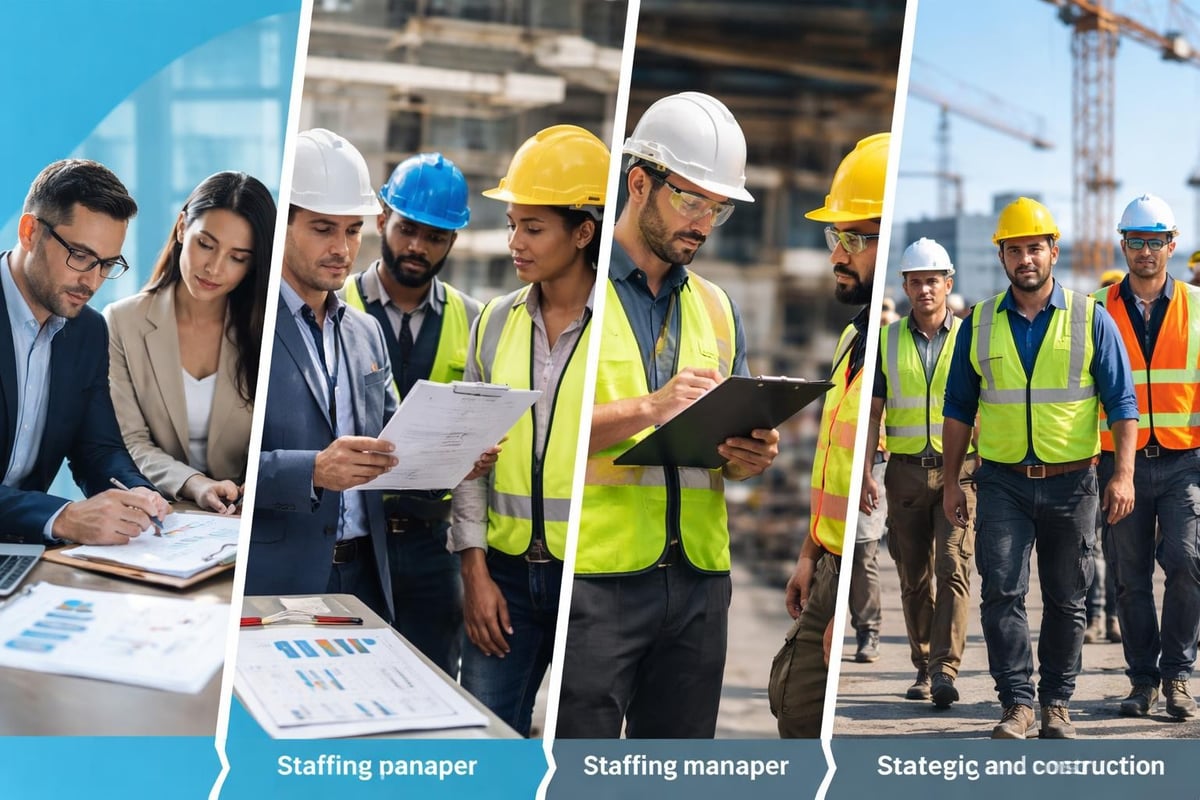
Critical Skilled Trades Categories Driving Demand
Man power staffing requirements vary significantly across industries, but certain skilled trades remain consistently in demand throughout 2026. Organizations that secure these professionals gain immediate competitive advantages in project execution and operational efficiency.
Industrial and Manufacturing Specialists
Certified welders represent the backbone of industrial operations. These professionals must demonstrate mastery of multiple welding techniques, understand metallurgy principles, and maintain current safety certifications. Pipefitters work alongside welders, ensuring complex piping systems meet exact specifications for pressure, temperature, and flow requirements.
Electricians with industrial certifications handle high-voltage systems, programmable logic controllers, and automated machinery integration. Heavy equipment operators certified on excavators, bulldozers, cranes, and specialized machinery enable project momentum that determines completion timelines.
| Skilled Trade | Certification Requirements | Average Project Duration |
|---|---|---|
| Certified Welders | AWS/ASME credentials, safety training | 3-12 months |
| Pipefitters | Journeyman certification, blueprint reading | 4-18 months |
| Industrial Electricians | State license, OSHA 30-hour | 2-24 months |
| Equipment Operators | NCCCO certification, equipment-specific | 1-6 months |
Construction and General Labor Teams
Construction sites require coordinated teams that execute according to strict timelines and safety protocols. General laborers provide foundational support-site preparation, material handling, cleanup, and basic construction tasks. Their reliability determines whether specialized trades can maintain productivity.
Carpenters, masons, and concrete finishers bring technical expertise to structural elements. Logistics coordinators ensure materials arrive on schedule, equipment remains operational, and workforce deployment matches project phases.
The most successful construction man power staffing strategies emphasize team cohesion. Workers who communicate effectively, understand safety protocols, and maintain consistent attendance create the foundation for on-time, on-budget project completion.
The Bilingual Advantage: Spanish-Speaking Workforce Solutions
The staffing industry’s dirty secret is this: most agencies cannot deliver truly bilingual, culturally competent workforce solutions. They claim diversity capabilities while providing surface-level language services that create communication breakdowns, safety incidents, and productivity losses.
The Spanish-speaking workforce advantage delivers:
- Enhanced safety compliance: Instructions understood completely, reducing incident rates
- Improved productivity: Clear communication eliminates costly misunderstandings
- Team cohesion: Cultural alignment creates stronger working relationships
- Broader talent access: Tapping into skilled professionals overlooked by competitors
- Client satisfaction: Seamless project execution without language barriers
Organizations operating in Louisiana, Mississippi, Alabama, and Kentucky increasingly recognize that Spanish-specialty staffing isn’t a nice-to-have feature. It’s a competitive requirement. Construction projects, industrial facilities, and maritime operations throughout the Gulf South employ diverse teams where bilingual capabilities determine success or failure.
The expertise required extends beyond translation services. Effective bilingual staffing requires understanding cultural nuances, communication styles, and team dynamics that maximize the Latino workforce’s proven reliability and work ethic.

Transportation and Logistics Workforce Requirements
The backbone of modern commerce depends on qualified transportation and logistics professionals. CDL drivers holding Class A and Class B licenses move materials, equipment, and products that keep industries operational. The current staffing market dynamics demonstrate continued strong demand for certified drivers across commercial sectors.
CDL Driver Specializations
Class A CDL drivers operate tractor-trailers, tanker trucks, and combination vehicles exceeding 26,001 pounds. They require specialized endorsements for hazardous materials, doubles/triples configurations, and passenger transport. Class B drivers handle straight trucks, box trucks, and delivery vehicles, providing essential last-mile logistics.
Man power staffing for transportation demands rigorous verification:
- Current CDL license validation and endorsement confirmation
- Clean driving record review and accident history analysis
- DOT physical examination and drug screening compliance
- Hours of service regulation understanding and log book management
- Safety training completion and defensive driving certification
Warehouse and Distribution Personnel
Forklift operators certified on various equipment types (sit-down, stand-up, reach trucks, order pickers) enable efficient warehouse operations. Their productivity directly impacts inventory accuracy, order fulfillment speed, and operational costs.
Warehouse personnel must demonstrate attention to detail, physical stamina, and commitment to safety protocols. The most valuable workers understand inventory management systems, quality control processes, and continuous improvement methodologies.
| Position | Key Requirements | Typical Shift Structure |
|---|---|---|
| Class A CDL Driver | Valid license, clean record, 2+ years experience | Regional routes, 10-14 hour shifts |
| Forklift Operator | OSHA certification, equipment-specific training | 8-12 hour shifts, rotating schedules |
| Warehouse Associate | Physical ability, attention to detail, team skills | 8-10 hour shifts, day/night rotation |
| Logistics Coordinator | Computer proficiency, organizational skills | Standard business hours, on-call availability |
Administrative and Clerical Staffing Excellence
Every industrial operation, construction project, and logistics facility requires administrative backbone. Professional office staff manage documentation, coordinate schedules, process payroll, handle compliance reporting, and maintain communication between field operations and executive leadership.
Man power staffing for administrative roles demands different evaluation criteria than skilled trades. Organizations need professionals with technological proficiency, communication excellence, and organizational capabilities that keep complex operations running smoothly.
Critical administrative positions include:
- Project coordinators managing timelines, budgets, and stakeholder communication
- Safety administrators maintaining OSHA compliance and incident documentation
- Human resources specialists handling onboarding, benefits, and employee relations
- Accounting clerks processing invoices, expenses, and financial reporting
- Executive assistants supporting leadership with scheduling and correspondence
The best administrative staffing solutions provide candidates who understand industry-specific requirements. A clerical worker supporting construction operations must comprehend permitting processes, subcontractor management, and project documentation requirements that differ significantly from general office administration.
Safety-First Commitment: Non-Negotiable Standards
Here’s the truth that separates professional staffing agencies from order-takers: safety isn’t a checkbox exercise. It’s the foundational principle that determines whether workers return home healthy and whether clients avoid devastating incidents, regulatory penalties, and reputation damage.
Every worker deployed through man power staffing must meet rigorous safety standards. According to staffing industry best practices for employee safety, staffing firms bear responsibility for promoting safe work environments and ensuring personnel understand hazard recognition and mitigation.
Comprehensive Safety Certification Requirements
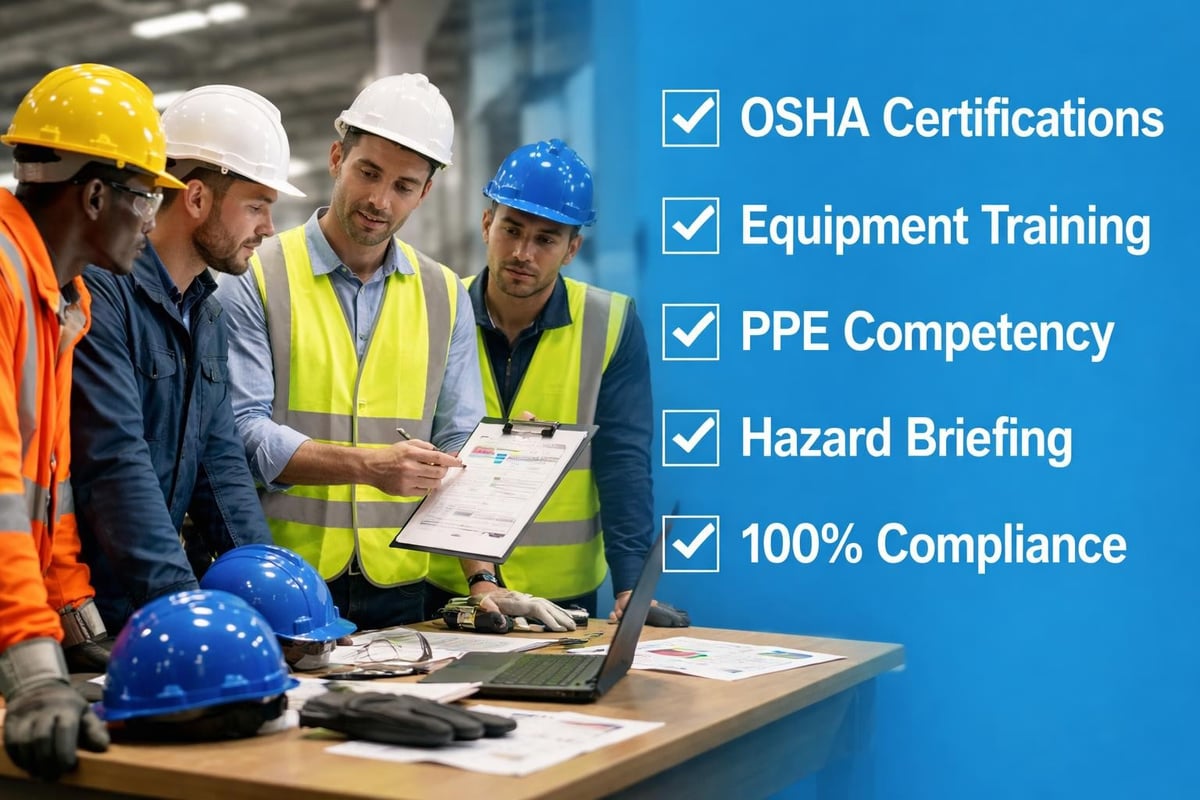
Workers entering industrial, construction, and maritime environments must complete OSHA 10-hour or 30-hour training appropriate to their role complexity. Site-specific safety orientations address unique hazards, emergency procedures, and equipment operation protocols.
Personal protective equipment training ensures workers properly use hard hats, safety glasses, gloves, hearing protection, respirators, and fall protection systems. Confined space entry, lockout/tagout procedures, and hazardous material handling require additional specialized certifications.
The safety-first staffing process includes:
- Pre-deployment safety certification verification and documentation review
- Job-specific hazard briefings aligned with client site requirements
- Ongoing safety performance monitoring and incident investigation participation
- Continuous safety education and refresher training coordination
- Zero-tolerance enforcement for safety violations and non-compliance
Organizations that compromise on safety credentials inevitably face consequences. Accidents destroy productivity, damage client relationships, trigger regulatory scrutiny, and create legal liability. Professional man power staffing agencies eliminate these risks through uncompromising safety standards.
Technology Integration and Workforce Management
The transformative role of AI and automation in staffing has revolutionized how agencies match talent with opportunities. Modern man power staffing leverages sophisticated platforms that track certifications, monitor availability, analyze performance data, and predict workforce requirements.
Real-time workforce management systems provide clients with transparent visibility into deployed personnel, time tracking, credential status, and performance metrics. This technological integration enables data-driven decisions about workforce optimization and resource allocation.
Mobile applications allow workers to receive shift notifications, confirm assignments, access safety documentation, and report incidents immediately. Clients gain instant communication channels for workforce adjustments, emergency notifications, and performance feedback.
Technology-enabled staffing advantages:
- Predictive analytics forecasting workforce needs based on project timelines
- Automated credential monitoring preventing expired certification deployment
- Performance tracking identifying top performers for critical assignments
- Compliance documentation maintaining audit-ready safety and training records
- Client portals providing 24/7 access to workforce data and reporting
The competitive edge comes from combining technological capabilities with human expertise. Algorithms identify potential matches, but experienced staffing professionals understand the nuanced requirements that determine job success versus failure.
Regional Expertise: Gulf South Workforce Dynamics
The Gulf South region spanning Louisiana, Mississippi, Alabama, and Kentucky presents distinct workforce characteristics that generic national staffing agencies fail to understand. Climate conditions, regulatory environments, union considerations, and cultural factors create unique staffing requirements.
Louisiana’s industrial corridor demands workers experienced with petrochemical facilities, refinery operations, and offshore maritime logistics. Mississippi’s manufacturing base requires skilled trades familiar with automotive production, aerospace assembly, and distribution operations. Alabama’s steel industry and port facilities need specialized certifications and equipment expertise. Kentucky’s logistics hubs and manufacturing clusters seek warehouse professionals and CDL drivers with regional route knowledge.
Successful man power staffing in these markets requires local presence, established relationships with training providers, and deep understanding of regional labor dynamics. Workers familiar with Gulf Coast weather patterns, hurricane preparedness, and seasonal project cycles deliver reliability that imported labor cannot match.
| State | Primary Industries | Top Skilled Trades Demand |
|---|---|---|
| Louisiana | Petrochemical, Maritime, Construction | Welders, Pipefitters, Heavy Equipment Operators |
| Mississippi | Manufacturing, Logistics, Agriculture | Forklift Operators, Production Workers, CDL Drivers |
| Alabama | Steel, Automotive, Port Operations | Electricians, Equipment Operators, Logistics Personnel |
| Kentucky | Manufacturing, Distribution, Infrastructure | Warehouse Associates, CDL Drivers, General Labor |
Scalable Workforce Solutions for Project Success
The fundamental value proposition of man power staffing is scalability. Projects expand and contract based on timelines, weather conditions, material availability, and client requirements. Organizations cannot maintain permanent headcount for peak demand periods without accepting massive inefficiency during slower periods.
Strategic staffing partnerships provide the flexibility to scale workforce size precisely to operational requirements. A construction project might need five workers during foundation phases, twenty-five during structural erection, and ten during finishing work. Industrial maintenance shutdowns might require fifty additional technicians for three weeks, then return to baseline staffing.
This scalability extends beyond simple headcount adjustments. Different project phases require different skill combinations. Early construction stages need equipment operators and general laborers. Mid-phases demand specialized trades-welders, electricians, pipefitters. Final stages require finish carpenters, painters, and cleanup crews.
Effective workforce scaling requires:
- Advance planning communicating projected workforce needs by phase
- Flexible deployment allowing rapid personnel additions or reductions
- Cross-trained workers capable of adapting to changing requirements
- Backup personnel ready for unexpected absences or turnover
- Performance monitoring identifying productivity optimization opportunities
Organizations that view man power staffing as purely transactional miss the strategic partnership opportunity. The best relationships involve collaborative planning where staffing agencies become workforce strategy advisors, not just order fulfillers.
Strategic man power staffing delivers the qualified, safety-certified workforce that drives operational excellence across industrial, construction, and maritime sectors. Organizations that partner with specialized agencies gain immediate access to skilled trades professionals, bilingual teams, and scalable deployment capabilities that generic hiring approaches cannot provide. When you need reliable, ready-to-work personnel backed by uncompromising safety standards and regional expertise, CDR General Services stands ready to deliver workforce solutions that exceed expectations and power your project success.