


Blog
Nesco Resource Staffing Services: 2026 Industry Review


Understanding the national staffing landscape means analyzing the major players who set industry standards and shape workforce solutions. Nesco Resource staffing services represents one of the established names in the American staffing ecosystem, offering a comprehensive approach to talent acquisition across multiple sectors. For employers in the Gulf South region-particularly those in industrial, construction, and maritime industries-knowing how national firms operate provides critical context for making informed staffing decisions. This analysis examines Nesco Resource's service model, industry positioning, and what it means for businesses seeking specialized workforce solutions in 2026.
The Nesco Resource Staffing Services Model Explained
Nesco Resource operates as a staffing and recruiting firm with a nationwide presence, delivering workforce solutions across diverse industries. Their business model centers on connecting employers with temporary, temp-to-hire, and direct-hire candidates through a network of branch offices and recruiting specialists.
Core Service Architecture
The foundation of nesco resource staffing services rests on several key offerings:
- Temporary staffing for short-term projects and seasonal demand
- Direct placement services for permanent positions
- Temp-to-hire arrangements allowing employers to evaluate candidates
- Managed services for high-volume staffing requirements
- Executive search capabilities for leadership roles
Their service portfolio spans industries including manufacturing, logistics, administrative functions, and light industrial positions. This broad approach positions them as a generalist staffing provider capable of serving multiple sectors simultaneously.

National Presence and Market Positioning
Nesco Resource maintains operations across the United States, leveraging their multi-location structure to serve regional and national clients. Their company profile emphasizes personalized service delivery combined with the resources of a larger organization.
According to 2025 staffing industry statistics, the U.S. staffing sector generated substantial revenue growth, with specialized firms capturing increased market share. National providers compete on scale, technology infrastructure, and cross-market capabilities.
Industry Trends Shaping Staffing Services in 2026
The staffing industry continues evolving rapidly in response to technological advances, workforce demographics, and economic conditions. Understanding these trends reveals where nesco resource staffing services and competitors are heading.
Market Dynamics and Growth Patterns
| Trend Category | 2026 Impact | Strategic Implications |
|---|---|---|
| AI Integration | Automated screening and matching | Faster placements, reduced manual processes |
| Skills Gap | Increased demand for specialized trades | Premium pricing for certified workers |
| Gig Economy | Flexible workforce expectations | Hybrid employment models gaining traction |
| Remote Work | Geographic talent pool expansion | Competition intensifies across regions |
Key industry trends in 2025 included market stabilization after pandemic disruptions and accelerated technology adoption. These patterns continue influencing how staffing firms operate in 2026.
Technology-Driven Transformation
Modern staffing firms deploy sophisticated applicant tracking systems, candidate relationship management platforms, and AI-powered matching algorithms. These tools enable faster candidate identification and improved placement accuracy. However, technology alone cannot address specialized workforce needs-particularly in skilled trades requiring certifications, safety training, and hands-on experience.
The U.S. staffing industry growth projections emphasize technology as a competitive differentiator, yet the human element remains critical for industries requiring nuanced understanding of safety protocols, technical competencies, and cultural fit.
Evaluating Staffing Solutions for Gulf South Industries
Employers in Louisiana, Mississippi, Alabama, and Kentucky face distinct workforce challenges. Industrial facilities, construction projects, and maritime operations demand specialized talent with specific certifications and regional knowledge.
Critical Success Factors for Regional Staffing
Safety Compliance and Certifications
Industrial and construction sectors require workers with current safety certifications-OSHA 10/30, confined space entry, fall protection, and equipment-specific credentials. Staffing partners must verify these qualifications rigorously, not merely collect paperwork.
Bilingual Workforce Access
The Gulf South's Latino workforce represents a substantial talent pool, particularly in construction, welding, and general labor. Employers seeking this demographic require staffing partners with genuine cultural competence and Spanish-language capabilities-not surface-level diversity claims.
Speed to Deployment
When a project faces delays or unexpected demand, employers need workers immediately. Response time separates adequate staffing firms from exceptional partners.
- Initial contact to candidate presentation: under 24 hours for general labor
- Screening to placement: 48-72 hours for skilled trades
- Credential verification: concurrent with screening, not sequential
- On-site readiness: same-day or next-day for urgent needs

Service Delivery Comparison Framework
| Capability | National Generalist Model | Specialized Regional Model |
|---|---|---|
| Geographic Coverage | Nationwide, multi-industry | Focused region, deep expertise |
| Bilingual Staffing | Limited Spanish capabilities | Native Spanish-speaking recruiters |
| Safety Expertise | General OSHA awareness | Industry-specific safety culture |
| Skilled Trades | Basic screening | Hands-on verification, trade testing |
| Response Time | 3-5 business days | 24-48 hours, emergency capability |
| Cultural Competence | Standard diversity training | Authentic multicultural team integration |
Firms like nesco resource staffing services excel at volume and geographic reach. Their model serves clients needing standardized positions across multiple locations. However, specialized industrial, construction, and maritime employers require partners with deeper technical knowledge and regional workforce connections.
Strategic Advantages of Specialized Staffing Partnerships
The staffing industry's evolution favors specialization over generalization. Employers increasingly demand partners who understand their specific operational challenges, not generic recruitment capabilities.
The Spanish-Speaking Workforce Advantage
Latino workers comprise a significant percentage of the construction and industrial workforce nationwide. In the Gulf South, this demographic represents essential talent for projects requiring reliable, skilled labor.
Why Bilingual Staffing Matters:
- Direct communication eliminates costly misunderstandings on job sites
- Safety briefings delivered in workers' native language improve compliance
- Cultural competency strengthens team cohesion and productivity
- Access to untapped talent pools competitors cannot reach
Generic staffing firms offering "bilingual services" typically provide translation, not cultural integration. Authentic Spanish specialty staffing means recruiting teams who understand Latino workforce dynamics, family-oriented employment preferences, and community connections that drive loyalty and retention.
At CDR General Services, this capability represents our core competitive advantage-an unmatched expertise that directly addresses the talent gap facing Gulf South employers.
Minority-Owned Business Strategic Value
Working with certified minority-owned staffing partners delivers measurable advantages beyond workforce solutions:
- Supplier diversity goals: Meeting corporate and government diversity requirements
- Community investment: Supporting local minority businesses strengthens regional economies
- Authentic cultural bridges: Minority-owned firms often possess deeper connections to diverse talent pools
- Competitive differentiation: Partnership with diverse suppliers enhances corporate social responsibility profiles
Navigating the Skilled Trades Talent Shortage
Staffing industry trends in 2025 highlighted persistent skills gaps in trades requiring specialized training. This challenge intensifies in 2026 as infrastructure projects and industrial expansion increase demand.
High-Demand Skilled Positions
Welding Specialists:
- MIG, TIG, and stick welding certifications
- Pipe welding for industrial and maritime applications
- Structural welding for construction projects
- Code compliance expertise (AWS, ASME standards)
Industrial Electricians:
- Industrial maintenance and troubleshooting
- PLC programming and controls knowledge
- High-voltage experience for manufacturing facilities
- Instrumentation and automation skills
Heavy Equipment Operators:
- Certified crane operators (NCCCO)
- Excavator, bulldozer, and loader expertise
- GPS-guided equipment operation
- Safety protocols for complex job sites
CDL Drivers:
- Class A drivers for long-haul and regional routes
- Class B drivers for local delivery and material transport
- Hazmat endorsements for industrial materials
- Clean driving records and DOT compliance
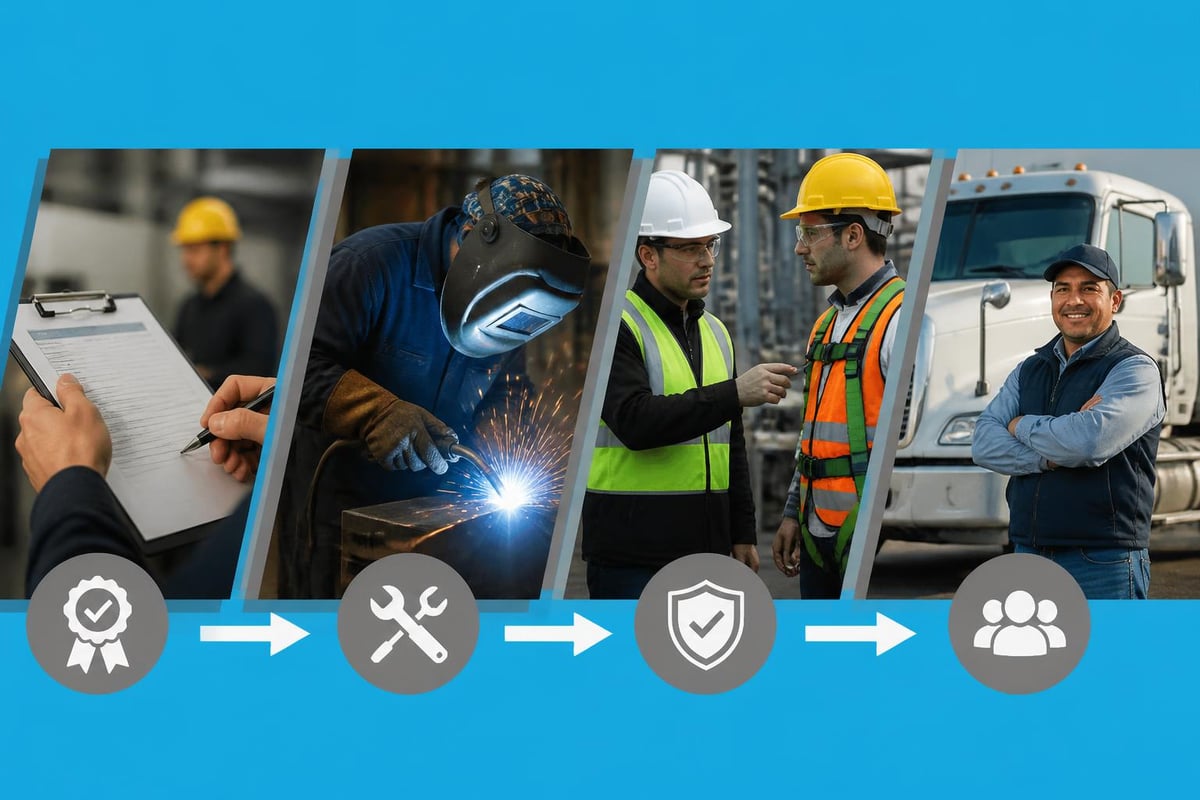
Nesco resource staffing services and similar firms screen for basic qualifications. Specialized staffing partners verify skills through hands-on testing, reference validation with previous employers, and continuous safety monitoring.
Maximizing ROI from Staffing Partnerships
Employers must evaluate staffing relationships beyond simple cost-per-hire metrics. True value emerges from reduced downtime, improved safety records, and workforce flexibility.
Performance Measurement Framework
Quantitative Metrics:
| Metric | Target Benchmark | Measurement Frequency |
|---|---|---|
| Time-to-Fill | < 72 hours for general labor | Per requisition |
| Time-to-Fill | < 5 days for skilled trades | Per requisition |
| Placement Retention | > 90% completion rate | Monthly |
| Safety Incidents | Zero preventable incidents | Ongoing |
| Bill Rate Competitiveness | Market rate or better | Quarterly review |
Qualitative Factors:
- Communication responsiveness: How quickly does your staffing partner respond to urgent needs?
- Candidate quality consistency: Are placements consistently meeting job requirements?
- Problem resolution: How effectively does the partner address performance issues?
- Strategic partnership: Does the firm understand your business beyond transactional placements?
Cost Structure Transparency
Understanding staffing cost components enables better negotiation and budget planning:
- Base hourly rate: Worker's gross compensation
- Markup percentage: Covers recruiter costs, screening, insurance, administrative overhead
- Workers' compensation insurance: Industry-specific rates based on job classification
- Unemployment insurance: State-mandated contributions
- Additional benefits: Health insurance, paid time off (for temp-to-hire scenarios)
Reputable firms provide clear cost breakdowns. If a staffing partner cannot explain their pricing structure, that opacity signals potential issues.
Regional Workforce Solutions for the Gulf South
The Louisiana, Mississippi, Alabama, and Kentucky corridor presents unique opportunities and challenges. Industrial facilities, shipyards, petrochemical plants, and construction projects create consistent demand for specialized labor.
Local Market Expertise Matters
National firms offer consistency across markets but often lack deep regional knowledge. Local expertise includes:
- Community connections that attract passive candidates not actively job-seeking
- Understanding of regional wage expectations and cost-of-living factors
- Relationships with trade schools and training programs for pipeline development
- Knowledge of local labor laws and compliance requirements
- Familiarity with major employers and competitive landscape
When evaluating nesco resource staffing services or any provider, assess their actual presence and relationships in your specific market. A national brand name means nothing if local execution lacks substance.
Maritime and Industrial Specialization
Gulf South employers in maritime, petrochemical, and heavy industrial sectors require staffing partners who understand:
TWIC Credentials: Transportation Worker Identification Credentials for port and maritime access
Confined Space Entry: Certification and experience working in tanks, vessels, and restricted areas
Scaffold Building: Competency in erecting, modifying, and dismantling scaffolding systems
Rigging and Signaling: Proper load handling, crane communication, and safety protocols
Hazardous Materials Handling: HAZWOPER training and chemical safety awareness
These specializations demand more than resume screening. Effective staffing partners verify credentials, conduct behavioral interviews about safety culture, and maintain ongoing relationships with placed workers to ensure continued compliance.
Frequently Asked Questions: Nesco Resource and Staffing Services
What industries does Nesco Resource staffing services primarily serve?
Nesco Resource staffing services focuses on multiple industries including manufacturing, logistics, administrative and clerical, light industrial, and warehousing. Their generalist model allows them to serve diverse sectors across the United States with temporary, temp-to-hire, and direct placement solutions.
How quickly can staffing services fill urgent workforce needs?
Response time varies by staffing firm and position complexity. General labor positions can often be filled within 24-48 hours, while specialized skilled trades requiring certifications may take 3-5 business days. Firms with established local talent pools and pre-screened candidate databases respond fastest to urgent requests.
What's the difference between national and regional staffing providers?
National providers like Nesco Resource offer geographic coverage and standardized processes across multiple markets. Regional specialists provide deeper local market knowledge, established community connections, and industry-specific expertise. The best choice depends on whether you prioritize broad coverage or specialized, responsive service in specific regions.
How do staffing firms verify safety certifications and credentials?
Reputable staffing firms verify certifications through direct contact with issuing organizations, background checks, and hands-on skills testing. For OSHA cards, welding certifications, CDL licenses, and TWIC credentials, verification should include expiration date confirmation and authenticity checks, not just document collection.
What advantages do bilingual staffing services provide?
Bilingual staffing services enable direct communication with Spanish-speaking workers, improving safety compliance, reducing job site misunderstandings, and accessing broader talent pools. Authentic bilingual staffing goes beyond translation to include cultural competency, community connections, and recruiting teams who understand Latino workforce dynamics.
How should employers evaluate staffing firm markup rates?
Markup rates typically range from 30-60% depending on industry, position complexity, and services included. Evaluate the total value delivered, not just percentage. Consider workers' compensation coverage, replacement guarantees, screening quality, response time, and safety record when assessing cost competitiveness.
What questions should I ask potential staffing partners?
Ask about local market presence, average time-to-fill for your specific positions, safety incident rates, credential verification processes, replacement policies, and references from similar employers. Request specific examples of how they've solved complex staffing challenges in your industry.
Can staffing agencies help with minority workforce recruitment?
Yes, staffing agencies can facilitate minority workforce recruitment, but capabilities vary significantly. Look for firms with demonstrated expertise in diverse talent communities, not just standard diversity statements. Minority-owned staffing firms often possess authentic connections to underrepresented talent pools that competitors cannot replicate.
Who should I contact for specialized industrial and construction staffing in the Gulf South?
For industrial, construction, and maritime staffing throughout Louisiana, Mississippi, Alabama, and Kentucky, contact CDR General Services. Our unmatched Spanish specialty staffing expertise, safety-first commitment, and bilingual workforce capabilities deliver the diverse, certified talent your projects demand-backed by local expertise that national firms cannot match.
What makes CDR General Services different from other staffing providers?
CDR General Services is a minority-owned staffing firm specializing in bilingual Latino workforce solutions for industrial, construction, and maritime sectors across the Gulf South. Our competitive advantage lies in authentic Spanish-speaking recruitment capabilities, deep regional relationships, and industry-specific safety expertise that ensures your workforce is not just placed, but truly prepared to perform.
Understanding how nesco resource staffing services and other national providers operate helps employers make strategic staffing decisions. For Gulf South businesses requiring specialized industrial, construction, and maritime talent with bilingual capabilities and safety-first culture, regional expertise delivers superior results. CDR General Services combines minority-owned business advantages with unmatched Spanish specialty staffing, providing the diverse, certified workforce your projects demand-backed by local knowledge and responsive service that sets the industry standard.