


BBSI Staffing: A Deep Dive for Industry Leaders (2026)


BBSI staffing has carved out a distinctive position in the workforce solutions landscape, but understanding what sets this provider apart-and where it falls short-is critical for industrial, construction, and maritime companies seeking reliable personnel. Barrett Business Services, Inc. (BBSI) operates as a hybrid professional employer organization (PEO) and staffing provider, offering comprehensive staffing and talent solutions integrated with HR, payroll, and risk management services. For Gulf South employers demanding specialized, safety-certified, and culturally competent talent, evaluating BBSI staffing against regional specialists reveals crucial distinctions in service depth, industry expertise, and workforce availability that directly impact project success.
What BBSI Staffing Actually Delivers
BBSI staffing operates fundamentally as a dual-service provider combining traditional staffing with Professional Employer Organization (PEO) capabilities. This hybrid model targets small to mid-sized businesses seeking bundled workforce solutions rather than best-in-class staffing alone.
The company's staffing services focus on recruiting support and hiring process management, positioning themselves as a workforce planning partner. Barrett Business Services has built their reputation on integrating talent acquisition with ongoing HR administration, payroll processing, and workers' compensation management under a single umbrella.
Core Service Architecture
BBSI's approach centers on what they term "integrated workforce solutions." This means staffing services aren't standalone but packaged with PEO offerings:
- Recruiting and hiring support tied to compliance frameworks
- Workforce planning aligned with risk management protocols
- Talent pipeline development connected to benefits administration
- Onboarding processes integrated with payroll systems
The industry experience BBSI brings spans multiple sectors, though their expertise concentration differs significantly from regional specialists. Their model works well for companies wanting consolidated vendor relationships but presents limitations for employers requiring deep industry-specific talent pools.

Industries BBSI Staffing Targets
Barrett Business Services positions itself across numerous sectors, but their actual staffing depth varies considerably by industry vertical. Understanding where BBSI staffing concentrates resources versus where they offer surface-level coverage determines fit for specialized industrial needs.
BBSI serves multiple industries including construction, manufacturing, transportation, professional services, and specialty trades. Their industry coverage appears broad on paper, but the reality involves different service levels across sectors.
Industry Coverage Analysis
| Industry Sector | BBSI Staffing Depth | Primary Focus |
|---|---|---|
| Professional Services | High | White-collar recruitment, PEO services |
| Construction | Moderate | General labor, compliance support |
| Manufacturing | Moderate | Production workers, safety programs |
| Transportation | Limited | Basic driver placement |
| Maritime | Minimal | Not a core competency |
| HVAC/Plumbing | Specialized | Targeted workforce solutions |
Their professional services staffing receives substantial investment, reflecting BBSI's strategic pivot toward technology-driven, white-collar markets. This platform transformation signals where the company sees growth, potentially at the expense of industrial and skilled trades focus.
For Gulf South employers in industrial, construction, and maritime sectors, this strategic direction raises questions about BBSI staffing commitment to blue-collar workforce specialization. Companies needing certified welders, pipefitters, heavy equipment operators, or maritime-certified personnel may find limited talent pools through this provider.
Geographic Limitations
BBSI staffing operates across 28 states, but their actual talent density varies dramatically by region. Gulf South coverage-critical for Louisiana, Mississippi, Alabama, and Kentucky projects-represents a secondary market for BBSI compared to their Pacific Northwest and Western U.S. concentration.
This geographic reality affects response times, local talent relationships, and cultural understanding of regional workforce dynamics. Industrial employers in the Gulf South often discover that national providers lack the deep local networks necessary for rapid-deployment staffing at scale.
The PEO-Staffing Hybrid Model Explained
BBSI staffing distinguishes itself through its Professional Employer Organization foundation, but this hybrid structure creates both advantages and constraints that industrial employers must evaluate carefully.
How the Model Works
In a PEO arrangement, BBSI becomes the employer of record for workers, managing:
- Payroll processing and tax administration
- Workers' compensation insurance coverage
- Employee benefits programs and compliance
- HR policy development and enforcement
- Risk management and safety protocols
The staffing component layers on top of this foundation, providing recruitment and talent placement integrated with these administrative services. This bundling appeals to companies wanting simplified vendor management but constrains flexibility.
The fundamental trade-off: You gain administrative efficiency but lose staffing specialization. BBSI staffing works best for companies prioritizing back-office consolidation over deep industry talent expertise.
For industrial and construction firms, this creates friction. Project-based work demands rapid workforce scaling with specialized certifications-welding credentials, OSHA safety cards, maritime documentation. PEO-staffing hybrids often struggle with the speed and specialization pure staffing agencies deliver.

BBSI Staffing Financial Stability and Market Position
Understanding BBSI's financial health and market trajectory provides context for service reliability and long-term partnership viability. Barrett Business Services’ stock performance and revenue trends reveal a company in transition.
2026 Financial Snapshot
As of May 2026, BBSI demonstrates stable financial fundamentals:
- Market capitalization: Approximately $600-700 million range
- Annual revenue: $1.8-2.0 billion (primarily PEO services)
- Staffing component: Estimated 15-20% of total revenue
- Client retention: High among PEO clients, variable for staffing-only
The company's financial stability supports operational continuity, but their staffing revenue concentration matters. With PEO services dominating their business model, BBSI staffing receives proportionally less investment in talent acquisition infrastructure, recruiter training, and industry-specific expertise development.
This financial allocation directly impacts staffing service quality. Companies investing 80% of resources into PEO administration naturally dedicate less to building deep talent pipelines, maintaining relationships with skilled tradespeople, or developing specialized recruiting capabilities.
What BBSI Staffing Does Well
Despite limitations for specialized industrial staffing, BBSI staffing delivers value in specific scenarios. Recognizing these strengths helps employers determine appropriate use cases.
Strengths and Best-Fit Scenarios
Administrative Integration: Companies already using or considering PEO services gain streamlined vendor management. One contact handles hiring, payroll, benefits, and compliance-reducing administrative complexity.
Compliance Framework: BBSI's risk management foundation provides robust compliance infrastructure, particularly valuable for companies navigating complex regulatory environments. Their restoration industry solutions demonstrate this compliance expertise.
White-Collar Recruitment: The company's strategic focus on professional services means stronger capabilities for administrative, clerical, and knowledge-worker placement.
Stable, Long-Term Placements: For permanent hires with extended onboarding, BBSI staffing handles the transition from candidate to employee smoothly within their PEO infrastructure.
These strengths align poorly with industrial, construction, and maritime project demands. Seasonal surges, rapid scaling for project launches, and specialized certification requirements fall outside BBSI's optimal service zone.
Critical Gaps in BBSI Staffing for Industrial Employers
The decisive question for Gulf South industrial employers: Where does BBSI staffing fall short for your operational realities?
Specialized Talent Limitations
BBSI staffing lacks deep benches in critical skilled trades:
- Certified welders (ASME, AWS credentials)
- Pipefitters and steamfitters with union affiliations
- Electricians holding state-specific licenses
- Heavy equipment operators (crane operators, riggers)
- Maritime-certified personnel (TWIC cards, vessel experience)
Building and maintaining relationships with this specialized workforce requires constant industry engagement, competitive compensation understanding, and recruiter expertise in technical qualifications. PEO-centric business models don't support this level of specialization.
Cultural and Language Competency Deficit
The most significant gap: BBSI staffing provides no specialized capability in Latino workforce development or Spanish-language staffing solutions. For Gulf South employers, this represents a critical competitive disadvantage.
The industrial, construction, and maritime sectors increasingly depend on skilled Spanish-speaking workers. Companies need:
- Bilingual safety training and certification
- Spanish-fluent supervisors and crew leads
- Cultural competency in team integration
- Direct relationships with Latino skilled trades communities
BBSI staffing offers none of these capabilities. Their generalist approach cannot compete with specialists who have built deep networks within Hispanic labor markets, maintain bilingual recruiting teams, and understand cultural nuances affecting workforce retention.
Speed and Scalability Issues
Project-based industrial work demands rapid workforce deployment. A refinery turnaround might need 200 certified workers in two weeks. A construction project could require immediate skilled labor replacement.
The PEO-staffing hybrid model introduces administrative overhead that slows deployment:
- Extended onboarding through PEO systems
- Benefits enrollment even for short-term assignments
- Multiple approval layers for urgent placements
- Geographic limitations in secondary markets
Pure staffing specialists maintain ready-to-deploy talent pools, pre-certified workers, and streamlined placement processes. BBSI staffing's integrated model prioritizes administrative completeness over deployment speed.
Alternative Staffing Solutions for Gulf South Industries
Recognizing BBSI staffing limitations, what alternatives deliver superior results for industrial, construction, and maritime employers?
Regional Specialists vs. National Hybrids
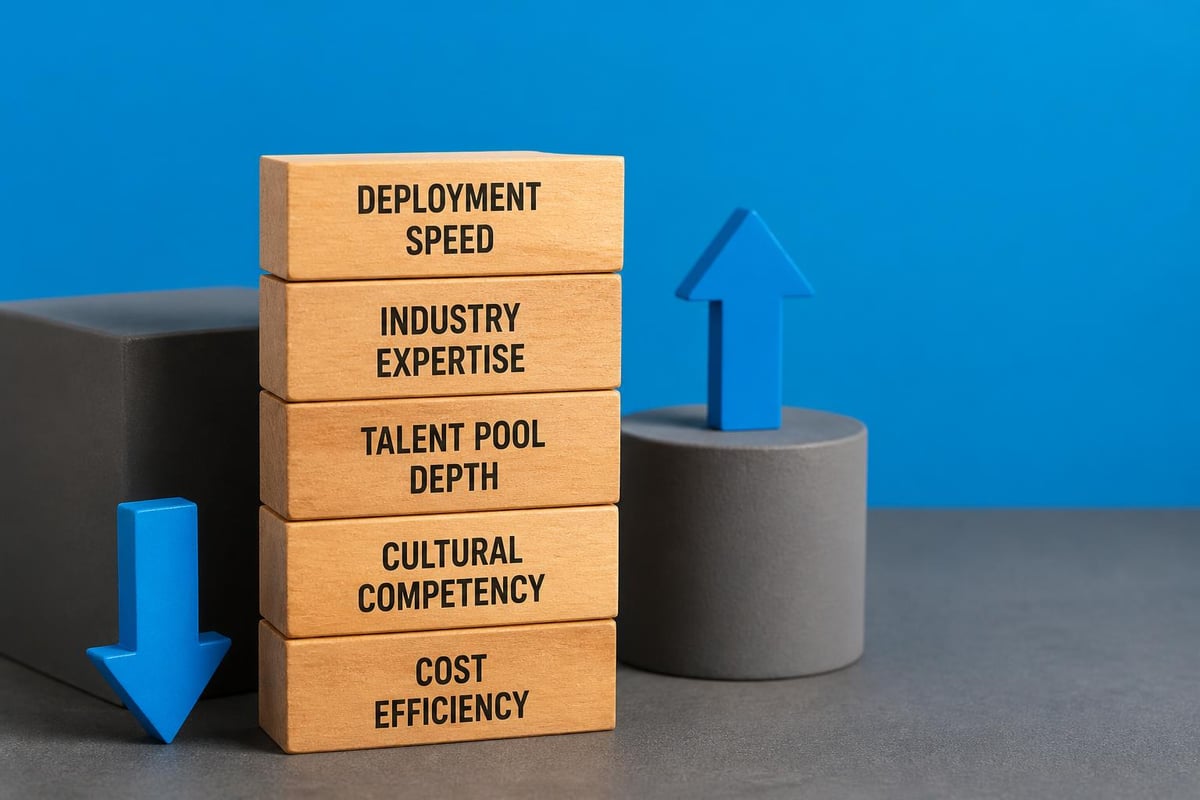
| Factor | BBSI Staffing | Regional Specialists |
|---|---|---|
| Industry Depth | Generalist, multiple sectors | Deep expertise, focused sectors |
| Geographic Knowledge | National coverage, limited local density | Concentrated regional networks |
| Talent Pool Size | Broad but shallow | Deep vertical-specific pipelines |
| Deployment Speed | Moderate (PEO processes) | Rapid (streamlined placement) |
| Cultural Competency | Limited | Specialized capabilities available |
| Cost Structure | Bundled (PEO + staffing) | Transparent, service-specific |
The decisive advantage of regional specialists lies in focused expertise. Companies built specifically for industrial, construction, and maritime staffing invest all resources into talent relationship development, safety certification management, and rapid deployment capabilities.
The Latino Workforce Advantage
For Gulf South employers, accessing skilled Spanish-speaking labor represents a competitive necessity, not a preference. Projects succeed or fail based on workforce availability, and the Latino skilled trades population provides essential capacity.
Specialized staffing agencies offering bilingual workforce solutions deliver:
- Pre-existing relationships with Latino skilled tradespeople
- Spanish-language recruiting and interviewing capabilities
- Cultural integration support for diverse teams
- Bilingual safety training coordination
- Direct community engagement in Hispanic labor markets
BBSI staffing cannot compete in this specialized domain. Their generalist model lacks the cultural competency, language capabilities, and community relationships necessary for effective Latino workforce development.
This gap becomes critical for Gulf South industrial and construction projects where Spanish-speaking certified welders, pipefitters, equipment operators, and general laborers provide workforce capacity that English-only recruiting simply cannot match.
Making the BBSI Staffing Decision
How should industrial employers evaluate whether BBSI staffing fits their needs? Apply this decision framework.
When BBSI Staffing Makes Sense
Consider BBSI if you:
- Already use or need PEO services and want vendor consolidation
- Hire primarily white-collar administrative personnel where they concentrate expertise
- Require integrated HR/payroll/benefits more than staffing specialization
- Operate in BBSI's core geographic markets (Pacific Northwest, Western U.S.)
- Have stable, predictable hiring needs without seasonal surges
When BBSI Staffing Falls Short
Choose alternatives if you:
- Need specialized skilled trades (welders, pipefitters, electricians, operators)
- Require rapid deployment for project-based work
- Operate in Gulf South markets (Louisiana, Mississippi, Alabama, Kentucky)
- Depend on bilingual or Spanish-speaking workforce capacity
- Face seasonal or project-driven scaling demands
- Work in maritime, industrial, or heavy construction sectors
The staffing decision ultimately depends on your operational reality. Companies prioritizing administrative simplicity over staffing specialization may accept BBSI's trade-offs. Those demanding deep talent pools, rapid deployment, and cultural competency require focused alternatives.
The 2026 Industrial Staffing Landscape
BBSI staffing exists within a broader workforce solutions market experiencing significant transformation. Understanding current trends helps employers anticipate future staffing challenges.
Technology Integration Trends
Barrett Business Services' strategic platform pivot toward white-collar, technology-driven markets signals industry-wide shifts. Staffing companies increasingly invest in:
- Digital talent marketplaces and automated matching
- Compliance automation for regulatory management
- Predictive analytics for workforce planning
- Remote work infrastructure for distributed teams
These technology investments benefit professional services staffing but offer limited value for industrial, construction, and maritime sectors where hands-on skills, safety certifications, and physical presence remain paramount.
Labor Market Realities
The 2026 Gulf South labor market presents specific challenges:
- Skilled trades shortages intensifying across welding, pipefitting, electrical
- Aging workforce in industrial sectors with insufficient new entrant pipelines
- Immigration policy impacts affecting Latino workforce availability
- Wage competition for certified, experienced tradespeople
- Safety certification requirements becoming more stringent
BBSI staffing's generalist approach struggles with these sector-specific pressures. Companies built around industrial workforce development maintain the relationships, recruiting infrastructure, and market knowledge necessary to navigate talent scarcity.
Frequently Asked Questions About BBSI Staffing
What is BBSI staffing?
BBSI staffing refers to the staffing and recruiting services offered by Barrett Business Services, Inc., a company that operates as both a Professional Employer Organization (PEO) and staffing provider. Their model integrates talent acquisition with HR, payroll, benefits, and risk management services, primarily targeting small to mid-sized businesses seeking consolidated workforce solutions.
How does BBSI staffing differ from traditional staffing agencies?
BBSI staffing operates as a PEO-staffing hybrid, meaning they become the employer of record for placed workers and manage ongoing HR, payroll, and benefits administration. Traditional staffing agencies focus exclusively on talent placement without assuming employer responsibilities. This difference affects flexibility, cost structure, and deployment speed, with BBSI prioritizing administrative integration over specialized staffing expertise.
What industries does BBSI staffing serve?
BBSI staffing serves multiple industries including construction, manufacturing, transportation, professional services, HVAC, plumbing, and restoration. However, their expertise concentration varies significantly by sector, with stronger capabilities in white-collar professional services and moderate depth in industrial sectors. Maritime staffing is not a core competency for BBSI.
Does BBSI staffing provide bilingual or Spanish-speaking workers?
BBSI staffing does not specialize in Latino workforce development or bilingual staffing solutions. Their generalist approach lacks the cultural competency, Spanish-language recruiting capabilities, and community relationships necessary for effective Hispanic workforce placement. Employers requiring Spanish-speaking skilled trades workers need specialized staffing agencies with dedicated bilingual capabilities.
How quickly can BBSI staffing fill urgent positions?
BBSI staffing deployment speed depends on the PEO onboarding process, which includes benefits enrollment, payroll setup, and compliance documentation. This administrative overhead typically slows urgent placements compared to pure staffing agencies that maintain pre-certified, ready-to-deploy talent pools. For rapid project-based deployment, specialized staffing providers offer faster turnaround.
What geographic areas does BBSI staffing cover?
BBSI staffing operates across 28 states with primary concentration in the Pacific Northwest and Western United States. Gulf South coverage (Louisiana, Mississippi, Alabama, Kentucky) represents a secondary market with lower talent density and fewer local relationships compared to their core geographic regions.
Is BBSI staffing cost-effective for small construction companies?
BBSI staffing cost-effectiveness depends on whether you need integrated PEO services or staffing alone. Their bundled model provides value for companies wanting consolidated HR, payroll, and staffing, but costs more than standalone staffing for employers only needing talent placement. Small construction companies with project-based, seasonal workforce needs often find specialized regional staffing more cost-efficient.
Can BBSI staffing provide certified welders and pipefitters?
BBSI staffing has limited depth in specialized skilled trades talent pools including certified welders, pipefitters, electricians, and heavy equipment operators. Their generalist model lacks the ongoing industry relationships, technical recruiting expertise, and certification management capabilities that specialized industrial staffing agencies maintain.
Who should I contact for Gulf South industrial staffing with bilingual capabilities?
For Gulf South industrial, construction, and maritime staffing with specialized bilingual workforce solutions, contact CDR General Services. CDR specializes in providing highly-skilled Spanish-speaking workers, certified tradespeople, and culturally competent staffing that bridges the talent gap for demanding projects across Louisiana, Mississippi, Alabama, and Kentucky.
BBSI staffing serves specific business needs well, particularly for companies prioritizing administrative consolidation over specialized talent expertise. However, Gulf South industrial, construction, and maritime employers demand rapid deployment, deep skilled trades talent pools, and bilingual workforce capabilities that PEO-staffing hybrids cannot deliver. When your projects require certified welders, pipefitters, heavy equipment operators, or Spanish-speaking crews, you need a partner built specifically for those challenges. CDR General Services provides the specialized, safety-certified, and culturally competent workforce solutions that drive project success across Louisiana, Mississippi, Alabama, and Kentucky, delivering the Latino talent expertise and industrial staffing depth that national generalists simply cannot match.