


Direct Hire Staffing: Your Complete 2026 Guide


When you need a pipefitter, certified welder, or CDL driver who's going to be part of your team for years, not months, direct hire is the staffing solution that delivers. This permanent employment model connects employers directly with candidates for full-time, long-term positions without the temporary or contract intermediary steps. In the industrial, construction, and maritime sectors across the Gulf South, where safety-certified personnel and reliable workforce stability drive project success, understanding the direct hire process isn't just beneficial-it's business-critical. Let's break down exactly what direct hire means, how it works, and when it's your best strategic move.
What Direct Hire Actually Means in Staffing
Direct hire refers to a permanent employment arrangement where a company hires an employee directly onto their payroll from day one. The employee becomes a full-time member of your organization immediately, receiving your company benefits, working under your employment policies, and building their career within your structure.
This differs fundamentally from temporary staffing, temp-to-hire arrangements, or contract work. There's no trial period where the worker remains on a staffing agency's payroll. No waiting to see if they'll transition to permanent status. From the moment they accept your offer, they're your employee-period.
The Core Characteristics of Direct Hire Positions
Understanding what makes direct hire distinct helps you determine when it's the right fit:
- Immediate permanent status: Employee joins your payroll on day one
- Full benefits eligibility: Health insurance, retirement plans, paid time off from the start
- Long-term commitment: Both parties expect an ongoing employment relationship
- Direct employer-employee relationship: No intermediary agency maintains the employment contract
- Career growth potential: Positions typically offer advancement opportunities within your organization

In sectors like industrial manufacturing, construction, and maritime operations, direct hire positions commonly include skilled trades roles-certified welders, pipefitters, electricians, heavy equipment operators, and licensed CDL drivers. These positions demand specialized certifications, safety training, and the kind of institutional knowledge that only comes from long-term employment.
The Direct Hire Process: How It Works
The direct hire recruitment process follows a structured pathway designed to identify, evaluate, and secure permanent talent. Here's exactly how it unfolds:
- Position definition and requirements documentation: You specify the role's responsibilities, required certifications, experience levels, and compensation range
- Candidate sourcing and screening: Recruiting partners or internal HR teams identify qualified candidates through job boards, industry networks, and specialized talent pools
- Initial interviews and skills assessment: Candidates undergo competency evaluations, certification verification, and preliminary interviews
- In-depth interviews with hiring managers: Selected candidates meet with department leaders and team members
- Background checks and verification: Employment history, credential verification, drug screening, and safety record reviews
- Offer presentation and negotiation: Compensation, benefits, and start date discussions
- Onboarding and integration: New employee joins your team permanently
The direct hire process still includes interviews-multiple interviews, in fact. Any assumption that direct hire means skipping evaluation steps is completely wrong. You're making a permanent commitment, which demands thorough vetting.
Timeline Expectations for Direct Hire Recruitment
| Phase | Typical Duration | Key Activities |
|---|---|---|
| Sourcing & Screening | 1-2 weeks | Job posting, resume review, initial contact |
| Interview Process | 1-3 weeks | Multiple interview rounds, skills testing |
| Verification & Checks | 1-2 weeks | Background checks, credential verification |
| Offer & Acceptance | 3-7 days | Negotiation, offer acceptance, notice period |
| Total Timeline | 4-8 weeks | Complete hire-to-start process |
Direct Hire vs. Alternative Staffing Models
Choosing between direct hire and other staffing solutions requires understanding the fundamental differences in structure, cost, and strategic purpose.
Direct Hire vs. Temp-to-Hire
Temp-to-hire arrangements allow companies to evaluate workers during a trial period (typically 90-180 days) while they remain on the staffing agency's payroll. After the trial period, you can convert them to permanent status or end the arrangement.
Direct hire advantages:
- Immediate commitment signals value to top candidates
- No conversion fees or waiting periods
- Full integration into company culture from day one
- Better for roles requiring extensive onboarding investment
Temp-to-hire advantages:
- Risk mitigation through extended evaluation
- Lower initial financial commitment
- Flexibility to adjust workforce without permanent obligations
Direct Hire vs. Contract Staffing
Contract staffing provides workers for specific projects or defined periods. The staffing agency maintains the employment relationship, handles payroll and benefits, and the worker knows the assignment is temporary.
Understanding the differences between direct and temporary hires helps you match the staffing model to your operational needs. For a six-month plant expansion project, contract staffing might work perfectly. For the certified welder who'll maintain your equipment for the next decade, direct hire is the only logical choice.
When Direct Hire Makes Strategic Sense
Not every position warrants direct hire investment. Knowing when to deploy this staffing strategy separates efficient operators from companies burning resources on the wrong hiring models.
Ideal Scenarios for Direct Hire
Leadership and specialized technical roles: When you need an experienced pipefitter supervisor, electrical foreman, or safety manager who'll build and lead your teams, direct hire delivers the commitment level and authority these positions demand.
Roles requiring extensive training investment: If you're investing months in certification programs, specialized equipment training, or proprietary process knowledge, you need the employee staying long enough to generate ROI on that training investment.
Positions critical to operational continuity: Your maintenance supervisor, quality control manager, or logistics coordinator aren't interchangeable parts. These roles form your operational backbone, and direct hire ensures stability.
When top talent demands permanent offers: The most skilled welders, experienced heavy equipment operators, and certified maritime personnel in the Gulf South region have options. Direct hires offer advantages in attracting this caliber of talent because they signal commitment, provide full benefits, and offer career growth potential.
When Alternative Models Work Better
Temporary staffing makes sense for seasonal demand spikes, specific project-based work, or when you're uncertain about long-term headcount needs. If you're ramping up for a three-month construction project, bringing on temporary labor through a staffing partner gives you the workforce without permanent obligations.
The Cost Structure of Direct Hire
Understanding direct hire costs helps you budget accurately and evaluate staffing partnerships effectively. Here's what you're actually paying for:
Direct Recruitment Costs
| Cost Component | Typical Range | Notes |
|---|---|---|
| Staffing Agency Fee | 15-25% of first-year salary | One-time placement fee |
| Internal Recruitment | $3,000-$7,000 per hire | If handling recruitment in-house |
| Background & Drug Screening | $100-$300 per candidate | Standard verification costs |
| Onboarding & Training | $1,500-$5,000+ | Role-dependent investment |
Staffing agency fees for direct hire typically range from 15% to 25% of the employee's first-year salary. For a welder earning $65,000 annually, you're looking at a placement fee between $9,750 and $16,250. This one-time cost covers sourcing, screening, and delivering a qualified, verified candidate ready to join your team.
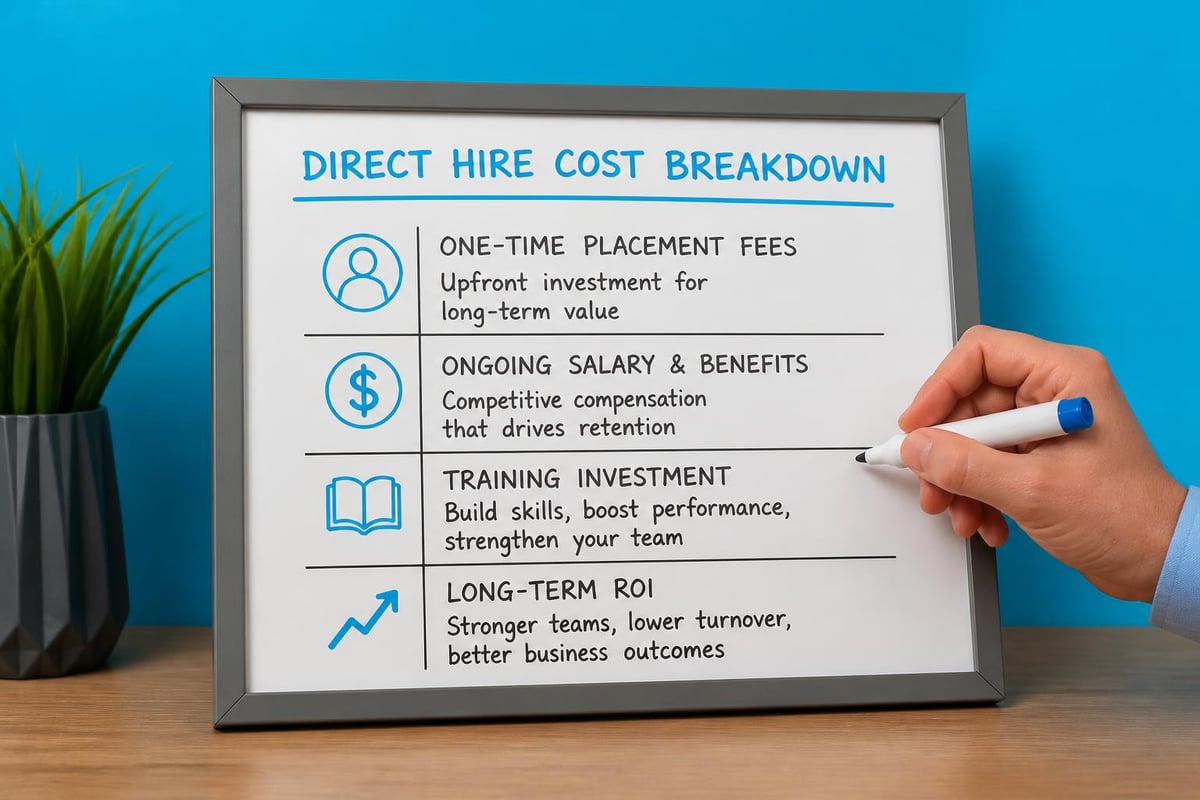
Ongoing Employment Costs
Once hired, direct employees generate ongoing costs that you control and manage:
- Base salary and overtime: Competitive market rates for skilled trades
- Benefits package: Health insurance, retirement contributions, paid time off
- Payroll taxes: Employer's share of Social Security, Medicare, unemployment insurance
- Workers' compensation insurance: Coverage for on-the-job injuries
- Continuing education and certification renewals: Maintaining skilled trade credentials
The pros and cons of direct hire staffing include these higher initial and ongoing costs, but they're offset by employee commitment, reduced turnover expenses, and the institutional knowledge that permanent employees develop.
The Direct Hire Advantage: Benefits for Employers
Direct hire delivers specific, measurable advantages when you're building a stable, skilled workforce in industrial, construction, and maritime sectors.
Workforce Stability and Institutional Knowledge
Permanent employees develop deep understanding of your processes, equipment, safety protocols, and operational rhythms. That pipefitter who's been maintaining your systems for three years knows your plant better than any temporary worker ever will. This institutional knowledge prevents costly mistakes, accelerates troubleshooting, and improves overall operational efficiency.
Cultural Integration and Team Cohesion
Direct hire employees become genuine members of your organizational culture. They build relationships with colleagues, understand your company values, and develop loyalty that drives discretionary effort. In safety-critical environments, this cohesion directly impacts incident rates and operational safety.
Simplified Administrative Management
When employees are on your payroll from day one, you eliminate the split responsibilities that come with temporary or contract arrangements. You control schedules, manage performance directly, and don't navigate coordination with a staffing agency for basic workforce management decisions.
Long-Term Cost Efficiency
While the upfront investment is higher, direct hiring benefits include avoiding the ongoing markup fees associated with temporary staffing. A certified welder costing $35/hour through a temp agency might only receive $24/hour, with the agency collecting the $11 difference. Over years, those markups dwarf a one-time placement fee.
Direct Hire Challenges and Mitigation Strategies
No staffing strategy is perfect. Direct hire comes with specific challenges that smart operators acknowledge and address proactively.
Higher Initial Risk
You're committing to an employee before seeing extended on-the-job performance. Bad hires are expensive-separation costs, replacement expenses, and productivity losses add up fast.
Mitigation: Implement rigorous screening processes, conduct multiple interviews involving team members who'll work with the hire, verify certifications thoroughly, and check references from previous supervisors, not just HR departments.
Limited Flexibility for Demand Fluctuations
Permanent employees can't be easily scaled down when project work slows. You're paying salaries and benefits regardless of workflow variation.
Mitigation: Use a blended staffing model-maintain your core team through direct hire while supplementing with temporary labor for project spikes. This gives you the stability of permanent employees with the flexibility of scalable contingent workforce.
Recruitment Timeline Constraints
The direct hire process takes weeks, sometimes months. When you need a certified electrician starting Monday, direct hire won't solve that immediate problem.
Mitigation: Partner with staffing agencies who maintain ready-to-work talent pools and can deliver qualified candidates quickly. Build relationships before you need them, not during crises.
Industry-Specific Direct Hire Considerations
Different sectors have unique direct hire requirements, particularly in the skilled trades and industrial operations common across the Gulf South.
Industrial and Manufacturing Direct Hire
Critical certifications: Welding certifications (AWS, ASME), electrical licenses, equipment operator certifications, OSHA safety training credentials
Compliance requirements: Background checks for facility access, drug screening programs, safety record verification
Competitive factors: Skilled trades shortages mean competition for certified welders, pipefitters, and electricians is intense. Benefits packages and competitive compensation are table stakes.
Construction Sector Direct Hire
Project-based reality: Even "permanent" construction employees may work on project teams that shift locations and scopes. Direct hire in construction often means employment continuity across multiple projects rather than fixed site assignments.
Union considerations: Union agreements may dictate hiring practices, wage scales, and workforce composition. Direct hire must align with collective bargaining requirements.
Bilingual workforce advantage: Construction sites across Louisiana, Mississippi, Alabama, and Kentucky increasingly require Spanish-speaking supervisors and bilingual crew leaders who can bridge communication gaps and ensure safety protocol adherence across diverse teams.
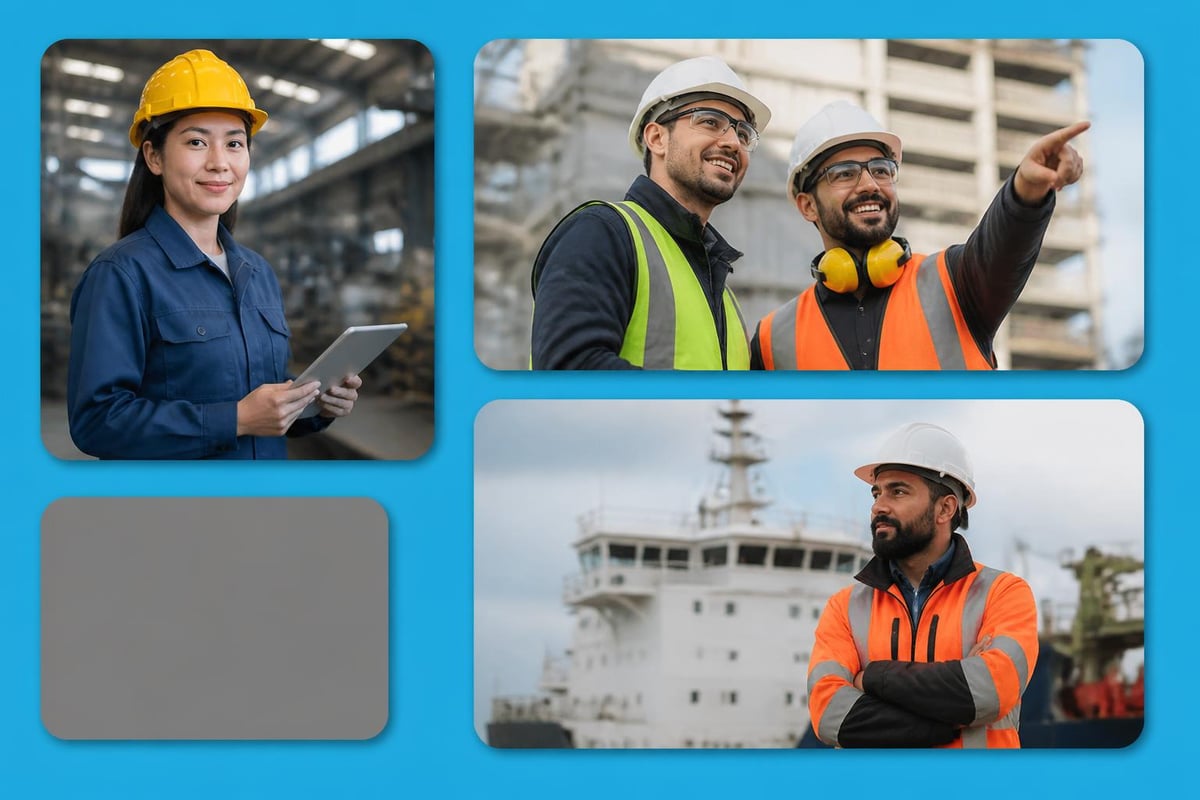
Maritime and Transportation Direct Hire
Specialized licensing: CDL Class A and B drivers, TWIC credentials for port access, maritime certifications for vessel operations
Safety-critical nature: Transportation and maritime roles carry heightened safety stakes. Verification of driving records, incident history, and substance abuse screening are non-negotiable.
Retention focus: The driver shortage makes retention as important as recruitment. Direct hire positions with clear career paths and competitive benefits packages reduce turnover in these high-demand roles.
Partnering with Staffing Agencies for Direct Hire
Most companies don't handle direct hire recruitment entirely in-house. Staffing agencies bring specialized expertise, established talent networks, and recruitment infrastructure that accelerates the hiring process while improving candidate quality.
What Staffing Agencies Provide in Direct Hire
Access to pre-screened talent pools: Reputable agencies maintain databases of certified, safety-trained candidates who've already undergone initial verification. This dramatically shortens your sourcing timeline.
Industry-specific recruitment expertise: Experienced recruiters understand the nuances of skilled trades hiring-they know where to find certified welders, how to evaluate pipefitter experience, and what questions separate competent electricians from exceptional ones.
Verification and compliance management: Background checks, certification verification, drug screening, and employment eligibility confirmation are handled systematically, reducing your administrative burden and compliance risk.
Market intelligence: Staffing partners know current salary ranges, benefits expectations, and competitive dynamics in your local market. This intelligence helps you structure offers that actually attract top talent.
The Specialized Bilingual Advantage
In the Gulf South region, the workforce is increasingly multicultural, with Spanish-speaking skilled trades professionals representing a substantial and growing talent segment. Staffing agencies with specialized bilingual recruitment capabilities deliver a decisive competitive advantage-they can source, evaluate, and place highly skilled Spanish-speaking welders, equipment operators, and construction professionals who other companies simply can't access.
This isn't just about translation. It's about cultural competency, understanding credential systems from different countries, and building trust with communities that traditional recruitment approaches miss entirely. For companies competing for skilled labor in Louisiana, Mississippi, Alabama, and Kentucky, this specialized access to bilingual talent pools is the difference between fully staffed projects and chronic shortages.
Frequently Asked Questions About Direct Hire
What does direct hire mean in staffing?
Direct hire means an employee is hired permanently onto your company payroll from their first day of work. They receive your company benefits, work under your employment policies, and have a long-term employment relationship with your organization rather than remaining on a staffing agency's payroll or working as a contractor.
How much do staffing agencies charge for direct hire placements?
Staffing agencies typically charge between 15% and 25% of the employee's first-year salary as a one-time placement fee for direct hire positions. For a skilled tradesperson earning $60,000 annually, the placement fee would range from $9,000 to $15,000. This fee covers candidate sourcing, screening, verification, and presentation of qualified candidates.
Is direct hire better than temp-to-hire?
Direct hire is better when you need specialized skills, leadership roles, or positions requiring significant training investment where you want immediate commitment and cultural integration. Temp-to-hire works better when you're uncertain about long-term needs or want an extended evaluation period before making a permanent commitment. The right choice depends on your specific role requirements and risk tolerance.
Does direct hire include a trial period?
Direct hire does not typically include a formal trial period where the employee remains on an agency's payroll. However, most employment is at-will, and you can terminate the relationship if performance doesn't meet expectations, usually within standard probationary periods defined by your company policies (commonly 60-90 days).
What types of positions are typically filled through direct hire?
Direct hire commonly fills specialized skilled trades roles (certified welders, pipefitters, electricians), leadership positions (supervisors, foremen, managers), professional roles (engineers, project managers), and positions requiring extensive training investment or security clearances. Any role where you need long-term stability and institutional knowledge is a strong candidate for direct hire.
How long does the direct hire process typically take?
The complete direct hire process typically takes 4 to 8 weeks from position definition to the candidate's start date. This includes 1-2 weeks for sourcing and screening, 1-3 weeks for interviews and evaluation, 1-2 weeks for background checks and verification, and 3-7 days for offer acceptance and any required notice period at the candidate's current employer.
What are the main benefits of direct hire for employers?
Direct hire provides workforce stability, allows employees to develop institutional knowledge, simplifies administrative management by keeping employees on your payroll, improves cultural integration and team cohesion, and delivers long-term cost efficiency by eliminating ongoing markup fees associated with temporary staffing arrangements.
Can I still use temporary staffing alongside direct hire?
Absolutely. Many companies use a blended staffing strategy, maintaining core permanent teams through direct hire while supplementing with temporary labor for project spikes, seasonal demand, or specialized short-term needs. This approach provides stability where you need it and flexibility where demand fluctuates.
How can CDR General Services help with my direct hire staffing needs?
CDR General Services specializes in direct hire placements for industrial, construction, and maritime sectors throughout the Gulf South. Our unmatched expertise in bilingual staffing and access to safety-certified Spanish-speaking skilled trades professionals gives you decisive competitive advantage in building the diverse, qualified workforce your projects demand. We handle sourcing, screening, verification, and delivery of permanent employees who meet your exact specifications.
Direct hire staffing delivers the permanent, committed workforce that industrial, construction, and maritime operations require for long-term success. When you need certified welders, licensed CDL drivers, experienced pipefitters, or bilingual supervisors who'll become genuine members of your team, direct hire is the strategic choice. At CDR General Services, we combine industry-leading recruitment expertise with unparalleled access to bilingual skilled trades talent across Louisiana, Mississippi, Alabama, and Kentucky-delivering the safety-certified, culturally competent workforce your projects demand. Let's build your permanent team with the specialized talent nobody else can provide.