

Employee solutions have evolved from simple hiring practices into strategic workforce systems that determine whether businesses thrive or struggle in today's competitive landscape. Companies in the Industrial, Construction, and Maritime sectors face unprecedented challenges: skilled labor shortages, safety compliance requirements, project scalability demands, and the critical need for culturally competent teams. The organizations that succeed understand this fundamental truth: employee solutions are not HR paperwork, they are competitive weapons that deliver measurable business outcomes.
What Employee Solutions Actually Mean for Modern Organizations
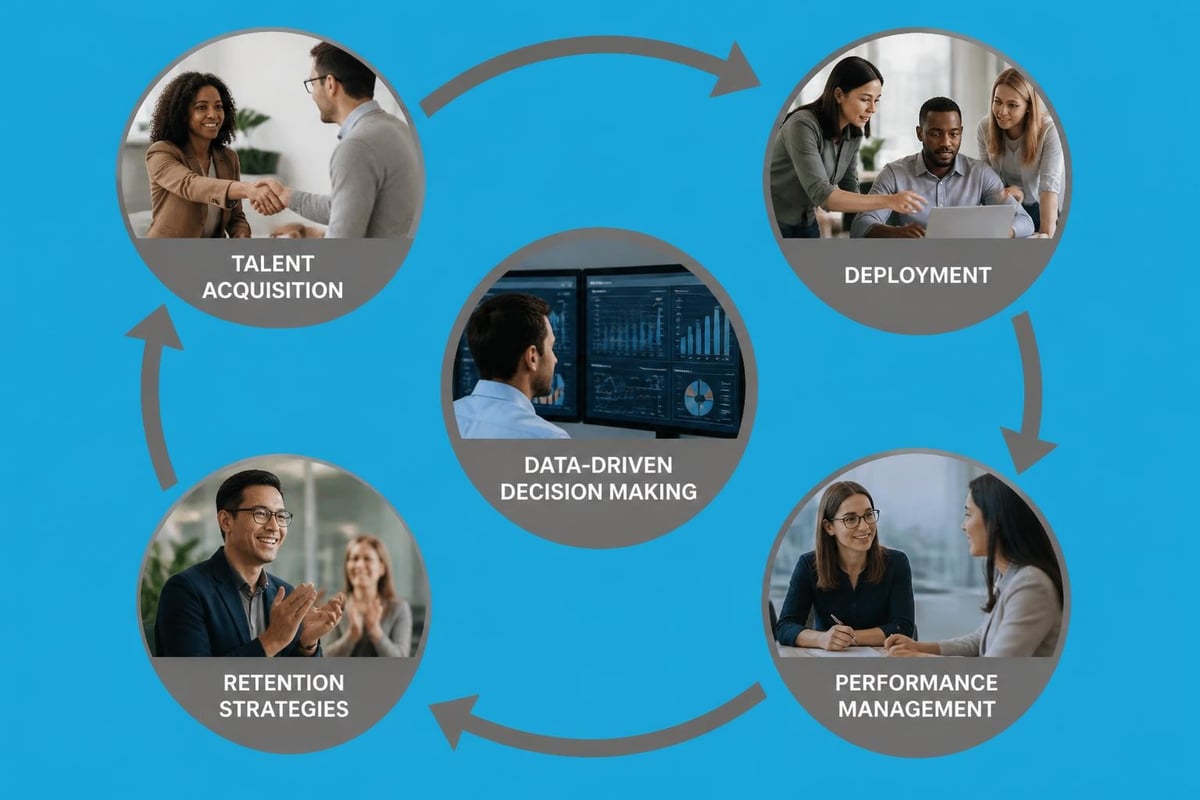
Employee solutions encompass the full spectrum of workforce strategies designed to attract, deploy, manage, and retain talent while maximizing productivity and ensuring compliance. This isn't theoretical HR philosophy. It's the operational framework that determines whether your construction project finishes on time, whether your industrial facility maintains safety records, and whether your maritime operation scales efficiently.
The concept extends far beyond recruitment. Comprehensive employee solutions integrate:
- Strategic workforce planning aligned with business objectives
- Talent acquisition systems for rapid, quality hiring
- Onboarding and training programs that reduce time-to-productivity
- Performance management frameworks that drive accountability
- Retention strategies that minimize costly turnover
- Compliance systems ensuring safety and regulatory adherence
- Scalability mechanisms for fluctuating workforce demands
According to Deloitte's 2025 Global Human Capital Trends, organizations that adopt integrated employee solutions report 3.5 times higher revenue growth than competitors relying on fragmented approaches. The data is clear: strategic workforce management drives bottom-line results.
The Critical Components of Effective Employee Solutions
Modern employee solutions function as interconnected systems where each component reinforces the others. When organizations like CDR General Services deploy workforce strategies across the Gulf South region, every element must work in concert to deliver results.
| Solution Component | Primary Function | Business Impact |
|---|---|---|
| Strategic Planning | Forecast workforce needs 6-12 months ahead | Eliminates scrambling, reduces emergency hiring costs |
| Rapid Deployment | Fill critical positions within 24-48 hours | Maintains project schedules, prevents revenue loss |
| Safety Certification | Ensure compliance with OSHA and industry standards | Protects workers, minimizes liability exposure |
| Cultural Competency | Match workforce to project demographics | Improves communication, boosts productivity |
| Performance Tracking | Monitor output, quality, and attendance | Identifies top performers, addresses issues quickly |
The construction foreman who needs ten certified welders by Monday morning doesn't have time for theoretical HR discussions. That foreman needs employee solutions that deliver qualified, safety-certified personnel who show up ready to work. Period.
Specialized Workforce Demands in Industrial and Construction Sectors
Industrial, Construction, and Maritime operations present unique workforce challenges that generic employee solutions cannot address. These sectors require specialized skills, rigorous safety standards, and the ability to scale teams rapidly without sacrificing quality.
Critical sector-specific requirements include:
- Technical Certification Verification: Welders, electricians, pipefitters, and heavy equipment operators must carry current certifications that meet or exceed project specifications
- Safety Training Documentation: OSHA 10, OSHA 30, confined space entry, fall protection, and industry-specific protocols must be verified and current
- Bilingual Communication Capabilities: Construction sites increasingly require Spanish-speaking personnel and bilingual supervisors to ensure safety and productivity
- Rapid Mobilization: Projects often require 20, 50, or 100+ workers deployed within days, not weeks
- Flexibility and Scalability: Workforce needs fluctuate dramatically based on project phases, requiring expansion and contraction without disruption
The Harvard Business Review article Reimagining Work as a Product emphasizes designing roles and work structures that meet operational realities rather than forcing operations into rigid HR frameworks. This principle is absolutely critical in sectors where a single unqualified worker can shut down an entire project or create catastrophic safety incidents.
The Spanish Specialty Advantage in Employee Solutions
One of the most significant competitive differentiators in Gulf South workforce management is access to highly skilled, Spanish-speaking personnel. This isn't about checking diversity boxes. This is about operational excellence and project success.
The business case for bilingual workforce solutions:
- Enhanced Safety Communication: Critical safety instructions delivered in workers' native language eliminate dangerous misunderstandings
- Increased Productivity: Teams that communicate effectively complete tasks 30-40% faster than those struggling with language barriers
- Reduced Turnover: Workers who feel understood and valued demonstrate significantly higher retention rates
- Cultural Competency: Supervisors who understand cultural nuances build stronger, more cohesive teams
- Broader Talent Pool: Accessing Latino talent networks dramatically expands the available skilled workforce
Organizations utilizing specialized bilingual staffing solutions gain immediate competitive advantages in project execution, safety records, and cost control. When your competitor's project stalls because their workforce can't communicate effectively, your project moves forward on schedule.
Strategic Implementation of Employee Solutions
Implementing effective employee solutions requires more than signing a staffing contract. It demands strategic integration between operations, safety, and workforce management.
Step-by-Step Deployment Process
Phase One: Assessment and Planning
Begin by conducting honest workforce analysis. What skills do your projects require? When do you need specific personnel? What are your safety compliance requirements? What language capabilities are necessary? Document these requirements with precision.
Phase Two: Partner Selection
Identify staffing partners who demonstrate deep sector expertise, maintain rigorous safety standards, and can deliver on timeline commitments. Evaluate their track record, certification verification processes, and ability to provide specialized talent like bilingual personnel.
Phase Three: Integration and Onboarding
Establish clear communication protocols between your operations team and your staffing partner. Define performance metrics, safety expectations, and reporting requirements. Create streamlined onboarding that gets personnel productive immediately.

Phase Four: Performance Monitoring
Track actual performance against established metrics. Monitor attendance, productivity, safety incidents, and quality standards. Address issues immediately rather than allowing problems to compound.
Phase Five: Continuous Optimization
Use performance data to refine workforce strategies. Identify top performers for retention and development. Eliminate sources of turnover. Scale successful approaches across multiple projects.
The SHRM Employee Experience toolkit provides extensive frameworks for measuring and improving workforce outcomes through systematic approaches.
Regional Workforce Solutions Across the Gulf South
The Gulf South region presents distinct workforce challenges and opportunities across Louisiana, Mississippi, Alabama, and Kentucky. Each market has unique industrial concentrations, labor availability, and cultural characteristics that demand tailored employee solutions.
Louisiana: Industrial and Maritime Expertise
Louisiana's concentration of petrochemical facilities, refineries, and maritime operations requires constant access to certified industrial trades. Staffing solutions in Louisiana must deliver welders, pipefitters, electricians, and operators who meet stringent safety and technical standards while scaling rapidly for turnaround and construction projects.
Mississippi: Manufacturing and Construction Growth
Mississippi's expanding manufacturing sector and ongoing infrastructure development create sustained demand for skilled construction labor and logistics personnel. Employee solutions here focus on reliability, safety certification, and the ability to maintain consistent workforce levels across extended projects.
Alabama: Automotive and Heavy Industry
Alabama's automotive manufacturing hub and steel production facilities require precise workforce coordination. Staffing solutions in Alabama emphasize quality control, technical precision, and the ability to integrate seamlessly with existing plant operations.
Kentucky: Logistics and Distribution Networks
Kentucky's strategic position in national logistics networks drives demand for CDL drivers, warehouse personnel, and distribution specialists. Employee solutions must prioritize licensing verification, safety records, and operational reliability.
| State | Primary Industries | Critical Skills | Workforce Challenges |
|---|---|---|---|
| Louisiana | Petrochemical, Maritime | Certified trades, bilingual supervisors | Rapid turnaround staffing, safety compliance |
| Mississippi | Manufacturing, Construction | General labor, equipment operators | Sustained workforce availability |
| Alabama | Automotive, Heavy Industry | Precision trades, quality control | Technical certification requirements |
| Kentucky | Logistics, Distribution | CDL drivers, warehouse operations | Licensing verification, safety records |
Building Retention Into Employee Solutions
The most expensive employee solutions are those that constantly replace workers rather than retaining quality personnel. Turnover costs extend far beyond recruiting expenses. They include lost productivity, training investments, safety risks from inexperienced workers, and project delays.
Effective retention strategies include:
- Competitive compensation aligned with market rates and skill levels
- Clear performance expectations and regular feedback
- Recognition programs that acknowledge top performers
- Career development opportunities that create advancement paths
- Safe working conditions with zero tolerance for preventable incidents
- Respectful workplace cultures where all workers feel valued
- Bilingual supervision that eliminates communication barriers
Organizations partnering with professional staffing agencies gain access to retention expertise developed across thousands of placements. These agencies understand what drives worker satisfaction and can implement proven retention protocols.

Compliance and Safety-First Employee Solutions
Safety isn't a checkbox in employee solutions. It's the foundation that protects workers, shields organizations from liability, and ensures projects progress without catastrophic interruptions. The cost of cutting corners on safety vastly exceeds any short-term savings from hiring unqualified personnel.
Non-Negotiable Safety Requirements
Every worker deployed through professional employee solutions must meet these minimum standards:
- Current Certifications: Trade-specific certifications verified through authorized bodies
- OSHA Training: Appropriate level (10-hour or 30-hour) for role and worksite
- Drug Screening: Pre-placement and random testing protocols
- Background Verification: Appropriate screening for workplace access requirements
- Safety Equipment Training: Proper use of personal protective equipment and site-specific gear
Organizations that compromise on these standards invite disaster. A single preventable accident can result in worker injuries, project shutdowns, regulatory fines, litigation, and irreparable reputation damage. Professional employment agency services maintain rigorous verification systems that protect all stakeholders.
Scalability and Flexibility in Modern Workforce Management
The ability to scale workforce rapidly up or down represents a critical competitive advantage. Projects don't wait for traditional hiring timelines. When you need fifty additional workers next week, employee solutions must deliver qualified personnel on schedule.
Scalability mechanisms include:
- Pre-vetted talent pools maintained by staffing partners
- Streamlined onboarding that activates workers in 24-48 hours
- Flexible engagement models (temporary, temp-to-hire, direct placement)
- Regional coverage that draws from multiple labor markets
- Bilingual recruitment that accesses broader talent networks
The alternative to professional employee solutions is maintaining excess permanent staff during slow periods or scrambling to find workers during peak demand. Both approaches destroy profitability. Strategic workforce partners absorb these fluctuations, delivering the right number of qualified workers exactly when needed.
Technology Integration in Employee Solutions
Modern employee solutions leverage technology to improve speed, accuracy, and communication. Digital platforms enable real-time workforce management that was impossible just five years ago.
Key technology capabilities:
- Applicant Tracking Systems: Rapidly screen, verify, and match candidates to positions
- Digital Credentialing: Instant verification of certifications, licenses, and training
- Mobile Communication: Direct contact with deployed workers for schedule updates and performance feedback
- Performance Dashboards: Real-time visibility into attendance, productivity, and safety metrics
- Compliance Documentation: Automated tracking of required training renewals and certification expirations
Technology doesn't replace human expertise. It amplifies it. The best employee solutions combine sophisticated digital tools with experienced staffing professionals who understand sector-specific requirements and can make judgment calls that algorithms cannot.
Measuring Employee Solutions Effectiveness
What gets measured gets managed. Effective employee solutions include clear metrics that demonstrate business impact and identify improvement opportunities.
Critical Performance Indicators
| Metric | Target | Business Impact |
|---|---|---|
| Time-to-Fill | 24-48 hours for standard roles | Maintains project schedules |
| Retention Rate | 85%+ for quality placements | Reduces turnover costs |
| Safety Incident Rate | Zero preventable incidents | Protects workers, minimizes liability |
| Attendance Rate | 95%+ | Ensures adequate staffing levels |
| Productivity Index | Meets or exceeds benchmarks | Validates quality of placements |
| Client Satisfaction | 90%+ positive feedback | Confirms solution effectiveness |
Track these metrics monthly and quarterly. Use the data to refine your employee solutions approach continuously. Demand the same transparency from staffing partners. If they can't demonstrate measurable results, they're not strategic partners.
Frequently Asked Questions About Employee Solutions
What are employee solutions in staffing?
Employee solutions encompass comprehensive workforce strategies including talent acquisition, deployment, management, retention, and compliance systems designed to meet organizational staffing needs efficiently and effectively.
How quickly can employee solutions fill critical positions?
Professional staffing agencies can typically fill standard positions within 24-48 hours and specialized roles within 3-5 business days, depending on certification requirements and skill complexity.
What industries benefit most from specialized employee solutions?
Industrial, Construction, Maritime, Manufacturing, Logistics, and Healthcare sectors benefit significantly from specialized employee solutions due to technical skill requirements, safety regulations, and fluctuating workforce demands.
How do bilingual employee solutions improve safety?
Bilingual staffing ensures safety instructions, training, and emergency communications are delivered in workers' native languages, eliminating dangerous misunderstandings and significantly reducing incident rates.
What certifications should staffing agencies verify?
Reputable agencies verify trade-specific certifications, OSHA training, licensing (CDL, etc.), safety training, and conduct drug screening and appropriate background checks before placement.
How do employee solutions reduce turnover costs?
Strategic employee solutions implement retention programs including competitive pay, recognition systems, career development, and respectful workplace cultures that keep quality workers engaged and productive.
What's the difference between temp agencies and strategic employee solutions providers?
Strategic providers offer comprehensive workforce planning, industry expertise, safety compliance, retention strategies, and scalability rather than simply filling positions with warm bodies.
How can employee solutions scale for large projects?
Professional staffing partners maintain pre-vetted talent pools, regional recruitment networks, and streamlined onboarding systems that enable rapid deployment of 20, 50, or 100+ workers within days.
Why should I choose CDR General Services for employee solutions?
CDR General Services delivers unmatched Spanish specialty staffing, deep Gulf South expertise, rigorous safety standards, and proven track records across Industrial, Construction, and Maritime sectors, providing workforce solutions no competitor can match.
How do I evaluate employee solutions effectiveness?
Track metrics including time-to-fill, retention rates, safety incidents, attendance, productivity, and client satisfaction. Demand transparent reporting from staffing partners and use data to optimize continuously.
Strategic employee solutions separate industry leaders from organizations perpetually struggling with workforce challenges. The companies that dominate their markets in 2026 understand this reality: your workforce strategy is your competitive strategy. If you're ready to deploy employee solutions that deliver measurable results through safety-certified personnel, bilingual expertise, and unmatched Gulf South coverage, CDR General Services provides the strategic workforce partnership your projects demand.
Published November 4, 2026 by Sanya
All articles