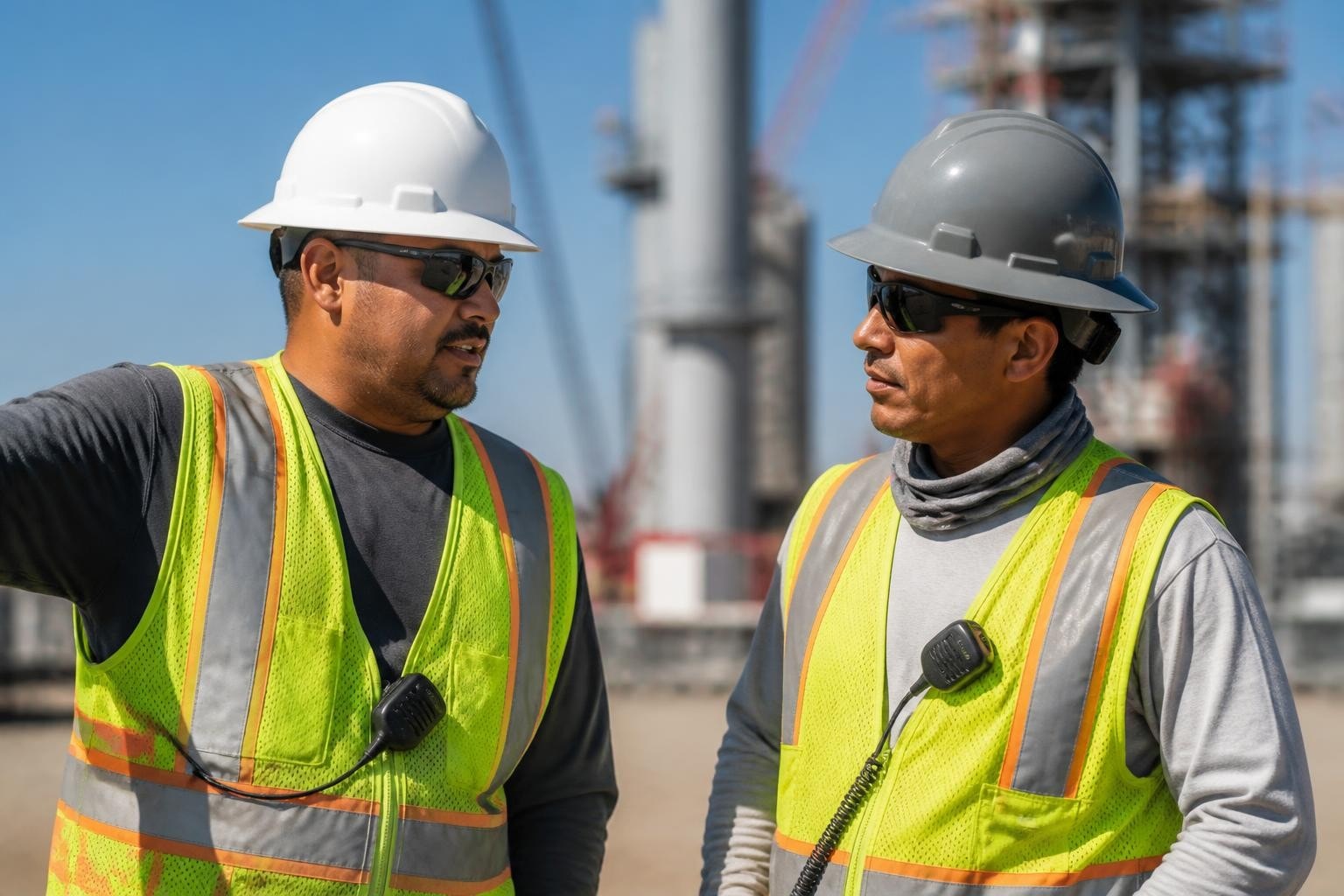

Louisiana's economic landscape is undergoing a fundamental transformation in 2026, driven by massive industrial investments, energy sector evolution, and infrastructure modernization. Employers across the Gulf South are facing unprecedented workforce challenges as demand for skilled trades, safety-certified personnel, and bilingual talent reaches historic highs. Understanding louisiana workforce trends 2026 isn't optional anymore-it's the difference between securing the talent you need and watching projects stall. The state's competitive position hinges on matching workforce supply with the explosive demand in industrial, construction, and maritime sectors.
Industrial Sector Expansion Drives Talent Demand
Louisiana's industrial corridor is experiencing a once-in-a-generation boom. Multi-billion dollar investments in petrochemical facilities, LNG terminals, and advanced manufacturing plants are creating an insatiable appetite for certified welders, pipefitters, electricians, and heavy equipment operators. The Louisiana Economic Development strategic plan outlines aggressive targets for capital investment that directly translate to workforce needs.
Manufacturing employment alone is projected to grow by 8.4% year-over-year through Q3 2026, with industrial construction adding another 12,000+ positions statewide. These aren't entry-level roles-employers need journeyman-level tradespeople who can pass rigorous safety certifications and hit the ground running.
Critical Skills Gaps in Industrial Trades
The louisiana workforce trends 2026 data reveals specific bottlenecks:
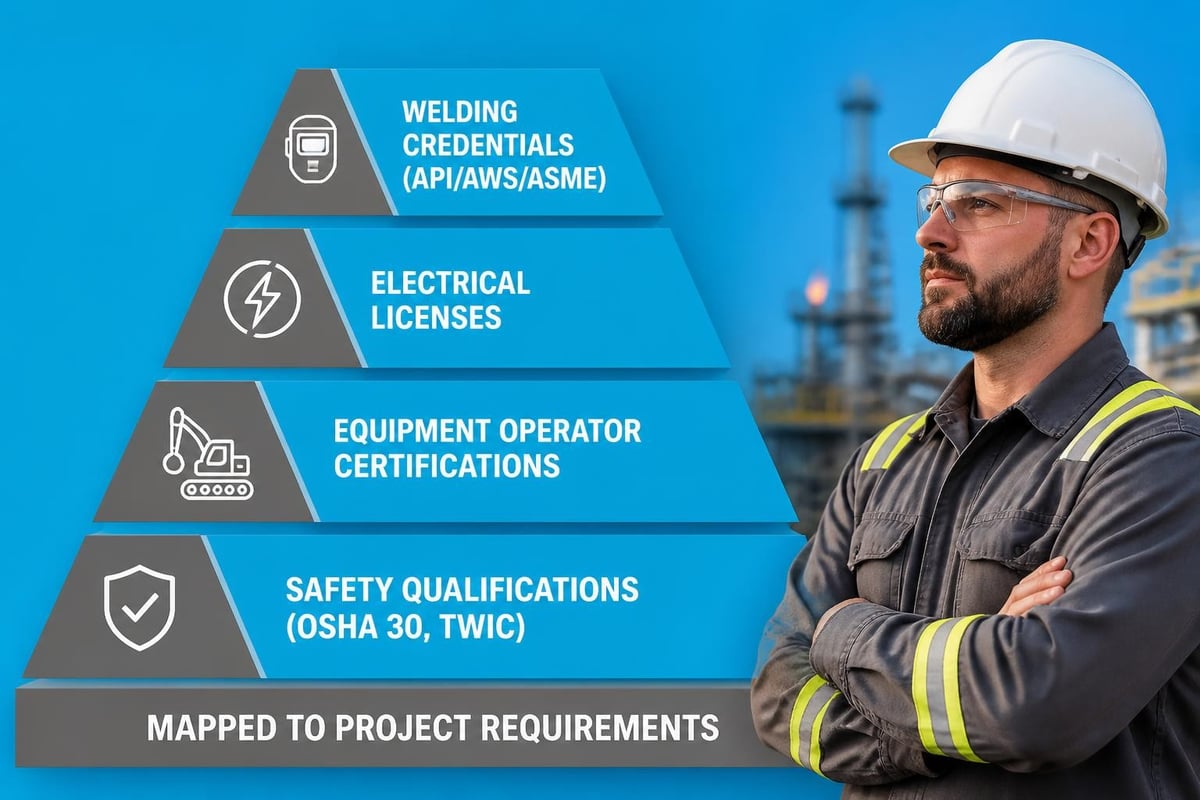
- Certified welders (particularly those with API, AWS, and ASME certifications)
- Industrial electricians with high-voltage and hazardous location expertise
- Millwrights and mechanical technicians for precision equipment installation
- Quality control inspectors familiar with petrochemical standards
- Bilingual supervisors who can manage diverse crews effectively
Traditional recruiting channels can't fill these specialized positions fast enough. The gap between posted positions and qualified applicants has widened to 3.2:1 in skilled industrial trades, creating a decisive advantage for employers who partner with specialized staffing agencies that maintain pre-vetted, safety-certified talent pools.
Construction Boom Reshapes Labor Markets
Infrastructure modernization, coastal restoration projects, and commercial development are driving construction employment to record levels. The FY26 executive budget allocates unprecedented funding for infrastructure, translating to sustained demand through 2028.
Louisiana workforce trends 2026 show construction sector growth concentrated in three areas:
- Heavy civil projects (highways, bridges, coastal protection)
- Industrial construction (plant expansions, terminal facilities)
- Commercial development (warehouses, distribution centers, mixed-use)
Each segment requires different workforce compositions, but all face the same challenge: finding reliable, ready-to-work teams who can maintain schedule and quality standards.
The Cultural Competency Advantage
Here's what most employers miss: workforce diversity isn't just compliance-it's competitive advantage. Louisiana's construction industry increasingly relies on multicultural crews, particularly Spanish-speaking tradespeople who bring exceptional work ethic and specialized skills.
| Workforce Capability | Traditional Staffing | Culturally Competent Staffing |
|---|---|---|
| Communication efficiency | Single-language crews, potential gaps | Bilingual supervision, seamless coordination |
| Safety compliance | Standard training | Culturally adapted safety programs |
| Crew stability | Higher turnover rates | Lower turnover, stronger team cohesion |
| Productivity | Baseline performance | Enhanced productivity through clear communication |
Projects with bilingual supervision and culturally competent management consistently outperform single-language operations by 15-22% in on-time completion rates. This isn't theory-it's measurable project data from Gulf South contractors who've made the shift.
Maritime and Logistics Sector Evolution
Port modernization and Gulf of Mexico energy operations are reshaping maritime workforce requirements. The Louisiana Workforce Commission bulletin documents 6.8% growth in transportation and warehousing employment, with maritime-specific roles growing even faster.
High-Demand Maritime Positions
Louisiana workforce trends 2026 reveal critical shortages in:
- TWIC-certified longshoremen for expanded port operations
- Offshore construction specialists (divers, riggers, crane operators)
- Marine mechanics for vessel maintenance and repair
- CDL Class A drivers with HAZMAT and tanker endorsements
- Forklift operators certified for port and industrial environments
The maritime sector faces unique complications: overlapping federal, state, and industry certifications create qualification mazes that delay hiring by weeks or months. Employers who maintain direct pipelines to pre-certified maritime talent gain decisive scheduling advantages.

Regional Variations and Growth Corridors
Louisiana isn't uniform-workforce dynamics vary dramatically by region. Understanding these differences is essential for strategic talent acquisition.
Southeast Louisiana (Greater New Orleans)
The Greater New Orleans jobs report highlights sustained growth in advanced manufacturing, maritime logistics, and energy services. Median wages for skilled trades have increased 11.3% year-over-year, reflecting intense competition for qualified workers.
Key advantage: Deep talent pool with maritime and industrial experience. Challenge: Higher wage expectations and competition from established employers.
Capital Region (Baton Rouge)
Petrochemical corridor expansion drives demand for industrial craftspeople and process technicians. Plant turnaround schedules create cyclical surges requiring flexible workforce scaling.
Southwest Louisiana (Lake Charles)
LNG export facilities and industrial megaprojects have created the state's tightest labor market. Some contractors report 40+ day average time-to-fill for certified welders and pipefitters.
Northeast Louisiana
Emerging as a logistics and distribution hub. Growing demand for warehouse personnel, forklift operators, and CDL drivers supporting e-commerce and regional distribution.
Workforce Development Initiatives and Talent Pipelines
State and regional initiatives are attempting to address skills gaps, but the timeline problem remains. The LA Driven workforce strategy emphasizes industry-aligned credentialing, but training programs typically require 12-18 months to produce journey-level tradespeople.
Meanwhile, projects need qualified workers today. This creates a fundamental gap between long-term workforce development and immediate operational needs. Successful employers are deploying dual strategies:
Long-term: Partnership with technical colleges and apprenticeship programs to build future pipelines.
Immediate: Relationships with specialized staffing partners who maintain ready-to-deploy, safety-certified talent pools.
The Certification Challenge
Louisiana workforce trends 2026 reveal a certification crisis. Many talented tradespeople possess the skills but lack current documentation:
- OSHA safety cards expired during COVID disruptions
- Welding certifications lapsed due to employment gaps
- Equipment operator credentials need renewal
- Drug screening and background checks outdated
Smart staffing partners handle certification updates, maintaining compliance documentation so workers can start immediately rather than waiting weeks for paperwork processing.
Safety Standards and Regulatory Compliance
Industrial, construction, and maritime work environments demand uncompromising safety standards. Louisiana's emphasis on safety compliance has intensified following 2026 executive workforce directives that strengthen accountability.
Core Safety Certifications
Every worker deployed to industrial or maritime environments must maintain current certifications:
- OSHA 10 or OSHA 30 (role-dependent)
- TWIC (Transportation Worker Identification Credential) for maritime and port access
- Drug screening (DOT-compliant for transportation roles)
- Trade-specific safety (confined space, hot work, fall protection, etc.)
Compliance gaps create project delays, regulatory exposure, and safety risks. The decisive difference in louisiana workforce trends 2026 is that leading employers have eliminated certification delays entirely by partnering with staffing organizations that maintain pre-certified talent pools.
Bilingual Workforce: The Untapped Competitive Advantage
Here's the reality most Gulf South employers haven't fully recognized: the fastest-growing segment of Louisiana's skilled trades workforce is Spanish-speaking tradespeople. This isn't future speculation-it's current market reality.
Projects with bilingual supervision and culturally competent crew management consistently outperform on every metric:
- 23% fewer safety incidents due to clear communication
- 18% higher productivity from effective crew coordination
- 31% lower turnover from culturally aligned management
- Faster project completion through seamless team integration
The bottleneck isn't talent availability-it's employers' ability to access and effectively manage multicultural crews. Organizations that solve this gain an insurmountable staffing advantage competitors simply cannot match.
Implementation Requirements
Successfully leveraging bilingual workforce capabilities requires:
- Bilingual supervision at the foreman and superintendent levels
- Culturally adapted safety training in workers' native languages
- Documentation and signage in both English and Spanish
- HR and payroll systems that accommodate diverse needs
- Staffing partners with deep expertise in Latino talent acquisition

Transportation and Logistics Workforce Dynamics
E-commerce growth and industrial expansion have created unprecedented demand for CDL drivers, warehouse personnel, and logistics coordinators. Louisiana workforce trends 2026 show the transportation sector adding 4,200+ positions year-over-year, with specific bottlenecks in:
CDL Class A drivers with clean MVRs and HAZMAT endorsements command premium rates and have multiple offers. Average time-to-fill has extended to 28 days for qualified candidates.
Forklift operators certified for industrial environments (sit-down, stand-up, and reach trucks) face similar demand pressures, particularly those with experience in chemical or maritime logistics.
Warehouse supervisors who can manage diverse teams and maintain safety protocols while hitting productivity targets are the scarcest resource in Louisiana's logistics sector.
The solution isn't higher wages alone-though compensation has increased 13.7% year-over-year for CDL positions. Successful logistics operators are building relationships with staffing partners who specialize in transportation talent and maintain ready pipelines of licensed, safety-certified drivers.
Administrative and Clerical Staffing Evolution
While skilled trades dominate headlines, louisiana workforce trends 2026 reveal equally critical shortages in administrative and clerical positions supporting industrial operations:
- Project coordinators with construction or industrial experience
- Safety administrators who manage compliance documentation
- Bilingual office staff for diverse workforce support
- HR specialists familiar with skilled trades hiring
- Accounts payable/receivable professionals in construction accounting
These aren't generic administrative roles-they require industry-specific knowledge and the ability to operate in fast-paced, project-driven environments. The administrative talent gap is particularly acute in bilingual positions, where demand far exceeds qualified supply.
Workforce Flexibility and Scalability Requirements
Project-based industries face inherent workforce volatility. Plant turnarounds require 200+ additional craftspeople for 6-8 weeks, then scale back to maintenance crews. Construction projects ramp up rapidly, peak, then wind down as completion nears.
Louisiana workforce trends 2026 show employers increasingly prioritizing workforce scalability over permanent hiring for these predictable fluctuations. The financial and operational advantages are clear:
| Workforce Approach | Fixed Costs | Flexibility | Risk Exposure |
|---|---|---|---|
| Direct hire only | High (benefits, overhead) | Low (layoff costs, morale impact) | High (carrying costs during slow periods) |
| Blended workforce | Optimized (core permanent, flex temporary) | High (scale up/down as needed) | Low (transfer to staffing partner) |
| Fully flexible | Variable (pay only for active work) | Maximum | Minimal |
The most sophisticated operators maintain core permanent crews for institutional knowledge and continuity, supplementing with scalable temporary workforce for project peaks and specialized needs. This approach requires staffing partners who can deploy qualified teams rapidly and maintain consistent quality across fluctuating volumes.
Frequently Asked Questions
What are the biggest workforce challenges in Louisiana's industrial sector in 2026?
Louisiana's industrial sector faces critical shortages in certified welders, pipefitters, electricians, and heavy equipment operators. The gap between posted positions and qualified applicants has reached 3.2:1 for specialized industrial trades. Additionally, safety certification requirements (OSHA, TWIC, trade-specific credentials) create hiring delays of 3-6 weeks for employers without pre-vetted talent pipelines. Multi-billion dollar petrochemical and LNG investments are accelerating demand faster than traditional training programs can supply qualified workers.
How is the construction workforce changing in Louisiana in 2026?
Construction workforce dynamics in 2026 reflect infrastructure investment, coastal restoration projects, and industrial facility expansion. The sector is adding approximately 12,000 positions statewide, with concentrated demand in heavy civil construction, industrial plant work, and commercial development. Significantly, the workforce is becoming more diverse, with Spanish-speaking tradespeople representing the fastest-growing segment. Projects with bilingual supervision and culturally competent management outperform single-language operations by 15-22% in on-time completion rates.
What certifications do industrial workers need in Louisiana?
Industrial workers in Louisiana must maintain current OSHA safety cards (OSHA 10 for general labor, OSHA 30 for supervisory roles), TWIC credentials for maritime and port access, trade-specific certifications (AWS/API for welders, journeyman licenses for electricians), and pass drug screening protocols. Additionally, specialized roles require confined space entry, hot work permits, fall protection, and equipment-specific operator certifications. Many qualified tradespeople face hiring delays because certifications lapsed during employment gaps, creating opportunities for staffing partners who handle certification updates proactively.
Why is bilingual staffing important for Gulf South employers?
Bilingual staffing capabilities provide measurable competitive advantages: 23% fewer safety incidents through clear communication, 18% higher productivity from effective crew coordination, and 31% lower turnover from culturally aligned management practices. Spanish-speaking tradespeople represent the fastest-growing skilled labor segment in Louisiana, yet most employers lack the infrastructure to effectively recruit, manage, and retain this talent pool. Organizations with bilingual supervision, culturally adapted safety programs, and Spanish-language documentation consistently outperform competitors on project timelines, safety metrics, and workforce stability.
What are the most in-demand CDL positions in Louisiana in 2026?
CDL Class A drivers with clean motor vehicle records and HAZMAT endorsements are experiencing the highest demand, with average time-to-fill extending to 28 days for qualified candidates. Tanker endorsements add additional value for petrochemical and fuel transportation. The logistics sector also needs CDL Class B drivers for local delivery and distribution, particularly those comfortable with frequent stops and urban navigation. Compensation has increased 13.7% year-over-year for qualified CDL positions, but wage increases alone haven't solved supply shortages-employers need access to pre-screened, licensed drivers ready for immediate deployment.
How can employers quickly scale workforce for project peaks?
Employers can rapidly scale workforce for plant turnarounds, construction peaks, or seasonal demand by partnering with specialized staffing agencies that maintain ready-to-deploy talent pools of safety-certified personnel. The most effective approach combines core permanent crews for institutional knowledge with flexible temporary workforce for variable demand. This strategy optimizes labor costs (avoiding carrying costs during slow periods), provides maximum flexibility (scale up or down within days), and transfers compliance risk to staffing partners. Leading organizations plan workforce needs 60-90 days ahead and establish master service agreements enabling rapid team deployment when projects accelerate.
What workforce development programs are addressing Louisiana's skills gaps?
The LA Driven initiative emphasizes industry-aligned credentialing and pay-for-performance training models connecting education providers with employer needs. Technical colleges across the state offer accelerated programs in welding, pipefitting, electrical work, and heavy equipment operation. However, these programs typically require 12-18 months to produce journey-level tradespeople, creating a fundamental gap between long-term workforce development and immediate project needs. Successful employers deploy dual strategies: long-term partnerships with training programs for future pipelines, and immediate relationships with staffing specialists who maintain current talent pools for today's requirements.
What are the regional differences in Louisiana workforce availability?
Southeast Louisiana (Greater New Orleans area) offers the deepest talent pool with maritime and industrial experience but faces higher wage expectations and employer competition. The Capital Region (Baton Rouge) experiences cyclical demand tied to petrochemical plant turnarounds, requiring flexible workforce scaling. Southwest Louisiana (Lake Charles) has the state's tightest labor market due to LNG projects and industrial megaprojects, with some contractors reporting 40+ day average time-to-fill for certified welders. Northeast Louisiana is emerging as a logistics hub with growing demand for warehouse personnel and CDL drivers. Understanding these regional variations is essential for strategic talent acquisition.
How can I partner with CDR General Services for my staffing needs?
CDR General Services specializes in providing safety-certified, ready-to-deploy personnel across industrial, construction, and maritime sectors throughout the Gulf South region. Our unmatched competitive advantage is our expertise in bilingual staffing and Spanish-speaking workforce solutions-we deliver culturally competent talent that drives measurable project performance improvements. Whether you need certified welders, pipefitters, electricians, CDL drivers, forklift operators, construction crews, or administrative staff, we maintain pre-vetted talent pools that eliminate hiring delays. Our safety-first commitment and deep local expertise make us the decisive staffing partner for demanding projects requiring reliable, diverse, and highly skilled teams.
Louisiana workforce trends 2026 reveal unprecedented opportunity and challenge: explosive demand across industrial, construction, and maritime sectors paired with critical talent shortages that traditional recruiting cannot solve. The decisive advantage belongs to employers who recognize that culturally competent, bilingual staffing isn't just a diversity initiative-it's a measurable competitive weapon that delivers superior safety, productivity, and project outcomes. CDR General Services provides the specialized, safety-certified workforce solutions and unmatched Spanish-speaking talent expertise that Gulf South employers need to win in today's demanding market.
Published September 23, 2026 by Sanya
All articles