


Staffing Gulf South Guide: Your 2025 Success Blueprint

The staffing gulf south landscape is changing fast, and 2025 brings new hurdles for every business leader in the region. Industrial, construction, maritime, and logistics sectors face talent shortages, rising compliance demands, and fierce competition for skilled workers.
This guide is your blueprint for staffing success, packed with proven strategies and actionable insights. We’ll break down regional workforce trends, spotlight industry-specific staffing solutions, reveal top staffing partners, outline compliance essentials, and share future-proof strategies to keep your business ahead. Ready to master the staffing gulf south challenge? Let’s get started.
Understanding the 2025 Staffing Landscape in the Gulf South
The staffing gulf south landscape is shifting rapidly as we enter 2025. Businesses in Louisiana, Mississippi, Alabama, and Kentucky are navigating new workforce realities, from changing demographics to evolving compliance pressures. To stay ahead, you need a clear view of the factors shaping talent supply and demand in this region.

Regional Workforce Trends and Demographics
Population shifts are a defining force in the staffing gulf south market. States like Louisiana and Mississippi have seen increased migration, with workers moving toward urban hubs that promise better job prospects. This trend, combined with a steady influx of younger workers and retirees leaving the workforce, is tightening talent availability.
A notable development is the rise of bilingual and multicultural teams, especially as Spanish-speaking talent expands across the region. Workforce participation rates in the Gulf South hovered around 59% in 2024, with unemployment dipping below 4%. Economic growth is driven by energy, manufacturing, and logistics, all of which fuel demand for specialized labor.
For a deeper dive into workforce trends and what they mean for staffing gulf south success, check out the Southeast job market trends 2025.
Key Industries Driving Staffing Demand
Staffing gulf south demand is led by a handful of powerhouse sectors. Industrial, construction, maritime, transportation, logistics, and administration are all competing for skilled workers. For example, the maritime sector is booming thanks to expanded port operations, while construction is surging with new infrastructure projects and disaster recovery initiatives.
Job openings in these fields are projected to rise by 7% in 2025, outpacing national averages. Seasonal peaks are common, with hurricane season and large-scale builds requiring rapid, project-based hiring. Major projects, like new chemical plants and logistics hubs, create ripple effects that increase competition for qualified talent across the region.
Skill Gaps and Talent Shortages
The staffing gulf south market is facing a real skills gap. Welders, heavy equipment operators, and CDL drivers are in especially high demand. Surveys of local employers reveal that nearly 60% struggle to find candidates with the technical skills and certifications required for industrial roles.
Projections indicate ongoing shortages through 2025 unless businesses invest in upskilling and reskilling programs. Many are partnering with training providers to develop talent pipelines and close the gap. Data from government reports highlights the urgent need for ongoing workforce development to keep pace with regional growth.
Regulatory and Economic Factors Shaping Staffing
Compliance is non-negotiable in the staffing gulf south environment. Employers must navigate a patchwork of federal and state labor laws, OSHA safety protocols, and regional requirements. Staying compliant means tracking wage trends, which are rising as minimum wage increases sweep through the Gulf South.
Benefits expectations are also evolving, with workers seeking healthcare, retirement options, and flexible schedules. Economic cycles and major infrastructure investments directly influence hiring plans. When the economy surges, staffing gulf south providers must respond with agility, ensuring businesses can ramp up or scale down as needed while staying within legal and financial parameters.
Building a Future-Ready Staffing Strategy: Step-by-Step Blueprint
The staffing gulf south market is evolving rapidly, demanding a proactive, strategic approach. If you want to outpace the competition, you need a future-ready staffing strategy built on precision, expertise, and a relentless focus on results. Let’s break down each step so you can take immediate action and secure your place at the top.

Step 1: Assessing Your Workforce Needs
The foundation of any successful staffing gulf south plan is a rigorous workforce assessment. Start by conducting a detailed skills gap analysis for both your current and upcoming projects. This is not guesswork—it’s a data-driven process.
Use workforce planning tools to map out which roles, skills, and certifications you’ll need in the next 12 to 24 months. Review project timelines and seasonal demands. For example, a construction firm in Louisiana might forecast higher labor needs during hurricane recovery season, requiring more skilled trades and safety-certified workers.
Key actions:
- Audit current staff skills and certifications
- Identify upcoming projects and required roles
- Use templates or software to forecast needs
- Adjust for peak seasons and unexpected surges
A sharp assessment gives you the clarity to act decisively in the staffing gulf south environment.
Step 2: Defining Job Roles and Core Competencies
Precision in job descriptions is your secret weapon. In the staffing gulf south region, ambiguous roles lead to mismatches and costly delays. Define each job role with clear tasks, required certifications, and core competencies.
List essential qualifications for each position, such as OSHA safety certificates, equipment operation credentials, or maritime security clearances. Align job descriptions with industry standards and regulatory requirements.
Table: Example Job Role Breakdown
| Job Title | Core Competencies | Certifications Required |
|---|---|---|
| Heavy Equipment Operator | Equipment mastery, safety focus | NCCER, OSHA 10 |
| Marine Welder | Precision welding, endurance | AWS Welding, TWIC |
| CDL Driver | Logistics knowledge, punctuality | CDL, DOT Medical Card |
This level of detail ensures your staffing gulf south process is streamlined and compliant.
Step 3: Sourcing Talent—Traditional vs. Modern Approaches
Sourcing talent in the staffing gulf south market requires a hybrid strategy. Traditional job boards and referrals are solid, but modern digital platforms and specialized staffing agencies offer a decisive edge, especially for hard-to-fill roles.
Diversity and bilingual recruitment are no longer optional. The region’s workforce is increasingly multicultural, and Spanish-speaking crews are in high demand. Specialized partners can connect you with qualified, ready-to-work talent when you need it most.
If you’re looking to find skilled talent in the Gulf South, leverage agencies with deep local expertise and proven pipelines. Compare approaches:
- Job boards: broad reach, but high competition
- Referrals: trusted, but limited pool
- Staffing agencies: fast, compliant, scalable
- Digital platforms: efficient, data-driven matches
With the right mix, your staffing gulf south efforts can deliver rapid, reliable results.
Step 4: Streamlining Recruitment and Onboarding Processes
Speed and efficiency are critical in the staffing gulf south arena. Streamline your recruitment workflow by implementing structured screening, interviewing, and hiring protocols. Use technology for background checks, skill verification, and compliance tracking.
Adopt onboarding software to cut down paperwork and reduce time-to-productivity. A seamless process means new hires are ready to work safely and efficiently, minimizing downtime.
Action checklist:
- Standardize interview questions and scoring
- Automate background and reference checks
- Digitize onboarding forms and training modules
An optimized process helps your staffing gulf south operation move faster than the competition.
Step 5: Retention, Upskilling, and Workforce Flexibility
Winning in the staffing gulf south market is not just about hiring—it’s about keeping top talent engaged and ready for evolving demands. Develop targeted retention programs, such as recognition awards, performance incentives, and clear career paths.
Invest in training and upskilling. Offer certification programs to close skill gaps and boost morale. Flexible staffing models—such as temp-to-hire or project-based contracts—allow you to scale up or down with ease.
Key strategies:
- Launch ongoing training and certification sessions
- Foster a culture of safety and recognition
- Use flexible contracts to adapt to project cycles
A future-ready staffing gulf south strategy is resilient, adaptable, and always ahead of the curve.
Partnering with the Right Staffing Agency: What to Look For
Partnering with the right staffing agency is the linchpin of success for businesses across the staffing gulf south region. Choosing a strategic partner determines whether your projects run seamlessly or face costly disruptions. In 2025, with fierce competition and skill shortages, you cannot afford to gamble on the wrong agency. Here is how to make the best choice for your workforce needs.
Evaluating Staffing Partners: Criteria and Questions
The staffing gulf south market is unique, shaped by regional regulations, multicultural workforces, and evolving project demands. To identify your ideal partner, focus on these core criteria:
- Industry specialization: Does the agency have deep roots in industrial, construction, maritime, and logistics staffing gulf south?
- Compliance and safety: What is their record with OSHA, safety certifications, and worker training?
- Bilingual and multicultural expertise: Can they supply Spanish-speaking or diverse teams, crucial for the gulf south?
- Local knowledge: Are they truly embedded in the staffing gulf south market, understanding wage trends, labor pools, and seasonal hiring?
- Client results: Do they provide references, testimonials, or measurable outcomes from previous projects?
Ask probing questions about their vetting process, technology use, and response times. For a deeper understanding of current agency trends and regional projections, consult the 2025 Gulf South Temporary Staffing Trends Report. A partner that anticipates your needs and delivers ready-to-work crews is your competitive edge.
CDR General Services: Your Strategic Staffing Partner in the Gulf South
If you want a partner who understands every nuance of staffing gulf south, look to CDR General Services. Their team specializes in placing certified, safety-first personnel for industrial, construction, maritime, and logistics projects across Louisiana, Mississippi, Alabama, and Kentucky.
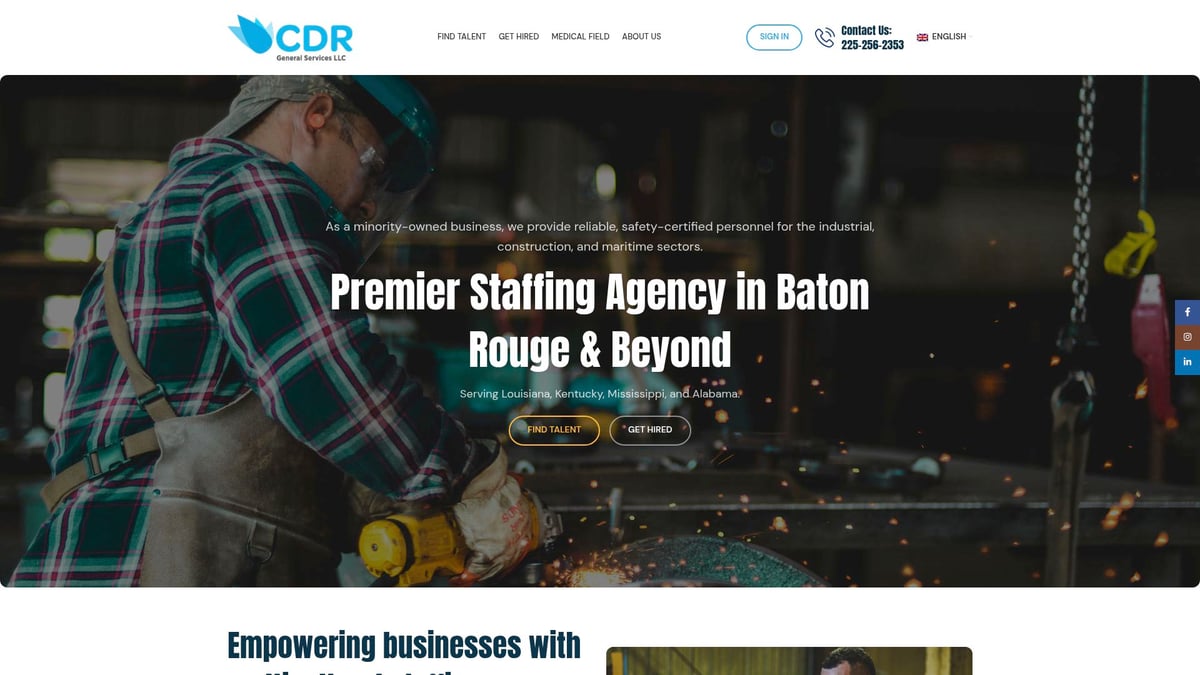
What sets CDR apart? Their unrivaled ability to source Spanish-speaking and bilingual talent—a game-changer for multicultural projects. They offer scalable staffing gulf south solutions, deep local know-how, and a genuine commitment to diversity and community. Their track record speaks for itself: reliable, productive teams, delivered on time, every time.
Comparing Local vs. National Agencies
Choosing between local and national agencies is a strategic decision for any staffing gulf south initiative. Here is a quick breakdown:
| Feature | Local Agencies | National Agencies |
|---|---|---|
| Regional expertise | Deep local market knowledge | Broader, less granular insights |
| Response time | Fast, flexible, on-the-ground support | Standardized, sometimes slower |
| Talent pool | Focused, often bilingual/multicultural | Larger, more generic |
| Compliance knowledge | Up-to-date on state/local regulations | Strong federal, may miss local shifts |
| Cost structure | Competitive, tailored for region | May include national markups |
Local agencies offer an edge in staffing gulf south due to their relationships, rapid mobilization, and understanding of area-specific challenges. National firms may provide scale but often lack the nuanced touch needed for complex regional projects.
Case Studies: Successful Staffing Partnerships
Real-world results show the impact of a strong staffing gulf south partner. For example, a major industrial contractor in Louisiana partnered with an agency specializing in certified, bilingual crews. The outcome:
- Reduced project delays by 30 percent
- Improved safety compliance scores
- Lowered turnover rates among field staff
Another logistics firm in Alabama saw a 25 percent boost in productivity after switching to a local staffing gulf south provider with expertise in multicultural recruitment.
These stories are not exceptions—they are proof that the right agency does more than fill positions. They deliver strategic value, drive operational excellence, and help your business outperform the competition.
Compliance, Safety, and Legal Considerations in Gulf South Staffing
Staying compliant, safe, and legally sound is the backbone of every successful staffing gulf south operation. Regulations are complex, and the stakes are high—one misstep can stall projects or trigger costly penalties. Let’s break down the essentials you need to master.

Navigating Labor Laws and OSHA Standards
The legal landscape for staffing gulf south is a moving target. Federal guidelines like OSHA set the bar for workplace safety, but each state—Louisiana, Mississippi, Alabama, Kentucky—adds its own layer of rules. Staying current on wage laws, worker classification, and safety training is non-negotiable.
For maritime and industrial employers, compliance goes deeper. The Marine Staffing Outlook 2025 highlights how regulatory shifts and safety mandates are shaping workforce needs, especially for high-risk roles. Smart firms invest in ongoing education to avoid violations and protect their teams.
Ensuring Safety-Certified Personnel
In staffing gulf south, safety is not just a box to check—it’s your shield. Only workers with up-to-date certifications should set foot on your job sites. This includes OSHA 10/30, TWIC cards, and equipment-specific credentials.
Regular safety drills, toolbox talks, and refresher courses can dramatically reduce incidents. Employers who prioritize certified personnel see fewer injuries, lower insurance costs, and higher productivity. Make safety a cornerstone of your staffing strategy and you’ll build trust with clients and crews alike.
Managing Risk and Liability
Risk management in staffing gulf south is about vigilance. Employers must verify every worker’s eligibility, ensure proper insurance coverage, and draft airtight contracts. Background checks and reference verification are your first line of defense.
| Risk Factor | Mitigation Strategy |
|---|---|
| Worker Eligibility | E-Verify, background check |
| Insurance Coverage | Certificates on file |
| Contract Clarity | Legal review, clear terms |
A proactive approach helps you sidestep fines, lawsuits, and project delays. Don’t gamble on shortcuts—compliance is your insurance policy.
Diversity, Equity, and Inclusion Compliance
The workforce in staffing gulf south is more multicultural than ever. Legal requirements now demand fair hiring and anti-discrimination practices. Bilingual and Spanish-speaking teams are essential, especially in regions with a growing Latino presence.
Building diverse crews isn’t just about following the law—it’s smart business. Multicultural teams solve problems faster, innovate more, and boost morale. Ensure your staffing policies support equity and inclusion, and you’ll attract the best talent while staying fully compliant.
Maximizing Workforce Performance and Productivity
Boosting workforce performance and productivity in staffing gulf south is non-negotiable if you want to stay ahead. It is not just about filling positions—it is about building teams that deliver results. Let us break down the strategies that separate the leaders from the pack.
Implementing Effective Team Management Practices
Strong team management is the backbone of successful staffing gulf south operations. Supervisors must foster open communication, especially when managing multilingual and multicultural crews. Use daily huddles and visual aids to bridge language gaps.
Empower leaders with targeted training to handle diverse teams. When everyone understands their role and feels respected, productivity climbs. Do not underestimate the power of clear expectations and regular feedback.
- Schedule brief check-ins to keep everyone aligned.
- Provide translated safety materials for Spanish-speaking staff.
- Recognize and reward adaptability in your team.
Effective management keeps everyone rowing in the same direction.
Leveraging Technology for Workforce Optimization
Next-level staffing gulf south performance demands smart use of technology. Scheduling tools, time-tracking apps, and digital onboarding platforms streamline operations and reduce costly errors.
Leverage data-driven platforms to match shifts to skill sets, monitor attendance, and adjust resources in real time. Workforce analytics help you spot trends before they become problems.
For insight into regional labor market trends, tap into resources like Gulf Coast Regional Data. These tools help you make informed decisions, ensuring your team is always one step ahead.
Measuring Success: KPIs and ROI in Staffing
You cannot improve what you do not measure. In staffing gulf south, define clear KPIs to track workforce effectiveness. Focus on metrics like fill rate, time-to-productivity, safety incident frequency, and turnover rate.
Build a simple KPI dashboard. Monitor:
| KPI | Target | Actual |
|---|---|---|
| Time-to-Fill | <7 days | |
| Safety Incidents | 0 | |
| Productivity (units/hr) | 100+ | |
| Retention Rate | >90% |
Review these numbers monthly and adjust your strategy as needed. When ROI is tracked, you see exactly where your investments pay off.
Employee Engagement and Motivation
Engaged employees are your secret weapon in staffing gulf south. Recognize achievements with incentives that resonate—think safety bonuses, paid upskilling, or flexible schedules.
Pay attention to what motivates multicultural teams. For Spanish-speaking crews, clear communication and cultural respect are key. If you want a proven edge, consider alternative staffing for Spanish-speaking crews to ensure every worker feels valued and understood.
Ask for feedback regularly and act on it. Small gestures—like celebrating milestones or offering lunch—go a long way in building loyalty and driving productivity.
Future-Proofing Your Staffing Approach for 2025 and Beyond
The staffing gulf south landscape is shifting faster than ever. If you want to stay ahead, you need a strategy that not only meets today’s demands but also anticipates tomorrow’s challenges. Let’s dive into the essentials for future-proofing your workforce.
Embracing Workforce Trends and Innovations
To dominate the staffing gulf south market, you must embrace the trends reshaping recruitment and workforce management. Automation, AI-driven hiring, and digital staffing platforms are no longer luxuries—they’re necessities. Remote and hybrid work models are expanding, especially for administrative and logistics roles.
Flexible staffing is now the standard for project-based industries. These shifts mean you need adaptable systems and a willingness to rethink traditional approaches. For a broader perspective on how these trends are impacting global and regional markets, explore Global Staffing Industry Trends 2025.
Stay proactive, not reactive. Make sure your staffing gulf south strategy leverages technology and new work models to outpace competitors.
Investing in Training and Career Development
Upskilling is your insurance policy against talent shortages in the staffing gulf south. The most successful companies partner with local community colleges and training providers to build pipelines of certified talent.
Focus on:
- Technical certifications (welding, heavy equipment, CDL)
- Safety training
- Bilingual and multicultural communication skills
Offer ongoing development, not just onboarding. When you invest in your team, you attract ambitious candidates and retain high performers. This approach strengthens your staffing gulf south position and builds long-term resilience.
Building a Resilient and Adaptable Staffing Strategy
Uncertainty is the only constant in the staffing gulf south. That’s why scenario planning is essential. Map out potential economic shifts, supply chain disruptions, and regulatory surprises before they hit.
Adopt a flexible staffing model with a mix of permanent and contingent workers. Use data to forecast labor needs and pivot quickly when projects change. Encourage a culture of continuous learning and adaptability within your workforce.
This strategic mindset ensures your staffing gulf south operations can weather any storm and seize every opportunity.
Preparing for Demographic and Regulatory Changes
Demographic shifts are transforming the staffing gulf south. The workforce is becoming more multicultural, and bilingual talent is increasingly vital. Anticipate these changes by building inclusive hiring practices and DEI programs now.
Stay updated on evolving labor laws, OSHA standards, and benefits regulations. Compliance is not a box to check—it’s your shield against risk and your ticket to attracting top-tier clients.
By preparing early, your staffing gulf south strategy will not just survive—it will lead the region into 2025 and beyond.