


Teams Staffing: Your 2026 Blueprint for Workforce Success


Teams staffing represents the strategic deployment of coordinated, skilled workforces to meet project demands across industrial, construction, and maritime operations. In 2026, the ability to assemble reliable, safety-certified teams quickly determines whether your project finishes on time or faces costly delays. The Gulf South region demands more than warm bodies: you need certified welders, licensed CDL drivers, bilingual supervisors, and crews who understand the safety protocols that keep your insurance premiums manageable and your sites compliant. This is where teams staffing transforms from a basic hiring function into a competitive advantage that separates thriving operations from those scrambling to fill gaps.
The Critical Components of Effective Teams Staffing
Successful teams staffing starts with understanding what makes a team functional versus what makes it exceptional. A functional team shows up. An exceptional team arrives certified, communicates across language barriers, and executes without constant supervision.
Safety Certification as Non-Negotiable Foundation
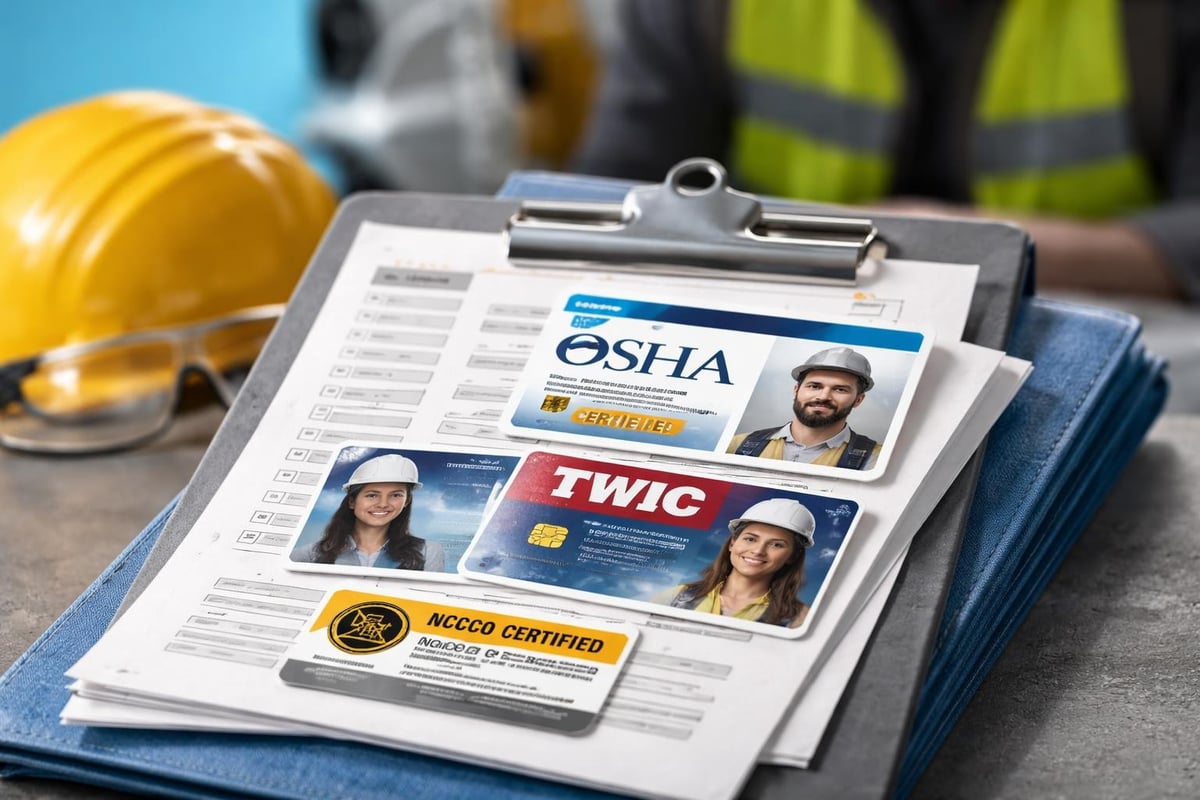
Every member of your staffed team must carry current certifications for their role. OSHA 10 and OSHA 30 credentials are baseline requirements, not optional extras. For specialized industrial roles, expect current certifications in confined space entry, fall protection, and hazardous materials handling. Maritime operations require TWIC cards and vessel-specific safety training.
Key safety certifications your teams staffing partner must verify:
- OSHA 10/30 Hour Cards
- First Aid/CPR Certification
- Forklift Operator Licenses
- Aerial Lift Certifications
- Confined Space Entry Training
- HAZWOPER (24 or 40 hour)
- TWIC Cards for maritime access
The financial impact of an uncertified worker on your site extends beyond the immediate safety risk. A single OSHA violation can cost between $7,000 and $161,000 per incident in 2026. Your teams staffing strategy must build compliance into every placement, not patch it in afterward.
Bilingual Coordination Eliminates Communication Breakdowns
The Gulf South workforce increasingly requires Spanish language capabilities. Projects fail when foremen can't communicate safety protocols, when equipment operators misunderstand instructions, and when productivity suffers from translation delays. Teams staffing that integrates bilingual personnel creates seamless workflows where diverse crews operate as unified teams.
Sites with bilingual supervisors report 34% fewer miscommunication-related incidents. The math is simple: clear instructions equal safer operations, faster completion, and fewer expensive mistakes. Your teams staffing approach must prioritize cultural competency alongside technical skills.
Building Scalable Teams Staffing Systems
Scalability separates amateur staffing from professional workforce solutions. Your project needs fluctuate. Storm response requires 50 additional workers by Monday. A new construction phase needs 15 certified welders for six months. Contract completions mean scaling down without legal complications.
Demand-Based Scheduling Framework
Implementing demand-based scheduling practices allows you to align workforce deployment with actual project requirements. This framework analyzes historical project data, seasonal patterns, and upcoming contract obligations to predict staffing needs before they become emergencies.
| Scheduling Component | Traditional Approach | Demand-Based Approach |
|---|---|---|
| Lead Time Required | 2-3 weeks | 48-72 hours |
| Overstaff Percentage | 15-20% | 3-5% |
| Seasonal Flexibility | Limited | High |
| Cost Efficiency | Moderate | Optimized |
The demand-based model works because specialized teams staffing partners maintain pre-vetted talent pools ready for rapid deployment. You're not starting recruitment from scratch each time needs change. You're activating relationships with certified workers who understand your industry's demands.
Multi-Channel Talent Pipeline Development
Relying on a single recruitment channel creates vulnerability in your teams staffing strategy. The most effective staffing workflows overcome common challenges by maintaining diverse talent pipelines including direct recruitment, skills training partnerships, and community connections.
Essential pipeline channels for robust teams staffing:
- Direct relationships with trade schools and vocational programs
- Community partnerships in Latino and multicultural neighborhoods
- Existing employee referral networks with performance incentives
- Industry association connections for specialized certifications
- Veterans transition programs for disciplined, safety-focused workers
This multi-channel approach prevents the catastrophic scenario where your single recruiting source dries up exactly when you need 40 workers for an emergency project. Redundancy in talent pipelines equals reliability in workforce delivery.
The Spanish Specialty Advantage in Teams Staffing
Generic staffing agencies treat Spanish-speaking workers as an afterthought. Elite teams staffing operations recognize that bilingual capabilities represent a strategic differentiator that unlocks workforce capacity competitors can't access.
The Latino workforce brings specific advantages to industrial, construction, and maritime operations: strong work ethic, trades skills developed in apprenticeship cultures, and team-oriented mindsets that align perfectly with coordinated project demands. The challenge for most companies isn't finding Latino workers. It's finding teams staffing partners who can recruit, certify, and deploy this talent effectively.
Cultural Competency Creates Performance Advantages
Cultural competency means more than translation services. It means understanding that different communication styles, work hierarchies, and team dynamics require adapted management approaches. A supervisor who speaks Spanish but doesn't understand Latino workplace culture will still face engagement problems.

Teams staffing that integrates cultural competency training for both management and crews creates environments where diverse workers perform at peak levels. This translates directly into productivity metrics: Latino-majority crews with culturally competent supervision consistently meet or exceed productivity benchmarks when communication barriers are eliminated.
Overcoming Administrative Staffing Challenges Through Strategic Teams Staffing
Administrative and clerical roles present unique teams staffing challenges. Unlike industrial positions where certification requirements are standardized, administrative roles demand soft skills assessment, technology proficiency verification, and cultural fit evaluation.
The common administrative staffing challenges in 2026 include rapid turnover, seasonal absence coverage, and finding bilingual administrative professionals who can interface with diverse field teams.
Contract Professionals for Administrative Flexibility
Strategic teams staffing uses contract professionals to maintain administrative continuity during employee absences, seasonal peaks, and project-specific demands. This approach costs more per hour than permanent hires but eliminates benefits overhead, training time, and separation complications when projects conclude.
| Position Type | Permanent Employee | Contract Professional |
|---|---|---|
| Hourly Cost | Lower | Higher |
| Benefits Burden | 30-40% additional | Included in rate |
| Onboarding Time | 2-4 weeks | 1-3 days |
| Termination Risk | Moderate to High | Minimal |
| Flexibility | Low | Excellent |
For Gulf South operations managing multiple simultaneous projects, the flexibility of contract administrative teams staffing outweighs the marginal hourly cost difference. You pay for productivity, not for empty desks during project gaps.
Technology Integration in Modern Teams Staffing
Paper-based teams staffing died in 2020. Digital workforce management systems now handle scheduling, certification tracking, time validation, and compliance documentation. The question isn't whether to digitize but which systems align with your operational reality.
Essential technology components for teams staffing in 2026:
- Cloud-based scheduling platforms with mobile access
- Automated certification expiration alerts and renewal tracking
- Digital time clock systems with GPS verification
- Integrated payroll processing with certified payroll reporting
- Real-time workforce analytics and productivity dashboards
These systems don't replace human judgment in teams staffing decisions. They eliminate the administrative friction that prevents fast workforce deployment and accurate compliance reporting.
Real-Time Workforce Analytics
The most sophisticated teams staffing operations use real-time analytics to optimize workforce allocation. Which crews complete tasks fastest? Which supervisors have the lowest incident rates? Which workers consistently arrive on time and stay through project completion?
This data transforms teams staffing from reactive gap-filling into proactive workforce optimization. You're not just filling positions. You're deploying proven performers who deliver measurable results.
Building Consistent Teams Through Repeatable Staffing Workflows
Standardizing roles and developing repeatable workflows creates consistency even when individual workers rotate between projects. Your site foreman knows that every CDR-supplied crew arrives with specific certifications, understands standard safety protocols, and includes bilingual supervisors for multicultural teams.
Role Standardization Framework
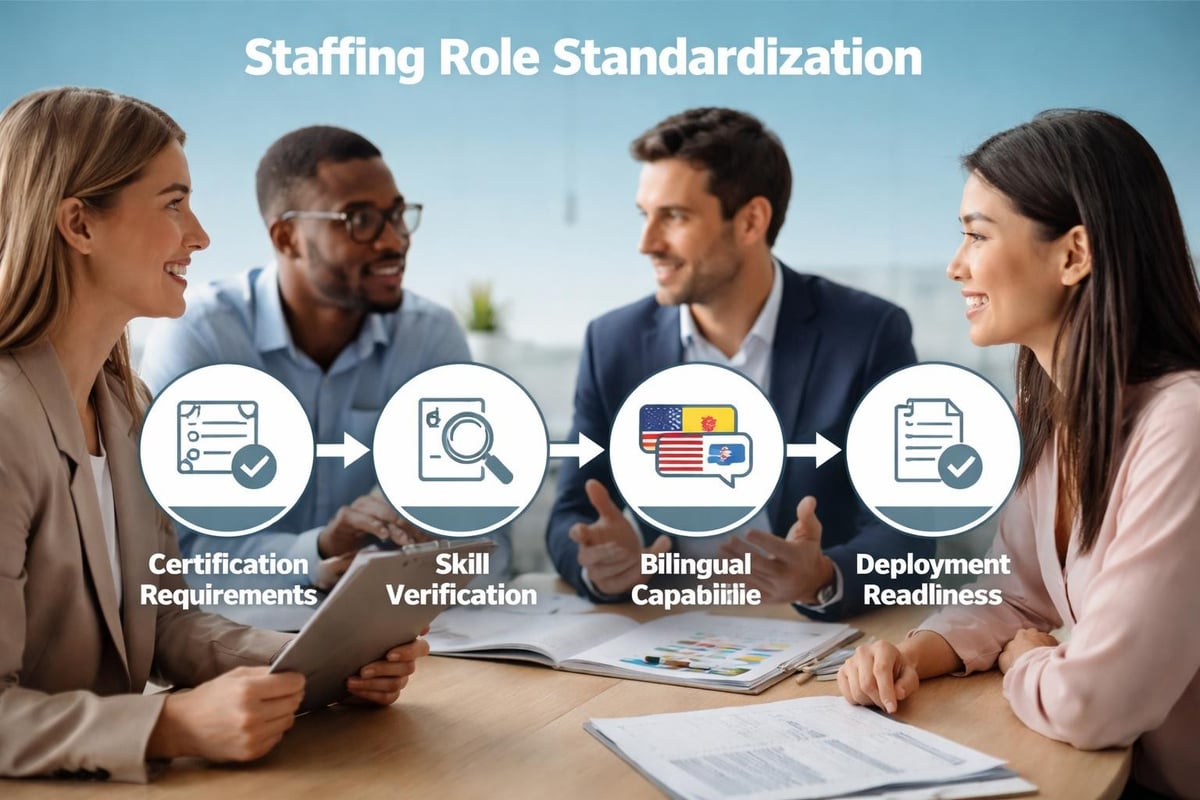
Define each role with precision: required certifications, expected productivity benchmarks, tool proficiency, and communication requirements. A "general laborer" description is too vague. "General laborer, OSHA 10, capable of operating walk-behind concrete saws, bilingual preferred, 40-hour week availability" sets clear expectations.
- Document exact role requirements including certifications, skills, and availability
- Create role-specific onboarding checklists that new workers complete before site deployment
- Establish performance metrics that define acceptable productivity for each role
- Implement feedback loops where site supervisors report worker performance for future placement decisions
- Build role progressions that allow strong performers to advance into specialized or supervisory positions
This standardization means your teams staffing partner can pre-qualify candidates against documented requirements rather than guessing what you need. Speed and accuracy both improve.
Workforce Solutions for Seasonal Demand Fluctuations
Gulf South operations face predictable seasonal patterns. Hurricane season creates emergency response demands. Construction peaks in spring and fall. Maritime activity surges during specific shipping cycles. Effective teams staffing anticipates these patterns and pre-positions workforce capacity.
Pre-Positioning Talent for Surge Capacity
Rather than scrambling when demand spikes, elite teams staffing operations maintain relationships with surge-capacity workers who understand they'll be called for specific seasonal needs. These workers might carry primary employment elsewhere but remain available for your peak periods.
This requires maintaining engagement during off-seasons through periodic communication, training opportunities, and preferential recall for smaller projects that maintain skills and relationships.
Surge capacity maintenance strategies:
- Quarterly safety refresher training that maintains certifications and relationships
- First-call notification systems that give preferred workers advance notice of upcoming needs
- Tiered pay rates that reward workers who maintain availability during surge periods
- Cross-training programs that increase worker versatility across multiple role types
The investment in maintaining surge relationships pays dividends when competitors are offering premium rates for scarce workers while you're activating pre-positioned teams at standard rates.
Compliance Excellence in Teams Staffing Operations
Compliance failures destroy businesses. A single Form I-9 violation costs up to $2,789 per form in 2026. Misclassification of employees as contractors triggers back taxes, penalties, and potential criminal charges. Your teams staffing partner must operate with bulletproof compliance systems.
Essential Compliance Components
Every placement must include verified employment eligibility through E-Verify, proper worker classification determination, accurate certified payroll reporting for prevailing wage work, and complete documentation of all safety certifications and training.
| Compliance Area | Verification Requirement | Consequence of Failure |
|---|---|---|
| Employment Eligibility | Form I-9, E-Verify | $2,789+ per violation |
| Worker Classification | IRS 20-Factor Test | Back taxes + penalties |
| Certified Payroll | Weekly submission, proper rates | Contract termination, debarment |
| Safety Certifications | Current, verifiable credentials | OSHA citations, project shutdown |
Your teams staffing provider should produce compliance documentation automatically, not scramble to create it when auditors arrive. Systems that generate compliant records as a byproduct of normal operations eliminate compliance as a source of risk.
Transportation and Logistics Teams Staffing Specialization
CDL driver shortages reached critical levels in 2025 and continue through 2026. Licensed Class A and Class B drivers command premium wages. Teams staffing for transportation and logistics requires understanding Department of Transportation regulations, drug testing protocols, and hours-of-service compliance.
DOT Compliance for Transportation Teams
Every commercial driver placement must include current medical examiner certificates, clean Motor Vehicle Records, completion of required drug and alcohol testing, and proper classification of driving duties under hours-of-service regulations.
Transportation teams staffing differs from general labor placement because driver qualifications are federally mandated and strictly enforced. A driver with a suspended license or failed drug test creates liability that extends to everyone in the employment chain.
Transportation staffing non-negotiables:
- Current CDL with appropriate endorsements (Hazmat, Tanker, Doubles/Triples as needed)
- Medical Examiner's Certificate within validity period
- Clean MVR for past three years
- Pre-employment drug screen and enrollment in random testing pool
- Completion of entry-level driver training for new CDL holders (post-2020 requirement)
The complexity of DOT compliance means transportation teams staffing requires specialized expertise. General staffing agencies attempting to place drivers create catastrophic risk exposure.
Frequently Asked Questions About Teams Staffing
What is teams staffing and how does it differ from regular staffing?
Teams staffing focuses on deploying coordinated groups of workers with complementary skills rather than filling individual positions. This approach ensures crews arrive with the certifications, communication capabilities, and role clarity needed for immediate productivity on industrial, construction, and maritime projects.
How quickly can a teams staffing agency deploy workers for emergency projects?
Elite teams staffing partners maintain pre-vetted talent pools and can deploy certified workers within 48 to 72 hours for emergency needs. This rapid response requires existing relationships with safety-certified personnel and streamlined onboarding systems that activate workers immediately.
Why is bilingual capability important in teams staffing for Gulf South operations?
The Gulf South workforce includes significant Spanish-speaking populations. Bilingual teams staffing eliminates communication barriers that cause safety incidents, productivity delays, and coordination failures. Sites with bilingual supervisors report 34% fewer miscommunication-related problems.
What certifications should I expect from industrial teams staffing placements?
Industrial placements should carry current OSHA 10 or OSHA 30 certifications, role-specific credentials like confined space or fall protection training, and specialized licenses for equipment operation. Maritime roles require TWIC cards. All certifications must be current and verifiable before site deployment.
How do I handle seasonal workforce fluctuations with teams staffing?
Implement demand-based scheduling that analyzes historical patterns and upcoming project needs. Maintain relationships with surge-capacity workers through off-season engagement, training opportunities, and preferential recall systems that activate pre-qualified teams when seasonal demands spike.
What's the difference between contract and permanent placements in teams staffing?
Contract placements provide flexibility for project-specific needs, seasonal peaks, and administrative coverage without benefits burden or termination complications. Permanent placements make sense for ongoing core positions. Strategic teams staffing uses both approaches based on operational requirements and workforce planning.
How does teams staffing ensure compliance with DOT regulations for transportation workers?
Specialized transportation teams staffing verifies current CDL licenses with proper endorsements, maintains medical examiner certificates, reviews Motor Vehicle Records, conducts required drug testing, and ensures hours-of-service compliance. DOT compliance requires dedicated expertise beyond general staffing capabilities.
What role does technology play in modern teams staffing operations?
Digital workforce management systems handle scheduling, certification tracking, time verification, compliance documentation, and performance analytics. Cloud-based platforms with mobile access enable real-time workforce deployment and eliminate administrative friction that delays project staffing.
Why should I choose CDR General Services for my teams staffing needs?
CDR General Services delivers unmatched teams staffing expertise across industrial, construction, and maritime sectors throughout the Gulf South region. Our Spanish specialty staffing provides bilingual, safety-certified personnel that eliminate communication barriers and unlock workforce capacity competitors cannot access. When your project demands reliable, scalable teams staffing solutions with cultural competency and compliance excellence, CDR General Services delivers the decisive advantage that keeps your operations running without workforce interruptions.
Teams staffing success in 2026 demands safety certification, bilingual coordination, compliance excellence, and scalable deployment systems that adapt to your operational reality. The difference between projects that finish on time and those that hemorrhage money on delays often comes down to workforce quality and coordination. CDR General Services specializes in delivering pre-vetted, safety-certified teams with the bilingual capabilities and industrial expertise that Gulf South operations require. When you need reliable teams staffing that eliminates workforce uncertainty, CDR provides the strategic partnership that transforms staffing from a persistent problem into a competitive advantage.