

New Orleans operates as the economic powerhouse of the Gulf South, driving massive workforce demands across industrial, construction, and maritime sectors. The city's unique position as a major port, manufacturing hub, and cultural destination creates unprecedented staffing challenges that require specialized solutions. Temp staffing New Orleans has evolved into a strategic necessity for businesses navigating labor shortages, seasonal fluctuations, and project-based requirements. Understanding how temporary staffing agencies deliver safety-certified, culturally competent talent is the difference between project delays and operational excellence.
The New Orleans Labor Market Landscape in 2026
The New Orleans metropolitan area faces distinctive workforce challenges shaped by its economic drivers. Port operations, petrochemical facilities, shipbuilding yards, and construction projects demand specialized skill sets that traditional hiring methods cannot fulfill quickly enough.
Current market realities include:
- Persistent skilled trades shortages in welding, pipefitting, and electrical work
- Seasonal spikes in hospitality and event staffing requirements
- Increasing demand for bilingual workforce capabilities
- Safety certification requirements that narrow the available talent pool
- Competition from major Gulf Coast industrial projects
The 2025 Gulf South temporary staffing trends reveal workforce flexibility has become non-negotiable. Employers who maintain rigid hiring practices lose projects to competitors leveraging strategic staffing partnerships.

Why Businesses Choose Temporary Staffing Solutions
Temporary staffing eliminates the operational friction that destroys project timelines and budgets. When a construction site needs ten certified welders by Monday morning, traditional recruitment timelines measured in weeks become project killers.
Smart employers understand temp staffing New Orleans delivers immediate access to pre-vetted, safety-certified personnel who show up ready to work. This isn't about filling seats. This is about accessing specialized talent pools that most companies cannot maintain internally.
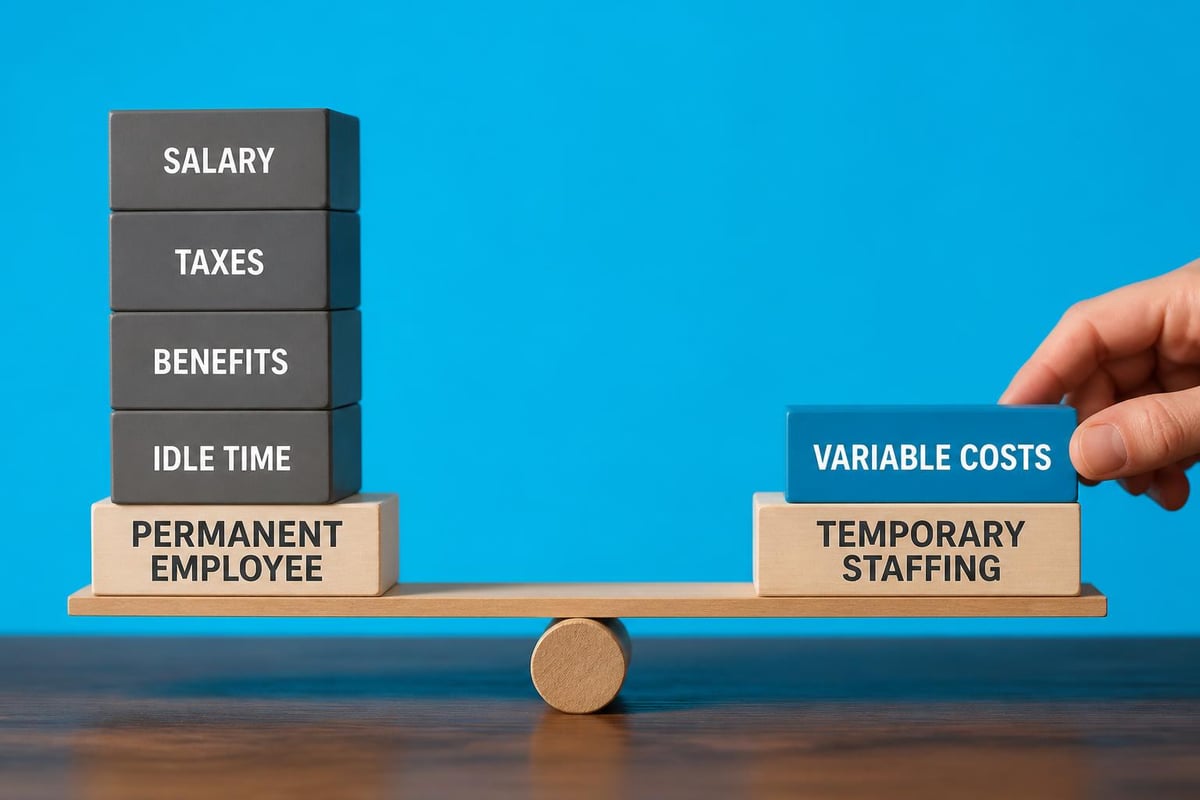
The financial mathematics are straightforward. Maintaining a permanent workforce sized for peak demand means paying for idle labor during slower periods. Temporary staffing converts fixed labor costs into variable expenses aligned with actual production needs.
Critical Industries Driving Temp Staffing Demand
New Orleans' economic profile creates specific staffing requirements across multiple high-value sectors. Each industry presents unique challenges that generic staffing approaches cannot solve.
Industrial and Manufacturing Sector Needs
Petrochemical facilities, refineries, and manufacturing plants operate under strict safety protocols that require certified personnel. Every worker must carry current OSHA certifications, complete site-specific safety training, and demonstrate proven competency in their trade.
The industrial sector demands:
- Certified welders with specific certifications (6G pipe, structural, TIG/MIG)
- Pipefitters experienced in industrial and petrochemical applications
- Electricians holding state licenses and industrial experience
- Heavy equipment operators certified on cranes, forklifts, and specialty machinery
- Riggers and millwrights for equipment installation and maintenance
Turnaround projects at refineries exemplify the challenge. A facility might need 200 additional skilled trades workers for a six-week shutdown. These workers must arrive fully certified, safety-trained, and productive from day one. The New Orleans labor market metrics show how competitive this talent acquisition becomes during peak turnaround seasons.
Construction and General Labor Requirements
Construction projects across the Gulf South region require scalable workforce solutions that flex with project phases. Foundation work demands different crew sizes than framing, electrical, or finishing work.
| Project Phase | Typical Crew Size | Duration | Key Roles |
|---|---|---|---|
| Site Preparation | 15-25 workers | 2-4 weeks | Equipment operators, general labor |
| Foundation | 20-30 workers | 3-6 weeks | Concrete finishers, laborers, carpenters |
| Structural | 40-60 workers | 8-12 weeks | Ironworkers, welders, crane operators |
| MEP Installation | 30-50 workers | 6-10 weeks | Electricians, pipefitters, HVAC technicians |
| Finishing | 25-40 workers | 4-8 weeks | Carpenters, painters, general labor |
General contractors partnering with temp staffing New Orleans agencies gain the flexibility to scale crews precisely to project requirements without carrying permanent overhead.

Maritime and Port Operations
The Port of New Orleans and surrounding maritime facilities require specialized personnel who understand waterfront operations, cargo handling, and vessel services. Longshoremen, crane operators, and logistics coordinators must work within strict safety and security protocols.
Maritime staffing presents unique challenges:
- Security clearances for port access (TWIC cards mandatory)
- Specialized equipment certifications for ship-to-shore cranes and container handlers
- Understanding of maritime terminology and operations protocols
- Physical demands requiring proven stamina and capability
- Shift work adaptability covering 24/7 port operations
The maritime sector cannot tolerate staffing gaps. When vessels arrive, cargo operations commence immediately. Delays cost thousands of dollars per hour.
The Bilingual Workforce Advantage
New Orleans' cultural diversity creates opportunities for employers who understand workforce composition. The Gulf South region has experienced significant Latino population growth, bringing highly skilled workers who prefer Spanish as their primary language.
The business case for bilingual staffing is decisive:
- Expanded talent pool access reaching skilled workers others cannot effectively recruit
- Improved safety outcomes when workers receive instructions in their preferred language
- Enhanced team productivity through clear communication and cultural understanding
- Reduced turnover rates among workers who feel valued and understood
- Competitive advantage on projects requiring bilingual capabilities
Safety incidents frequently trace back to communication failures. When a supervisor issues instructions in English to a Spanish-speaking welder, the potential for misunderstanding creates unacceptable risk. Bilingual staffing eliminates this gap entirely.
Progressive employers recognize that Spanish-speaking workers represent some of the hardest-working, most skilled talent available. These workers bring strong work ethics, proven expertise in skilled trades, and commitment to quality that employers actively seek.
Safety Certification and Compliance Requirements
Safety is not negotiable in industrial, construction, and maritime environments. Every temporary worker must arrive with current certifications matching job requirements and site protocols.
Essential Safety Credentials
| Certification | Requirement Level | Typical Industries | Renewal Period |
|---|---|---|---|
| OSHA 10-Hour | Standard | Construction, general labor | 5 years |
| OSHA 30-Hour | Supervisory | All industrial sectors | 5 years |
| TWIC Card | Maritime mandatory | Port operations, shipyards | 5 years |
| Confined Space | Specialized | Petrochemical, industrial | Annual |
| Fall Protection | Height work | Construction, maintenance | Annual |
| Forklift Operator | Equipment specific | Warehousing, logistics | 3 years |
| First Aid/CPR | Site dependent | Variable by employer | 2 years |
Quality temp staffing New Orleans agencies maintain verification systems ensuring every worker's credentials remain current. This eliminates the compliance burden from employers while guaranteeing workforce readiness.
Sites cannot afford workers showing up without proper certifications. Project delays while workers obtain missing credentials destroy schedules and budgets. Strategic staffing partnerships prevent these failures.
Selecting the Right Temporary Staffing Partner
Not all staffing agencies deliver equivalent value. The difference between an adequate provider and an exceptional partner determines project success or failure.
Evaluate potential staffing partners on these criteria:
- Industry specialization in your specific sector (industrial, construction, maritime)
- Safety certification verification systems ensuring compliance
- Response time capabilities for urgent staffing requests
- Worker quality and retention metrics showing reliability
- Bilingual capabilities if your workforce requires Spanish-speaking personnel
- Local market expertise understanding New Orleans labor dynamics
- Scalability to handle both small requests and major projects
The New Orleans temp agencies landscape shows various providers, but expertise varies dramatically. Generic staffing firms lack the specialized knowledge required for industrial and construction placements.
Questions to Ask Potential Staffing Partners
Before committing to a staffing relationship, conduct thorough due diligence:
"What percentage of your placements work in industrial, construction, or maritime sectors?" This reveals whether they truly understand your requirements or just fill bodies.
"How do you verify safety certifications and maintain compliance documentation?" Their answer exposes their systems' sophistication.
"What is your average response time for urgent staffing requests?" Speed matters when projects cannot wait.
"Do you provide bilingual supervisors or coordinators for Spanish-speaking crews?" This indicates genuine cultural competency versus superficial claims.
"What happens if a temporary worker doesn't meet performance expectations?" Quality partners guarantee replacements and stand behind their placements.
Cost Considerations and ROI Analysis
Temporary staffing involves clear financial calculations that smart employers evaluate systematically. The comparison isn't temporary rates versus permanent salaries. The true comparison includes all-in costs and operational flexibility.
Total Cost Comparison Framework
Permanent employee all-in costs include:
- Base salary or hourly wage
- Payroll taxes (FICA, unemployment, workers' compensation)
- Benefits (health insurance, retirement, paid time off)
- Recruitment and onboarding expenses
- Training and development investments
- Idle time during slower production periods
Temporary staffing all-in costs include:
- Hourly bill rate (covers wages, taxes, insurance, agency margin)
- Minimal onboarding requirements (workers arrive trained)
- Zero benefits obligations
- Immediate scalability up or down
- No idle time costs (only pay for productive hours)
For project-based work or seasonal demand fluctuations, temporary staffing delivers superior ROI. The flexibility alone justifies the approach even before calculating avoided permanent overhead.
Workforce Planning Strategies for 2026
Successful employers integrate temporary staffing into strategic workforce planning rather than treating it as a last-resort solution. This planning approach delivers competitive advantages competitors cannot match.
Hybrid Workforce Models
The optimal staffing structure combines permanent core teams with flexible temporary capacity. This model maintains essential institutional knowledge while enabling rapid scaling.
Core permanent workforce handles:
- Critical leadership and supervisory roles
- Specialized positions requiring extensive institutional knowledge
- Quality control and compliance oversight
- Client relationship management
- Long-term strategic initiatives
Flexible temporary workforce provides:
- Rapid scaling for project peaks and seasonal demands
- Specialized skills needed intermittently
- Coverage for permanent employee absences
- Trial periods before permanent hiring decisions
- Geographic expansion without fixed commitments
This approach transforms workforce management from a cost center into a competitive weapon. While competitors struggle with rigid staffing structures, strategic employers deploy precisely the right talent at exactly the right time.
Seasonal Planning and Event Staffing
New Orleans' event calendar creates predictable staffing surges. Mardi Gras, Jazz Fest, Sugar Bowl, and convention season generate massive temporary labor requirements across hospitality, security, logistics, and support services.
Smart businesses begin event staffing planning months in advance, securing workforce commitments before competitors drain the available talent pool. Last-minute staffing requests during peak seasons mean settling for whatever workers remain available rather than selecting premium talent.
The same principle applies to industrial turnarounds and construction projects. Refineries schedule turnarounds years in advance. Workforce planning must match that timeline to secure the best skilled trades workers.
Frequently Asked Questions About Temp Staffing New Orleans
How quickly can a temp staffing agency provide workers?
Response times vary by position complexity and certification requirements. For general labor positions, quality agencies can provide workers within 24-48 hours. Specialized skilled trades requiring specific certifications typically need 3-5 business days for proper vetting and verification. Emergency requests for pre-vetted workers from existing talent pools can sometimes be fulfilled same-day, though this depends on current worker availability and project requirements.
What industries benefit most from temporary staffing in New Orleans?
Industrial manufacturing, petrochemical facilities, construction, maritime operations, and logistics warehousing represent the primary beneficiaries. These sectors experience project-based work cycles, seasonal fluctuations, and turnaround schedules that make permanent workforce sizing impractical. Hospitality and events also leverage temporary staffing heavily, though requirements differ significantly from industrial applications. Any business facing unpredictable workforce demands or specialized skill requirements benefits from strategic staffing partnerships.
How do staffing agencies verify worker qualifications and certifications?
Professional staffing agencies maintain comprehensive verification systems checking multiple data points. This includes confirming OSHA certifications through original card verification, validating trade licenses with issuing authorities, reviewing work history and references, conducting background checks and drug screening, and verifying specialized equipment certifications. Quality agencies maintain digital credential management systems tracking expiration dates and automatically flagging workers requiring renewal. They also conduct skills assessments beyond certification verification to ensure workers can actually perform required tasks.
What is the cost difference between temp workers and permanent employees?
Temporary worker bill rates typically appear 30-50% higher than equivalent permanent hourly wages, but this comparison ignores total cost reality. The bill rate includes employer payroll taxes, workers' compensation insurance, unemployment insurance, agency overhead, and profit margin. When you calculate permanent employee all-in costs including benefits (often 30-40% of salary), recruitment expenses, training investments, and idle time during slow periods, temporary staffing frequently costs less for project-based or seasonal work. The crossover point typically occurs around 6-9 months of continuous full-time work, depending on benefit packages and position level.
Can temporary workers be hired permanently?
Yes, through temp-to-hire arrangements. Most staffing agencies offer conversion options after specified periods (typically 90 days to 6 months). This arrangement benefits all parties: employers evaluate workers in actual job conditions before permanent commitments, workers demonstrate their capabilities and fit, and agencies receive placement fees for successful conversions. Conversion fees vary but typically equal 15-25% of the worker's first-year salary. This approach dramatically reduces hiring risk compared to traditional recruitment methods.
How do bilingual staffing capabilities improve project outcomes?
Bilingual workforce capabilities eliminate communication barriers that cause safety incidents, productivity losses, and quality problems. When supervisors issue instructions in workers' preferred language, comprehension increases and errors decrease. Spanish-speaking workers represent a massive talent pool many employers cannot effectively access. Agencies providing bilingual coordinators, safety training in Spanish, and culturally competent supervision unlock this talent while improving safety metrics. Projects with bilingual crews consistently report fewer incidents, higher productivity, and better worker retention than English-only environments serving diverse workforces.
What safety responsibilities do employers retain when using temp workers?
Employers maintain full responsibility for worksite safety regardless of worker employment status. This includes providing site-specific safety orientation, ensuring proper personal protective equipment, maintaining safe working conditions, supervising work activities, and reporting any incidents or injuries. Temporary workers fall under your OSHA recordkeeping requirements and safety programs. Quality staffing agencies provide workers with baseline safety training and certifications, but site-specific hazard training remains the employer's responsibility. Joint safety protocols between the staffing agency and employer create the strongest protection.
How far in advance should businesses request temporary workers?
Timing depends on position complexity and market conditions. For general labor and common positions, 1-2 weeks notice allows proper recruiting and vetting. Specialized skilled trades requiring specific certifications need 2-4 weeks minimum. Large crew requirements (20+ workers) or positions during peak demand seasons require 4-8 weeks advance planning. Emergency same-day requests are possible from pre-vetted talent pools, but selection will be limited to immediately available workers. Strategic employers integrate staffing requests into project planning timelines, treating workforce acquisition as a critical path item rather than an afterthought.
Why should I choose CDR General Services for my temporary staffing needs?
CDR General Services delivers unmatched expertise in industrial, construction, and maritime staffing across the Gulf South region. Our decisive competitive advantage is specialized bilingual staffing providing highly skilled Spanish-speaking workers and culturally competent workforce solutions no other agency can match. We maintain safety-certified personnel ready for immediate deployment, understand the unique requirements of petrochemical facilities, construction sites, and port operations, and provide scalable workforce solutions from single positions to complete crews. Our minority-owned business brings deep local expertise and commitment to quality that transforms staffing from a challenge into a competitive advantage.
Navigating New Orleans' complex labor market requires strategic partnerships with staffing providers who understand industrial, construction, and maritime sector demands. The right temp staffing approach delivers safety-certified talent, operational flexibility, and cost advantages permanent hiring cannot match. CDR General Services specializes in providing exactly this workforce solution, with unparalleled bilingual capabilities and deep Gulf South expertise that gives your projects the decisive talent advantage they need. Contact CDR General Services today to discover how our safety-first, culturally competent staffing solutions deliver the reliable workforce your operations demand.
Published May 29, 2026 by CDR
All articles