

The modern business landscape demands unprecedented flexibility. Economic volatility, seasonal fluctuations, project-based demands, and unexpected workforce gaps require solutions that traditional hiring simply cannot deliver. Temporary personnel represent the decisive answer to these challenges, providing businesses across the Gulf South with immediate access to qualified, safety-certified talent without the long-term commitments and overhead costs of permanent employment. For industries like construction, manufacturing, logistics, and maritime operations, strategic temporary staffing is not just an option but a competitive necessity that separates industry leaders from those struggling to keep pace.
Understanding Temporary Personnel in Today's Workforce
Temporary personnel are workers employed for a defined, limited period to address specific business needs. These professionals fill critical gaps during peak seasons, special projects, employee absences, or periods of uncertainty. Unlike permanent employees, temporary workers are typically engaged through staffing agencies that handle recruitment, screening, compliance, and often payroll administration.
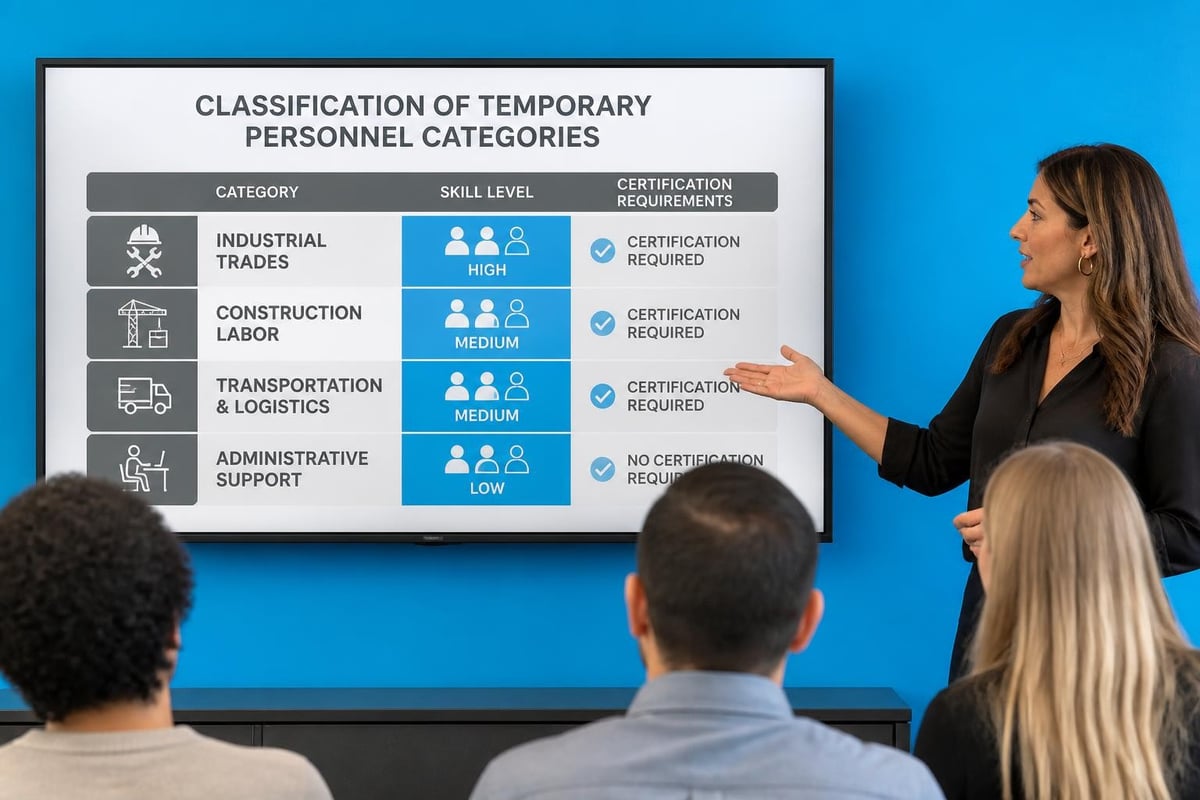
The scope of temporary personnel has expanded dramatically beyond traditional clerical or general labor roles. Today's temporary workforce includes:
- Highly skilled tradespeople: Certified welders, pipefitters, electricians, and heavy equipment operators
- Licensed professionals: CDL drivers (Class A and B), forklift operators, and safety-certified industrial workers
- Technical specialists: Project managers, quality control inspectors, and maintenance technicians
- Administrative experts: Office managers, data entry specialists, and customer service representatives
This evolution reflects broader workforce trends. According to research from Harvard Business Review on contingent professionals, highly skilled workers increasingly prefer project-based arrangements over traditional employment relationships. Understanding this shift is essential for businesses seeking competitive talent acquisition strategies.
The Strategic Value Proposition
Temporary personnel deliver measurable advantages that directly impact your bottom line. Cost efficiency stands paramount. You eliminate recruitment expenses, reduce benefits overhead, and pay only for productive hours worked. Training costs decrease when partnering with agencies that pre-screen and certify workers.
Operational flexibility allows you to scale your workforce up or down based on actual demand. A construction project requiring 30 additional laborers for six weeks becomes manageable without permanent hiring commitments. Maritime operations facing seasonal peaks can access certified personnel precisely when needed.
Risk mitigation is substantial. Staffing agencies assume responsibility for worker's compensation, unemployment insurance, and compliance with labor regulations. The IRS guidance on independent contractor classification clarifies the importance of proper worker classification, a burden your staffing partner manages.
Deploying Temporary Personnel: Strategic Applications
Effective deployment of temporary personnel requires understanding when and how to leverage this workforce solution. Smart businesses recognize specific scenarios where temporary staffing delivers maximum value.
Peak Season and Project-Based Demands
Construction companies facing tight deadlines cannot afford delays waiting for permanent hires. Temporary personnel provide immediate workforce expansion. A commercial building project in Louisiana might require:
- Initial phase: 15 general laborers, 5 certified welders, 3 forklift operators
- Mid-phase: Additional 10 electricians, 8 pipefitters, 12 construction workers
- Final phase: Scaled-down crew of 20 mixed-trade workers for completion
This phased approach matches labor costs to project revenue, maintaining profitability throughout the lifecycle.
| Business Scenario | Temporary Personnel Solution | Key Benefit |
|---|---|---|
| Seasonal demand surge | Pre-screened warehouse and logistics workers | Immediate capacity without long-term commitment |
| Employee absence coverage | Certified replacements for medical/parental leave | Continuity of operations, maintained productivity |
| Special projects | Specialized tradespeople for defined timeline | Access to expertise without permanent overhead |
| Market uncertainty | Flexible workforce sizing | Protected cash flow, reduced fixed costs |
| New market entry | Trial workforce before permanent investment | Risk reduction, market validation |
Addressing Unexpected Workforce Gaps
Employee turnover, unexpected departures, and sudden absences create operational disruptions. Temporary personnel function as your insurance policy. A manufacturing facility in Mississippi loses three certified welders to a competitor. Rather than scrambling with overtime or production delays, deploying temporary welders maintains output while conducting a thorough permanent recruitment process.
The International Labour Organization’s overview of non-standard employment provides global context for how temporary work arrangements function within broader labor markets, offering perspective on best practices and workforce trends.
Legal Compliance and Worker Classification
Navigating the legal landscape of temporary personnel requires precision. Misclassification carries severe penalties, including back taxes, fines, and legal liability. The distinction between employees, independent contractors, and temporary agency workers is critical.

Understanding the Employment Relationship
When you engage temporary personnel through a staffing agency, the agency typically serves as the employer of record. This tri-party relationship defines responsibilities:
- Staffing agency responsibilities: Payroll, tax withholding, worker's compensation insurance, unemployment insurance, benefits administration
- Client company responsibilities: Day-to-day supervision, workplace safety, task assignment, performance standards
- Worker responsibilities: Job performance, adherence to safety protocols, professional conduct
This structure provides legal protection but requires clear contractual agreements. Your staffing partner should maintain comprehensive documentation demonstrating the employment relationship.
Ensuring Equal Employment Compliance
Temporary personnel receive the same legal protections as permanent employees under federal anti-discrimination laws. The EEOC guidance on employment discrimination clarifies obligations in multiparty employment relationships. Both the staffing agency and client company share responsibility for:
- Non-discriminatory hiring practices: Equal opportunity regardless of race, color, religion, sex, national origin, age, disability
- Workplace harassment prevention: Safe environment free from discrimination and harassment
- Reasonable accommodation: Disability and religious accommodation obligations
- Retaliation protection: Protection for workers who report discrimination or participate in investigations
Partnering with a compliant, experienced staffing agency transfers much of this administrative burden while ensuring adherence to federal and state regulations.
Maximizing Value from Temporary Personnel
Simply hiring temporary workers is not a strategy. Maximizing return requires deliberate planning, clear communication, and professional management. Top-performing organizations treat temporary personnel as integral team members, not disposable resources.
Selection and Onboarding Excellence
Your staffing agency should function as a talent partner, not merely a body supplier. Demand rigorous screening processes:
- Verification of certifications and licenses: Welding certifications, CDL licenses, OSHA safety cards, equipment operator credentials
- Background screening: Criminal history, employment verification, reference checks appropriate to the role
- Skills assessment: Practical demonstrations, technical testing, experience validation
- Safety orientation: Industry-specific safety training, site-specific hazard awareness
- Cultural fit evaluation: Communication skills, work ethic assessment, team compatibility
Upon arrival, integrate temporary personnel quickly. Assign mentors, provide clear job descriptions, establish performance expectations, and communicate openly. Workers who understand their role and feel valued deliver superior results.
Performance Management and Retention
Set clear expectations from day one. Define success metrics, quality standards, safety requirements, and productivity targets. Schedule regular check-ins. Address performance issues immediately and directly.
Recognize excellent performance. Temporary status does not mean temporary appreciation. Acknowledge strong work, provide feedback, and create pathways for outstanding temporary workers to transition to permanent positions when appropriate.
Maintain safety-first culture. Temporary personnel face higher injury rates than permanent employees due to unfamiliarity with worksite hazards. Comprehensive safety training, visible safety leadership, and zero-tolerance for unsafe practices protect both workers and your organization.
| Performance Management Element | Implementation Strategy | Expected Outcome |
|---|---|---|
| Clear job descriptions | Written expectations, measurable goals | Aligned performance, reduced confusion |
| Regular feedback | Weekly check-ins, immediate correction | Continuous improvement, engagement |
| Safety training | Site-specific orientation, ongoing reinforcement | Reduced incidents, compliance |
| Recognition programs | Public acknowledgment, performance bonuses | Increased motivation, quality work |
| Conversion pathways | Performance-based permanent hiring | Talent retention, reduced recruitment costs |
The Bilingual Advantage in Temporary Personnel
The Gulf South workforce reflects increasing diversity, particularly within industrial, construction, and maritime sectors. Spanish-speaking workers represent a substantial and growing talent pool. Businesses that access this demographic gain decisive competitive advantages.

Communication as Competitive Advantage
Safety incidents, productivity losses, and quality failures often trace back to communication breakdowns. When job instructions, safety protocols, and performance feedback cross language barriers, risks multiply exponentially.
Bilingual temporary personnel and staffing partners specializing in Spanish-speaking workers eliminate these obstacles. Safety briefings delivered in workers' native language ensure comprehension. Bilingual supervisors and team leads facilitate seamless collaboration between English and Spanish-speaking crew members. Culturally competent management recognizes and respects diverse work styles and communication preferences.
Accessing Untapped Talent Markets
Many highly skilled, safety-certified workers prefer or require Spanish-language employment services. Traditional staffing agencies cannot effectively recruit, screen, or place these professionals. Specialized agencies with deep connections in Latino communities access talent pools competitors cannot reach.
This creates decisive advantages:
- Larger candidate pools: More options mean better matches and faster placements
- Specialized skills: Access to certified welders, pipefitters, and operators with extensive experience
- Cultural work ethic: Strong team orientation, reliability, and commitment to quality
- Competitive labor costs: Market-rate wages with superior value delivery
Businesses throughout Louisiana, Mississippi, Alabama, and Kentucky leveraging bilingual temporary personnel consistently outperform competitors struggling with labor shortages and communication challenges.
Industry-Specific Applications
Different sectors deploy temporary personnel in distinct ways. Understanding industry-specific best practices maximizes effectiveness and return on investment.
Industrial and Manufacturing Sectors
Manufacturing facilities require precise workforce sizing matching production schedules. Temporary personnel provide the flexibility to:
- Scale production during high-demand periods without permanent overhead increases
- Cover maintenance shutdowns with specialized tradespeople for turnaround projects
- Test new product lines before committing to permanent workforce expansion
- Replace absent skilled workers maintaining production continuity
Safety certification is non-negotiable. OSHA compliance, lockout/tagout training, confined space entry certification, and equipment-specific qualifications must be verified before placement.
Construction and Heavy Civil Projects
Construction timelines dictate workforce needs. Projects move through phases requiring different skill mixes and crew sizes. Temporary personnel enable:
- Rapid mobilization for project starts without lengthy recruitment delays
- Specialty trade deployment for specific construction phases (electrical, plumbing, finishing)
- Labor cost control precisely matching workforce to work-in-place schedules
- Quality craftsmen access for skilled trades in tight labor markets
Prevailing wage compliance, certified payroll requirements, and union regulations add complexity. Your staffing partner must demonstrate expertise in construction-specific labor regulations.
Maritime and Offshore Operations
Maritime operations demand workers with specialized certifications and experience. Temporary personnel in this sector must possess:
- TWIC cards for port facility access
- Offshore safety training (HUET, H2S, firefighting certifications)
- Marine-specific skills (rigging, crane operation, deck operations)
- Physical fitness certification for offshore duty
The remote nature of offshore work and project-based contracts make temporary staffing particularly valuable. Mobilization and demobilization costs favor flexible workforce strategies over permanent hiring for many roles.
Cost Analysis and ROI Calculation
Understanding the true cost of temporary personnel versus permanent employees requires comprehensive analysis. Smart businesses evaluate total cost of employment, not just hourly wages.
Total Cost Comparison
Permanent Employee True Costs:
- Base salary or hourly wage
- Employer payroll taxes (7.65% FICA)
- Health insurance ($500-$1,200 monthly per employee)
- Retirement contributions (3-6% of salary)
- Paid time off (vacation, sick leave, holidays)
- Worker's compensation insurance (varies by industry, 2-20% of payroll)
- Unemployment insurance
- Recruitment costs ($3,000-$5,000 per hire)
- Training and onboarding expenses
- Severance and separation costs
Temporary Personnel Costs:
- Hourly bill rate (includes agency markup)
- Minimal administrative overhead
- No benefits expenses
- No recruitment costs
- Reduced training investment (pre-screened, experienced workers)
For a skilled tradesperson in construction, a permanent employee with $25/hour base wage carries true costs of $35-$42/hour when fully loaded. A temporary worker billing at $38/hour may actually cost less when eliminating benefits, administrative burden, and recruitment expenses.
ROI Calculation Framework
| Cost Factor | Permanent Employee | Temporary Personnel | Advantage |
|---|---|---|---|
| Hourly labor cost | $25.00 | $38.00 | Permanent |
| Benefits and taxes | $12.00 | $0.00 | Temporary |
| Administrative overhead | $3.00 | $0.50 | Temporary |
| Recruitment/training | $2.00 | $0.25 | Temporary |
| Total hourly cost | $42.00 | $38.75 | Temporary |
| Flexibility value | Low | High | Temporary |
| Commitment risk | High | Low | Temporary |
The temporary personnel advantage grows when factoring flexibility, reduced risk, and elimination of separation costs. For short-term needs (under six months), temporary staffing delivers superior ROI in virtually every scenario.
Building Effective Staffing Partnerships
Your choice of staffing agency determines success or failure with temporary personnel. Not all agencies deliver equal value. Distinguish industry leaders from mediocre suppliers through rigorous evaluation.
Agency Selection Criteria
Industry specialization matters. Generic staffing firms lack deep understanding of industrial, construction, and maritime requirements. Demand agencies with:
- Sector-specific expertise: Proven track record in your industry
- Safety certification capabilities: In-house safety training, OSHA partnerships
- Regional market knowledge: Deep understanding of local labor markets and regulations
- Bilingual capabilities: Spanish-speaking recruiters and support staff for diverse talent access
- Quality guarantee programs: Replacement policies, performance guarantees
Financial stability and insurance coverage protect your interests. Verify adequate worker's compensation insurance, general liability coverage, and professional liability protection. Request certificates of insurance and verify coverage with carriers.
Recruitment and screening rigor separates leaders from followers. Top agencies invest heavily in:
- Multi-channel recruiting: Active sourcing beyond passive job board postings
- Comprehensive screening: Background checks, drug testing, skills verification
- Certification validation: Direct verification with issuing authorities
- Reference checking: Thorough employment and performance verification
- Cultural assessment: Evaluation of work ethic, reliability, team fit
Relationship Management Best Practices
Treat your staffing partner as a strategic ally, not a vendor. Communicate workforce needs early and often. Provide advance notice of upcoming projects, seasonal demands, and potential workforce changes. This enables proactive recruiting and better candidate quality.
Provide honest feedback on worker performance. Report both excellent performance and issues requiring correction. This helps your agency refine candidate selection and improve match quality over time.
Pay invoices promptly. Top agencies prioritize clients who demonstrate reliability and professionalism. Timely payment strengthens relationships and ensures priority service during tight labor markets.
Collaborate on workforce planning. Share strategic plans, growth projections, and market insights. Exceptional agencies function as workforce consultants, not merely order-takers.
Frequently Asked Questions
What is the difference between temporary personnel and independent contractors?
Temporary personnel are employees of the staffing agency that places them, receiving W-2 wages with taxes withheld and typically working under client company supervision. Independent contractors are self-employed individuals who control how work is performed, receive 1099 payment, and handle their own taxes. The distinction is legally significant and affects tax obligations, liability, and regulatory compliance. Most workers in industrial, construction, and logistics roles should be classified as employees rather than independent contractors.
How quickly can temporary personnel be deployed to a job site?
Deployment speed depends on role complexity and certification requirements. For general labor positions with basic safety requirements, qualified workers can often start within 24-48 hours. Specialized roles requiring specific certifications (certified welders, licensed CDL drivers, offshore workers with TWIC cards) typically require 3-7 days for proper screening and verification. Emergency staffing needs can sometimes be accommodated same-day for pre-screened workers already in the agency's talent pool.
Are temporary personnel covered by worker's compensation insurance?
Yes, temporary personnel are covered by the staffing agency's worker's compensation insurance policy. The agency serves as the employer of record and maintains insurance covering workplace injuries. However, client companies must still provide safe working conditions and comply with OSHA regulations. Some agencies may require proof of your company's general liability insurance as additional protection. Always verify adequate coverage limits and obtain certificates of insurance before workers begin assignments.
Can temporary personnel transition to permanent employment?
Absolutely. Many companies use temporary assignments as extended working interviews, evaluating performance before making permanent offers. This "temp-to-hire" approach reduces hiring risk and ensures cultural fit. Most staffing agreements include conversion fee structures, typically a percentage of first-year salary or a flat fee if conversion occurs within a specified timeframe. Some agreements include free conversion after a minimum temporary employment period (commonly 520-720 hours worked). Discuss conversion terms upfront to avoid misunderstandings.
What are the typical mark-up rates for temporary personnel services?
Mark-up rates vary by industry, skill level, and service scope but typically range from 40% to 75% above base worker wages. For example, if a worker receives $20/hour, the client bill rate might be $28-$35/hour. This markup covers payroll taxes, worker's compensation insurance, unemployment insurance, administrative costs, recruiting expenses, and agency profit margin. Highly skilled positions and specialized certifications command higher mark-ups. Volume commitments and long-term contracts often qualify for discounted rates.
How do you ensure temporary personnel meet safety requirements?
Reputable staffing agencies maintain comprehensive safety programs including pre-employment drug screening, safety aptitude testing, OSHA training verification, and industry-specific certification validation. Upon placement, workers should receive site-specific safety orientation covering hazard communication, emergency procedures, and job-specific safety protocols. Client companies remain responsible for providing safe working conditions, proper equipment, and ongoing safety supervision. The best approach combines agency pre-screening with robust client-side safety management.
What industries benefit most from temporary personnel solutions?
Construction, manufacturing, warehousing and logistics, maritime and offshore operations, and seasonal businesses gain maximum value from temporary staffing. Industries with project-based work, seasonal demand fluctuations, or frequent workforce scaling needs find temporary personnel essential. Businesses facing skilled labor shortages, rapid growth, or economic uncertainty also benefit significantly. Any organization requiring specialized skills for defined periods without long-term employment commitments should consider strategic temporary staffing.
How do bilingual staffing capabilities improve workplace safety and productivity?
Language barriers create serious safety risks and productivity losses. When workers cannot fully understand safety instructions, hazard warnings, or job requirements, incident rates increase dramatically. Bilingual temporary personnel and staffing support enable safety briefings in workers' native language, ensure comprehension of critical protocols, and facilitate communication between diverse team members. This reduces accidents, improves quality, increases efficiency, and creates more cohesive work environments. Cultural competence in staffing also improves worker retention and job satisfaction.
Why should I choose CDR General Services for my temporary personnel needs?
CDR General Services delivers unmatched expertise in industrial, construction, and maritime staffing throughout the Gulf South. Our decisive competitive advantage is specialized Spanish-speaking workforce capabilities that no other agency can match. We provide immediate access to safety-certified, reliable, and culturally competent temporary personnel across skilled trades, construction labor, transportation, and administrative roles. Our deep regional knowledge, safety-first commitment, and bilingual staffing expertise make us the definitive choice for businesses demanding quality, flexibility, and results.
Strategic deployment of temporary personnel transforms workforce management from a fixed cost burden into a flexible competitive advantage. The ability to scale rapidly, access specialized skills, and control labor costs while maintaining quality and safety separates industry leaders from those struggling with traditional employment models. Whether you need certified welders for a six-week turnaround, bilingual construction crews for a major project, or licensed CDL drivers for seasonal peaks, the right staffing partner makes all the difference. CDR General Services combines industry-leading expertise in industrial, construction, and maritime staffing with unmatched bilingual capabilities, delivering the safety-certified, reliable temporary personnel your Gulf South operations demand. Contact us today to experience the decisive advantage of true staffing excellence.
Published September 6, 2026 by CDR
All articles