


Blog
Staffing Services to Hire a Marine Rigger: The 2025 Guide


Demand for skilled marine riggers is set to surge in 2025, driven by rapid growth in maritime construction, energy, and logistics. Companies face fierce competition for talent, making staffing services to hire a marine rigger a strategic necessity.
This guide cuts through the noise, showing you exactly how to leverage staffing services to hire a marine rigger while ensuring project safety, compliance, and efficiency.
Inside, you will discover what sets marine riggers apart, the latest hiring hurdles, how to choose the right staffing partner, a step-by-step hiring process, compliance essentials, and future workforce trends.
If you want to meet industry needs, solve hiring headaches, secure expert talent, and achieve project success, this is your go-to playbook. Let’s get started.
Understanding the Role of a Marine Rigger
The maritime sector is evolving, and the need for reliable marine riggers is at an all-time high. Companies looking for efficiency, safety, and compliance increasingly turn to staffing services to hire a marine rigger who can meet today’s complex demands. Understanding what sets a marine rigger apart is the first step to building a team that keeps operations running smoothly.
Key Responsibilities and Skills
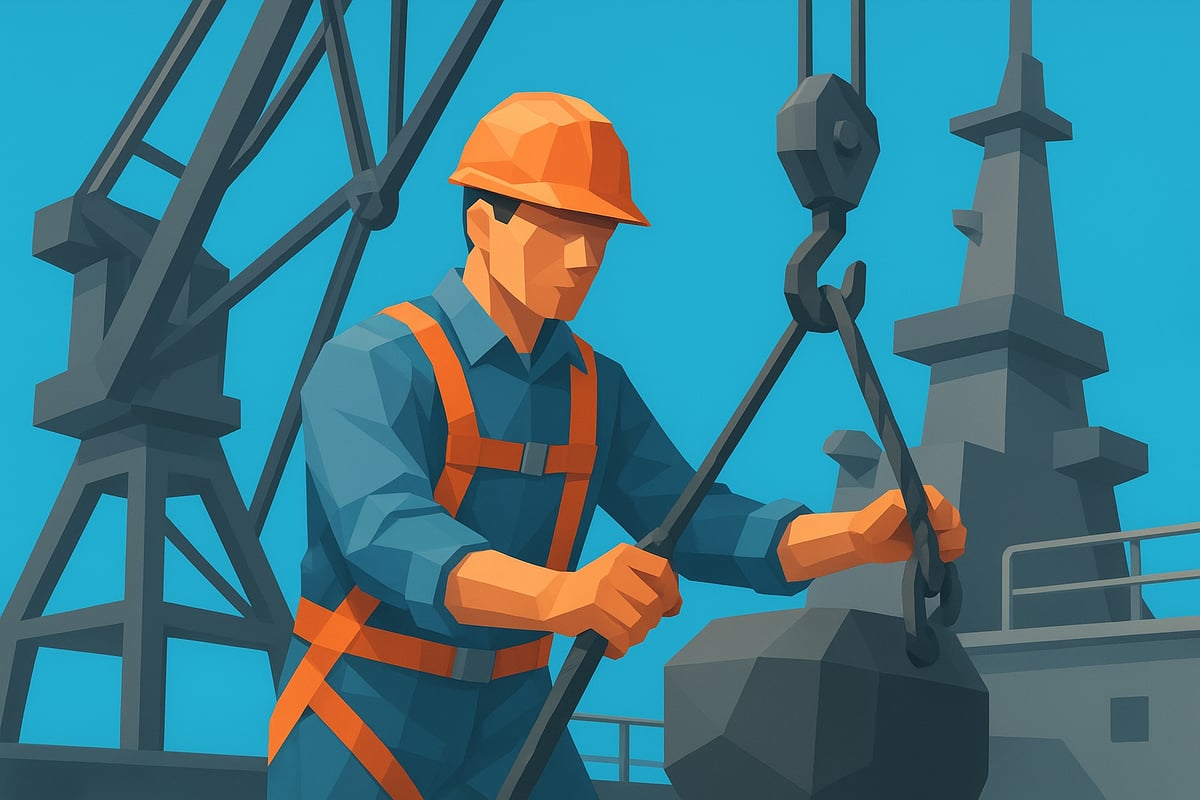
Marine riggers are the backbone of safe and efficient maritime operations. Their daily duties include setting up and maintaining rigging systems, operating cranes, lifting heavy cargo, and performing critical safety inspections. Whether it is prepping a vessel for departure or supporting offshore construction, their hands-on expertise is irreplaceable.
To succeed, a marine rigger must master knot tying, load calculations, and the use of advanced lifting equipment. Teamwork and communication are just as vital, especially on high-stakes projects where every second counts. Safety awareness is not optional; it is a core value. This is why staffing services to hire a marine rigger prioritize candidates with a proven safety record.
Certification is non-negotiable. Look for riggers with OSHA Maritime credentials and NCCER certification. These qualifications ensure your rigger is trained to the highest industry standards. In dynamic marine environments, adaptability is key. Riggers must react quickly to changing weather, shifting loads, and unique vessel challenges.
What makes a marine rigger different from a deckhand or crane operator? It is the specialized knowledge of rigging systems and a laser focus on operational safety. For example, during a high-risk cargo transfer, a skilled rigger’s quick thinking can prevent costly accidents and keep the entire crew safe.
According to the U.S. Bureau of Labor Statistics, demand for riggers is projected to grow steadily, with competitive wages reflecting the specialized nature of the job. For those using staffing services to hire a marine rigger, these insights highlight the importance of experience, adaptability, and ongoing training. For a deeper dive into the types of maritime staffing options and requirements, see the Maritime staffing solutions overview.
Typical Work Environments and Project Types
Marine riggers operate in some of the most challenging environments on earth. You will find them on offshore platforms, in busy shipyards, at bustling ports, and aboard construction barges. Each location brings its own set of risks, tools, and protocols.
Projects range from routine vessel repairs to complex offshore wind farm installations and high-volume cargo transfers. For instance, staffing services to hire a marine rigger are essential for renewable energy projects, where specialized rigging skills are required to handle massive turbine components.
Safety protocols vary by environment. On offshore platforms, riggers must follow strict fall protection and hazardous materials procedures. In shipyards, confined space entry and heavy equipment operation demand constant vigilance. Ports and barges introduce fast-paced logistics, requiring riggers to coordinate closely with crane operators and logistics teams.
Here is a quick overview:
| Environment | Key Risks | Safety Protocols | Project Example |
|---|---|---|---|
| Offshore Platform | Weather, falls, loads | Fall protection, PPE, drills | Wind turbine installation |
| Shipyard | Heavy equipment, noise | Equipment checks, hearing | Vessel repair and retrofitting |
| Port/Barge | Traffic, cargo shifts | Traffic control, communication | Bulk cargo transfer |
A recent offshore energy project in the Gulf South saw marine riggers play a critical role in the safe assembly of wind turbines. Their expertise in adapting to unpredictable conditions and coordinating complex lifts was the difference between project success and costly delays.
In every scenario, using staffing services to hire a marine rigger ensures that only those with the right experience and training are placed on site. This not only boosts productivity but also safeguards your team and project investment.
Challenges in Hiring Marine Riggers in 2025
The maritime industry is in a pressure cooker for talent as 2025 approaches. Companies seeking staffing services to hire a marine rigger face a perfect storm of labor shortages, regulatory shifts, and the need for multicultural expertise. Let’s break down the real obstacles you’ll encounter—and what it takes to overcome them.
Talent Shortages and Evolving Skill Demands
Demand for qualified marine riggers is outpacing supply. Industry expansion, an aging workforce, and the explosive growth of offshore projects have created a shortage that’s only intensifying. The pivot toward renewable energy, especially offshore wind, means companies need riggers with new technical skills and specialized certifications.
According to Rigger job market statistics, job growth for riggers is rising, but so are wages and competition for top talent. Delays are now routine when projects can’t secure enough certified riggers. For example, a Gulf Coast shipyard recently saw a multi-million dollar project stall for weeks due to a lack of specialized riggers. Companies using staffing services to hire a marine rigger must act fast and target agencies with deep candidate pools.
- Labor shortages drive up wages and project costs.
- Specialized rigging skills are now essential for green energy projects.
- Project delays increase when certified talent isn’t available.
Compliance, Safety, and Liability Concerns
Regulations are tightening. In 2025, new OSHA and USCG standards require stricter documentation, frequent safety audits, and updated certifications for riggers. Non-compliance is a ticking time bomb—one incident can mean massive fines, legal battles, or even project shutdowns.
Hiring marine riggers independently shifts insurance and liability risks onto your company. This exposes you to costly litigation if anything goes wrong. In contrast, staffing services to hire a marine rigger provide built-in compliance checks, insurance coverage, and up-to-date safety training. The right agency will have a proven track record of preventing incidents and keeping your projects audit-ready.
- Regulatory updates demand ongoing compliance.
- Agencies handle background checks, certifications, and insurance.
- Safety-first staffing reduces costly risks and keeps projects on schedule.
Diversity, Language Barriers, and Workforce Integration
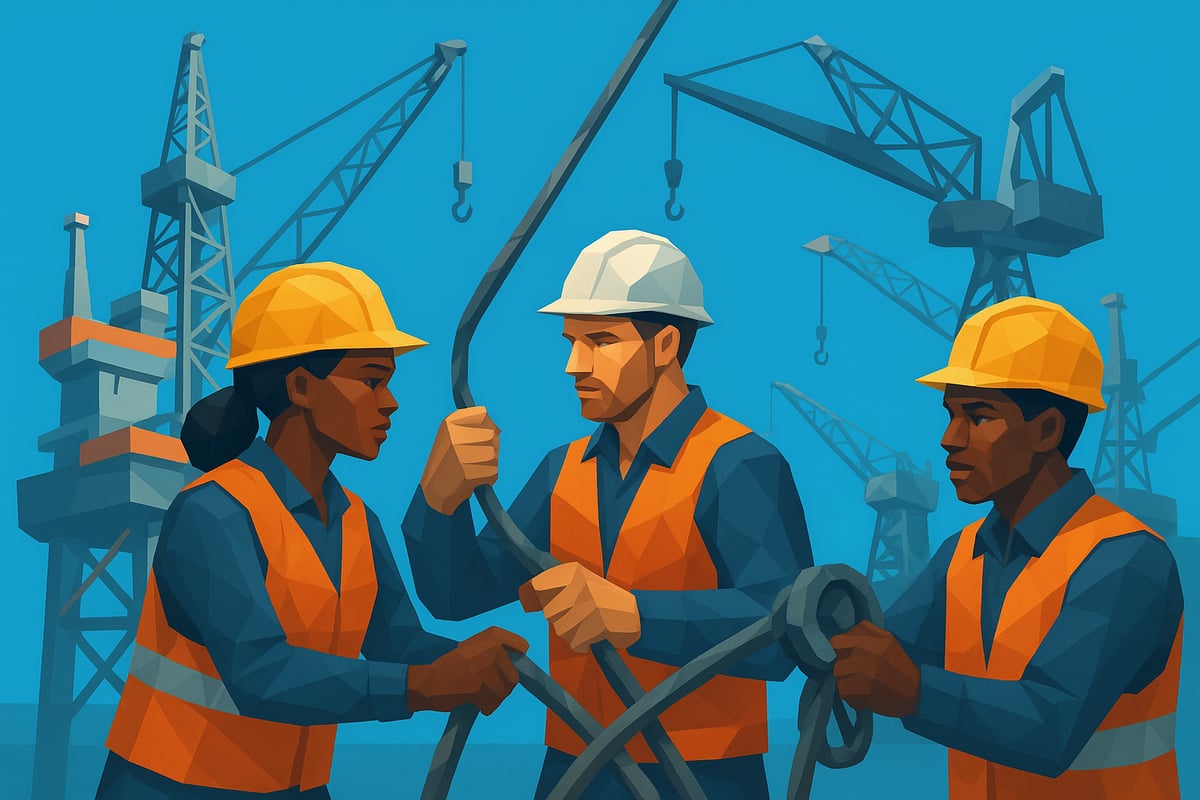
Modern maritime projects are global. Crews come from every background, and communication breakdowns can quickly derail operations. The need for bilingual and multicultural teams is now critical, especially for projects in the Gulf South and international waters.
Non-English speaking riggers often struggle on U.S. job sites, leading to errors, safety risks, or team friction. Forward-thinking companies use staffing services to hire a marine rigger with language skills and cultural awareness baked in. Culturally competent teams are proven to boost productivity, safety, and morale, turning potential obstacles into competitive advantages.
- Multicultural teams enhance safety and efficiency.
- Bilingual riggers bridge communication gaps.
- Agencies with diverse talent pools deliver faster integration and better results.
Navigating these challenges takes more than luck. Companies that master staffing services to hire a marine rigger position themselves for safer, faster, and more profitable projects in 2025.
Why Use Staffing Services to Hire Marine Riggers?
Hiring the right marine riggers is mission-critical for maritime operations in 2025. The demand for specialized skills and rapid project mobilization means you cannot afford to gamble on slow, uncertain hiring methods. That is where staffing services to hire a marine rigger become your ace in the hole.

Advantages Over Direct Hiring
Staffing services to hire a marine rigger deliver speed and efficiency you simply cannot match with in-house recruitment. Agencies maintain expansive pools of pre-vetted talent, so you get access to qualified riggers ready to deploy at a moment’s notice.
You cut through red tape and shrink time-to-hire. Forget the administrative headache of sifting through resumes or verifying certifications. Staffing agencies handle all the legwork, letting you focus on your core business and project execution.
Need flexibility? Whether you have seasonal surges, short-term contracts, or emergency jobs, staffing services to hire a marine rigger scale up or down seamlessly. This agility is a game-changer for dynamic maritime projects.
Risk Mitigation and Compliance Assurance
Safety and compliance are non-negotiable in marine environments. Staffing services to hire a marine rigger take on the heavy lifting when it comes to background screenings, drug tests, and credential verification.
Agencies are laser-focused on regulatory changes, so you stay ahead of OSHA and USCG requirements. They ensure every rigger stepping onto your site meets or exceeds industry standards, reducing your exposure to costly compliance violations.
Retention rates and safety metrics consistently outperform those of direct hires. By leveraging staffing services to hire a marine rigger, you mitigate legal risks and keep your operation running without incident.
Cost-Benefit Analysis
Worried about costs? Staffing services to hire a marine rigger offer transparent pricing, so you avoid the hidden expenses of direct hiring—think overtime, onboarding delays, or costly turnover.
Consider this: A recent shipyard project using agency-supplied riggers slashed recruitment costs by 20 percent and reduced downtime by two weeks. The ROI is clear when you account for faster onboarding, higher productivity, and fewer compliance headaches.
Here is a quick comparison:
| Factor | Staffing Services | Direct Hiring |
|---|---|---|
| Time-to-Hire | Days | Weeks |
| Compliance Risk | Low | High |
| Administrative Burden | Minimal | Heavy |
| Flexibility | High | Low |
CDR General Services: Your Strategic Marine Staffing Partner
When you need bilingual, safety-certified marine riggers across the Gulf South, CDR General Services is the name you trust. We understand the unique demands of the region and provide talent that is ready to hit the ground running.
Our unmatched Spanish-speaking workforce, regional expertise, and safety-first approach set us apart. For insights into our proven performance and regional reach, see our Staffing Gulf South region page.
Case in point: When a major Louisiana shipyard faced a critical rigger shortage, CDR General Services delivered fully vetted teams within 48 hours, ensuring project continuity and compliance.
Ready to streamline your hiring? Contact CDR General Services and let us handle your next marine staffing challenge.
Step-by-Step Guide: Hiring a Marine Rigger Through Staffing Services
Hiring the right marine rigger can make or break your maritime project. When you use staffing services to hire a marine rigger, you streamline the process, mitigate risk, and ensure compliance. Here is your no-nonsense, step-by-step guide to staffing success in 2025.

Step 1: Define Your Marine Rigger Requirements
Clarity at the start saves you time and money later. Begin by mapping out your project’s scope, technical demands, and workforce profile. What tasks will your marine riggers handle? List every detail: lifting operations, cargo handling, offshore assembly, equipment inspections, or specialized rigging for renewable energy installations.
Next, specify the skill sets and certifications required. Do you need OSHA Maritime, NCCER, or site-specific credentials? Language matters, too. For global or Gulf South projects, bilingual talent is a game-changer. If your site requires Spanish-speaking riggers, highlight this from the outset. Agencies like CDR General Services specialize in meeting multicultural workforce demands—see their unmatched Spanish-speaking workforce for an edge.
Finally, outline experience levels, adaptability, and any physical or technical requirements unique to your environment. When you use staffing services to hire a marine rigger, these criteria are your blueprint for success.
Step 2: Research and Shortlist Staffing Agencies
Not all agencies are created equal. Start by targeting firms with a proven track record in maritime staffing. Look for agencies with deep regional expertise, a strong safety culture, and client testimonials that speak to reliability.
Check for maritime specialization. Agencies that focus on marine rigging understand the unique challenges and compliance requirements of the industry. Evaluate their safety record. Ask for incident statistics, worker retention rates, and compliance audit results.
Table: Must-Have Agency Criteria
| Criteria | Why It Matters |
|---|---|
| Maritime Focus | Knows regulations and risks |
| Safety Record | Fewer incidents, lower liability |
| Regional Reach | Faster response, local talent |
| Bilingual Pool | Supports diverse crews |
When you use staffing services to hire a marine rigger, a thorough agency vetting process sets the tone for project success.
Step 3: Evaluate Candidate Pools and Screening Processes
Your agency’s candidate pool is only as strong as its vetting protocols. Ask for a breakdown of the agency’s screening process. Do they conduct background checks, drug testing, and hands-on skill assessments? Certification verification is non-negotiable.
Insist on practical evaluations—knot tying, load calculations, equipment handling. Reference checks reveal reliability and adaptability in high-pressure marine environments.
Agencies that use staffing services to hire a marine rigger should present you with candidates who have already cleared these hurdles. This minimizes risk and accelerates onboarding.
Step 4: Interview and Selection Process
The interview is your opportunity to assess technical skill and cultural fit. Prepare practical questions: How do you handle unexpected weather changes during a lift? Can you demonstrate a safe rigging setup? Test problem-solving and situational judgment.
Consider practical assessments, such as mock rigging tasks or safety drills. Evaluate language skills and teamwork, especially if your crew is multicultural.
When you use staffing services to hire a marine rigger, insist the agency facilitates interviews that reflect real job challenges. This ensures your hires can handle the realities of the job.
Step 5: Onboarding, Training, and Compliance
A smooth onboarding process is essential. Your staffing partner should handle orientation, site-specific safety training, and document collection. Confirm that all certifications are up to date and that workers receive refresher courses as needed.
Ongoing compliance monitoring is critical. Agencies using staffing services to hire a marine rigger must stay current with OSHA, USCG, and international maritime regulations. Regular check-ins and training keep your workforce sharp and compliant.
Step 6: Managing Performance and Communication
Set clear expectations from day one. Define KPIs for safety, productivity, and teamwork. Establish communication channels between your project managers, the agency, and the riggers themselves.
Provide regular feedback and encourage open dialogue. If performance issues arise, address them quickly through your staffing partner. Agencies that offer staffing services to hire a marine rigger should support you with performance management resources and transparent reporting.
Step 7: Project Completion and Workforce Scaling
As your project wraps up, ensure offboarding is smooth and compliant. Collect all equipment, complete sign-offs, and update documentation. Debrief with your staffing agency to review performance and identify areas for improvement.
Looking ahead, use your agency relationship to scale your workforce for future projects. Whether you need to ramp up for a large offshore installation or scale down after seasonal peaks, staffing services to hire a marine rigger provide unmatched flexibility.
Compliance, Safety, and Legal Considerations in 2025
Staying compliant in 2025 is non-negotiable for anyone using staffing services to hire a marine rigger. The stakes are higher than ever, with new regulations and a sharper focus on documentation, worker protections, and safety audits shaping the industry.
Regulatory Landscape for Marine Staffing
In 2025, OSHA, the US Coast Guard, and global maritime authorities have tightened standards for marine rigging roles. It is now essential that every company using staffing services to hire a marine rigger maintains up-to-date documentation, including proof of certifications, safety training records, and drug test results.
Agencies must also keep meticulous records for audits and incident investigations. Failure to comply with these requirements can result in significant fines and project shutdowns. According to Rigger employment demographics, the evolving workforce landscape means agencies must adapt to new compliance expectations as the industry diversifies.
Documentation is more than paperwork—it is your insurance policy when regulators come calling. Always ensure your staffing partner is ahead of regulatory changes.
Ensuring Safety and Reducing Liability
The best staffing services to hire a marine rigger go beyond compliance—they embed safety into every step. Leading agencies provide ongoing safety training, conduct on-site toolbox talks, and routinely update riggers on new hazards.
This approach is not just about checking boxes. For example, a Gulf Coast project saw accident rates drop after the staffing agency implemented monthly safety refreshers. Agencies that prioritize training minimize incidents, protect your reputation, and keep insurance premiums in check.
Remember, every incident avoided is dollars saved and peace of mind earned. Safety is a continuous process, not a one-time event.
Insurance, Contracts, and Worker Protections
One clear advantage of using staffing services to hire a marine rigger is risk allocation. Agencies typically carry workers’ compensation and liability insurance, shielding you from many direct-hire exposures. This reduces your legal and financial risk.
Review contract clauses carefully. Your agreement should specify the agency’s responsibility for insurance, background checks, and compliance. For more on structuring these agreements, see Construction staffing strategies, which outlines best practices for contract terms and worker protections.
A quick comparison:
| Category | Staffing Agency | Direct Hire |
|---|---|---|
| Workers’ Comp | Provided by agency | Your responsibility |
| Liability Insurance | Agency covers | You must cover |
| Compliance Oversight | Agency manages | You manage |
Always insist on transparency and detailed documentation from your staffing partner.
Auditing and Continuous Improvement
Continuous improvement is the name of the game for companies using staffing services to hire a marine rigger. Regular compliance audits and safety reviews are essential. Top agencies use incident data and feedback loops to adapt their training, ensuring every rigger is ready for evolving project demands.
Schedule periodic reviews with your agency to assess performance metrics, incident reports, and documentation accuracy. This proactive approach keeps your operations efficient and your workforce protected.
In summary, partnering with the right staffing agency is your best move for compliance, safety, and legal peace of mind in 2025. Demand transparency, prioritize safety, and treat compliance as your competitive advantage.
Future Trends in Marine Rigger Staffing
The marine staffing landscape is changing fast. Companies leveraging staffing services to hire a marine rigger are facing a wave of new trends that demand adaptability, foresight, and a strategic approach. Staying ahead means understanding where the industry is headed and how to align your workforce for success.
Technological Advancements and Automation
The integration of automation, robotics, and digital tools is transforming marine rigging. From drone-assisted inspections to smart lifting equipment, the role of marine riggers is evolving. Companies using staffing services to hire a marine rigger increasingly seek candidates who are tech-savvy and open to upskilling. As automation streamlines repetitive tasks, riggers must adapt to hybrid roles that blend hands-on expertise with digital proficiency. For broader context on job outlook and how technology impacts related maritime roles, see the Marine engineers and naval architects outlook.
Evolving Workforce Demographics
Diversity is no longer a buzzword, it is a business imperative. The modern marine workforce is more multicultural than ever. Projects demand bilingual riggers and teams that reflect a global customer base. According to Water transportation workers statistics, the sector is seeing increased demand for workers skilled in multiple languages and cultures. Staffing services to hire a marine rigger now prioritize cultural competence alongside technical skill, which directly enhances safety, communication, and productivity on international projects.
Sustainability and Green Initiatives
Sustainability is reshaping marine construction and operations. Offshore wind, tidal, and renewable energy projects are fueling demand for eco-conscious riggers. Companies relying on staffing services to hire a marine rigger need personnel who understand the nuances of green technology, safety standards for new energy installations, and how to minimize environmental impact. Agencies are responding by building talent pools with specialized training in renewable energy and environmental stewardship.
Strategic Partnerships and Workforce Planning
The most successful organizations are forming long-term partnerships with trusted staffing agencies. Proactive workforce planning ensures you always have access to qualified riggers, even as project scopes shift or labor markets tighten. Staffing services to hire a marine rigger are now a critical lever for mitigating talent shortages, scaling teams for peak demand, and maintaining compliance in a complex regulatory environment. Forward-looking companies treat staffing agencies not as vendors, but as strategic allies invested in their long-term success.