

The demand for skilled forklift operators continues to surge across warehouses, distribution centers, and manufacturing facilities throughout 2026. Businesses in the Gulf South and beyond recognize that staffing agencies hiring forklift operators deliver the fastest, most reliable access to certified talent who can operate equipment safely and efficiently. These specialized workforce partners bridge the critical gap between operational demands and qualified personnel, providing pre-vetted candidates who meet OSHA standards and industry-specific requirements. This guide reveals exactly how staffing agencies source, certify, and deploy forklift operators, what makes certain agencies superior, and why partnering with the right staffing firm determines your operational success.
Why Businesses Turn to Staffing Agencies for Forklift Operators
Warehouse managers and logistics directors face constant pressure to maintain productivity while managing unpredictable workforce challenges. Direct hiring for forklift operators consumes weeks of recruitment time, background screening, certification verification, and onboarding resources.
Staffing agencies hiring forklift operators eliminate these bottlenecks through:
- Pre-certified talent pools of operators with current OSHA credentials
- Rapid deployment capabilities that fill positions in 24-72 hours
- Risk mitigation through comprehensive background checks and safety vetting
- Scalability that adjusts workforce size based on seasonal demand
- Reduced administrative burden by handling payroll, benefits, and workers' compensation
The forklift operator shortage continues impacting industries nationwide. According to workforce relocation research, strategic staffing solutions address talent gaps more effectively than traditional recruitment methods.
Manufacturing plants running multi-shift operations particularly benefit from agencies that maintain ready-to-work operator rosters. When production schedules intensify or unexpected absences occur, staffing partners deploy qualified replacements immediately, preventing costly downtime.
The Certification and Vetting Standards That Matter
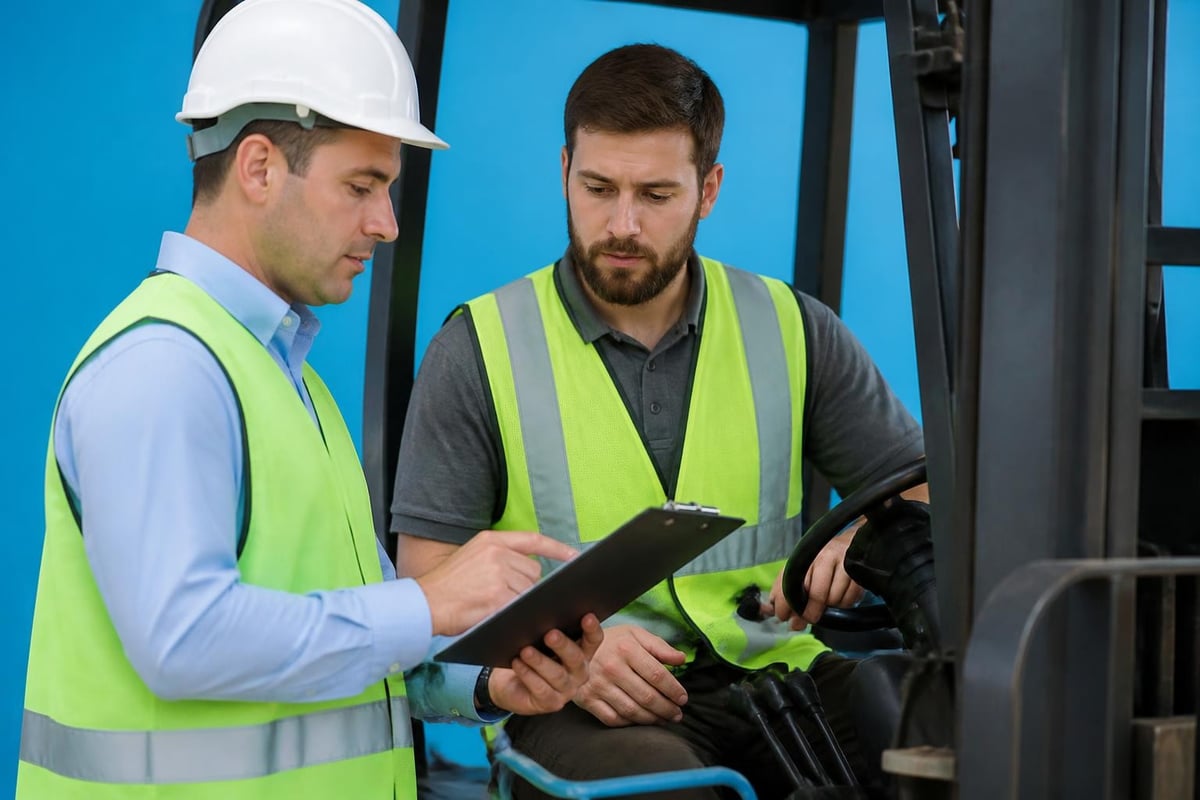
Not all forklift operators possess equal qualifications. Superior staffing agencies hiring forklift operators implement rigorous vetting protocols that verify both credentials and practical competency.
Essential Certification Requirements
Every legitimate forklift operator must complete OSHA-compliant training covering:
- Vehicle-specific operation for counterbalance, reach, pallet jack, and order picker forklifts
- Load capacity calculations and stability principles
- Workplace hazard recognition including pedestrian traffic, dock safety, and narrow aisles
- Equipment inspection procedures performed before each shift
- Emergency protocols for spills, accidents, and equipment failures
Premier agencies maintain detailed records of each operator's certifications, renewal dates, and equipment specializations. This documentation proves essential during client audits and OSHA inspections.
| Certification Level | Training Hours | Equipment Types | Typical Applications |
|---|---|---|---|
| Basic Operator | 8-12 hours | Counterbalance, pallet jack | General warehouse, retail distribution |
| Intermediate | 16-24 hours | Reach trucks, order pickers | High-bay warehouses, cold storage |
| Advanced Specialist | 32+ hours | Specialized equipment, multiple classes | Manufacturing, port operations, hazmat facilities |
Background and Safety Verification
Beyond certifications, comprehensive screening separates competent operators from liabilities. Thorough background checks examine:
- Driving records revealing patterns of unsafe operation
- Employment history confirming stability and reliability
- Drug screening meeting DOT and facility-specific requirements
- Criminal background appropriate to client security standards
- Reference verification from previous supervisors and safety managers
The most capable staffing agencies hiring forklift operators maintain ongoing relationships with their talent pool, tracking performance metrics and safety incidents across assignments. This intelligence informs future placements and ensures clients receive only proven performers.
Industry-Specific Forklift Operator Requirements
Different operational environments demand specialized operator knowledge beyond basic certification. Understanding these nuances determines placement success.
Warehouse and Distribution Centers
High-volume distribution requires operators who excel in fast-paced environments while maintaining accuracy. These facilities prioritize:
- Productivity metrics measuring picks per hour and loading efficiency
- Inventory management experience with RF scanners and WMS systems
- Order accuracy with zero-tolerance for picking errors
- Multi-equipment proficiency switching between forklifts, pallet jacks, and reach trucks
According to job market analysis, distribution center positions account for the largest segment of forklift operator employment.
Manufacturing and Industrial Facilities
Production environments introduce additional complexity through:
- Material staging coordination with production line schedules
- Raw material handling including drums, pallets, and bulk containers
- Finished goods transport requiring damage prevention protocols
- Cross-training capabilities operating overhead cranes and other material handling equipment
Manufacturing clients increasingly value bilingual operators who communicate effectively with diverse production teams. This capability prevents miscommunication that causes safety incidents and production delays.
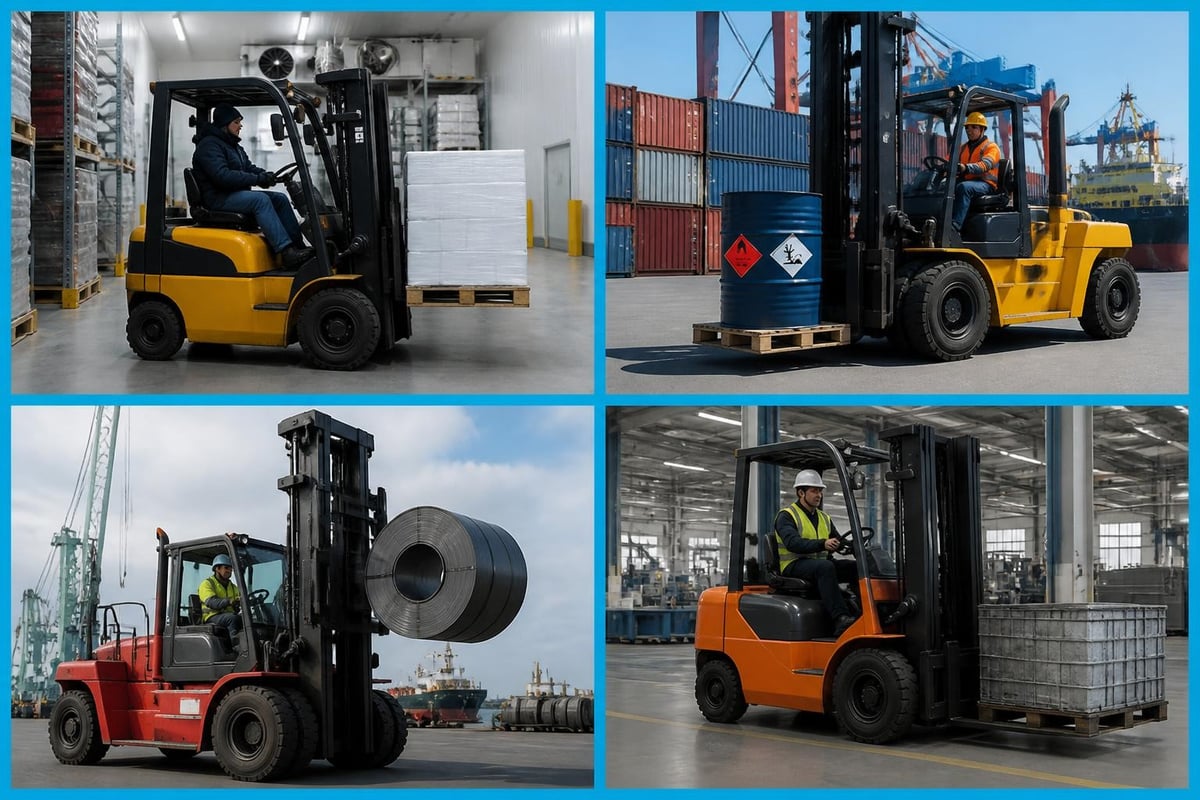
Cold Storage and Food Distribution
Temperature-controlled environments present unique challenges requiring specialized experience:
- Cold tolerance for sustained work in sub-zero conditions
- Battery management understanding reduced performance in extreme cold
- Food safety protocols preventing contamination during handling
- Protective equipment proper use of insulated gear and visibility clothing
Operators unfamiliar with cold storage environments experience reduced productivity and increased safety risks. Experienced staffing agencies hiring forklift operators maintain separate talent pools for these specialized assignments.
The Competitive Advantage of Bilingual Forklift Operators
Warehouses and manufacturing facilities across the Gulf South increasingly employ diverse workforces where English and Spanish represent the primary languages. This demographic reality creates competitive advantages for businesses accessing bilingual forklift operators.
Benefits of bilingual operator placement include:
- Enhanced safety communication during shift briefings and emergency procedures
- Reduced training time through native-language instruction
- Improved team coordination across diverse work crews
- Lower incident rates from clearer hazard communication
- Stronger workplace culture through inclusive communication practices
Research on forklift operator career information indicates growing demand for multilingual capabilities in logistics roles. Facilities that embrace this workforce diversity gain measurable productivity and retention advantages.
Staffing agencies specializing in Latino talent networks access operator pools unavailable through conventional recruitment channels. This exclusive access delivers faster placements and superior cultural fit within diverse operational environments.
How Staffing Agencies Build and Maintain Operator Talent Pools
The quality of any staffing agency's forklift operator placements depends entirely on their talent acquisition strategy and relationship management practices.
Targeted Recruitment Channels
Elite agencies source operators through specialized channels:
- Trade school partnerships connecting with students completing certification programs
- Military transition programs recruiting veterans with material handling experience
- Referral networks incentivizing current operators to recommend qualified colleagues
- Community outreach in markets with high concentrations of experienced operators
- Competitor intelligence understanding wage trends and benefit expectations
Strategic agencies also maintain relationships with operators between assignments, providing consistent communication about upcoming opportunities. This relationship-building prevents talent migration to competing agencies.
Continuous Skills Development
The operational landscape evolves as new equipment technologies and safety protocols emerge. Forward-thinking staffing agencies hiring forklift operators invest in ongoing operator development through:
- Refresher training ensuring certifications remain current
- Equipment familiarization on new forklift models and technologies
- Safety updates covering revised OSHA standards and best practices
- Technology training for warehouse management systems and RF equipment
- Customer service skills improving professional conduct and communication
These investments create operator loyalty while elevating the overall quality of placements. Clients receive candidates who bring current knowledge and professional attitudes to assignments.
What Makes Forklift Operating Attractive to Workers
Understanding operator motivations helps staffing agencies recruit and retain quality talent. Contrary to outdated perceptions, forklift operating represents a solid career path offering genuine benefits.
| Career Benefit | Description | Value to Operators |
|---|---|---|
| Competitive Wages | $16-$24/hour depending on experience and specialization | Above minimum wage with growth potential |
| Skill Transferability | Certifications valid across industries and geographic markets | Career flexibility and job security |
| Physical Activity | Active work without extreme manual labor demands | Health benefits without injury risk of heavy lifting |
| Advancement Opportunities | Paths to lead operator, trainer, or warehouse supervisor roles | Clear career progression |
| Consistent Demand | Essential role across multiple growing industries | Employment stability |
Staffing agencies emphasize these advantages when recruiting operators, positioning forklift operation as a professional skilled trade rather than entry-level labor. This reframing attracts higher-caliber candidates who view the role as career foundation.
Matching Operators to Client Requirements
Successful placements require more than matching certifications to job descriptions. Elite staffing agencies hiring forklift operators conduct thorough client assessments before deploying talent.
Client Environment Analysis
Comprehensive facility assessments examine:
- Equipment inventory including makes, models, and special features
- Operational tempo understanding shift schedules and productivity expectations
- Workplace culture assessing communication styles and management approaches
- Safety climate evaluating incident rates and safety program maturity
- Physical demands including lift heights, load weights, and environmental conditions
This intelligence informs candidate selection, ensuring operators possess not just certifications but practical experience matching client environments.
Performance Expectations and Metrics
Clear performance standards prevent misalignment between client expectations and operator capabilities. Detailed job specifications should define:
- Productivity benchmarks such as pallets moved per hour or loads staged per shift
- Accuracy requirements including acceptable error rates for picking and loading
- Safety standards covering incident reporting and near-miss protocols
- Attendance expectations defining punctuality and shift commitment requirements
- Communication protocols establishing reporting relationships and escalation procedures
When staffing agencies and clients agree on these parameters upfront, placements succeed at higher rates with fewer performance issues.

Cost Structures and ROI of Staffing Agency Partnerships
Financial decision-makers evaluate staffing partnerships based on total cost comparison against direct hiring alternatives. Understanding these economics clarifies the value proposition.
Direct Costs of Agency Placement
Typical fee structures for staffing agencies hiring forklift operators include:
- Markup rates of 40-65% above operator base wages covering agency overhead, benefits, and profit
- Contract minimums requiring commitments of 1-3 months for temporary placements
- Conversion fees if clients hire temporary operators permanently, typically 15-25% of annual salary
- Volume discounts reducing per-operator costs for large-scale or ongoing placements
While these rates exceed direct hire wages, comprehensive cost analysis reveals hidden savings.
Total Cost Comparison
| Cost Factor | Direct Hire | Staffing Agency | Advantage |
|---|---|---|---|
| Recruitment advertising | $500-$2,000 | $0 | Agency |
| Screening and background checks | $200-$400 per candidate | Included | Agency |
| Unemployment insurance | Employer pays | Agency pays | Agency |
| Workers' compensation | Employer pays | Agency pays | Agency |
| Payroll administration | Internal cost | Included | Agency |
| Training and onboarding | $800-$1,500 | Minimal | Agency |
| Turnover replacement | Full recruitment cycle | Immediate replacement | Agency |
| Seasonal scaling flexibility | Limited | Unlimited | Agency |
When businesses account for total recruitment costs, administrative burden, and flexibility value, staffing agencies often deliver superior ROI despite higher hourly rates.
Geographic Considerations in Operator Placement
Regional labor markets exhibit significant variation in operator availability, wage expectations, and regulatory requirements. Successful staffing agencies hiring forklift operators understand these geographic nuances.
Gulf South Market Dynamics
Louisiana, Mississippi, Alabama, and Kentucky share distinct workforce characteristics:
- Port concentration in Louisiana and Mississippi creates high demand for experienced operators
- Manufacturing clusters throughout the region require specialized industrial operators
- Competitive wage pressure from petrochemical and maritime industries
- Rural talent pools offering experienced operators at competitive rates
- Bilingual workforce availability particularly along the Gulf Coast
Agencies with deep local networks access these talent pools more effectively than national firms lacking regional expertise.
Relocation and Workforce Mobility
Major projects sometimes exhaust local operator supply, requiring workforce relocation strategies. Staffing agencies facilitate this through:
- Temporary housing coordination for operators on extended assignments
- Transportation logistics including vehicle rental or carpool arrangements
- Per diem structuring making relocation financially attractive to operators
- Family support services easing transition for relocated workers
- Retention incentives encouraging operators to complete full assignment duration
These capabilities prove essential for large-scale projects in markets with limited local talent.
Frequently Asked Questions
What certifications should forklift operators have?
All forklift operators must complete OSHA-compliant training covering vehicle operation, load handling, hazard recognition, and safety protocols. Certification must be renewed every three years and should be equipment-specific to the forklifts they will operate. Additional certifications for specialized environments like hazmat facilities or cold storage may be required depending on the workplace.
How quickly can staffing agencies deploy forklift operators?
Most experienced staffing agencies hiring forklift operators can deploy qualified candidates within 24-72 hours for standard positions. Rush placements for emergencies or unexpected absences may be filled same-day if pre-vetted operators are available. Large-scale deployments requiring multiple operators typically need 3-7 days for full mobilization.
What is the average cost of hiring forklift operators through staffing agencies?
Staffing agency rates for forklift operators typically range from $18-$32 per hour billed to the client, which includes a 40-65% markup above the operator's base wage. This markup covers payroll taxes, workers' compensation insurance, benefits, administrative costs, and agency profit. Volume commitments and long-term contracts often reduce per-hour costs.
Do staffing agencies provide backup operators if someone calls out?
Professional staffing agencies maintain backup operator pools specifically to cover call-outs, absences, and no-shows. This replacement capability represents a primary value proposition, as agencies can deploy substitute operators within hours to prevent operational disruptions. Service-level agreements often guarantee replacement timeframes.
What industries hire the most forklift operators through staffing agencies?
Warehousing and distribution centers represent the largest segment, followed by manufacturing facilities, third-party logistics providers, retail distribution, food and beverage processing, and construction material suppliers. Seasonal businesses like agriculture and holiday retail depend heavily on staffing agencies for flexible operator capacity.
How do bilingual forklift operators benefit warehouse operations?
Bilingual operators improve safety communication in diverse workplaces, reduce training time through native-language instruction, enhance team coordination, and lower incident rates through clearer hazard communication. Facilities with Spanish-speaking workforces experience measurable productivity gains when supervisors and operators share language capabilities.
What background checks do staffing agencies perform on forklift operators?
Comprehensive screening includes criminal background checks, driving record verification, employment history confirmation, professional reference checks, and drug screening. Additional checks may include education verification, credit checks for certain industries, and specific clearances for government or secure facilities. All screening must comply with EEOC and state regulations.
Can businesses convert temporary forklift operators to permanent employees?
Most staffing agencies allow temp-to-perm conversions after a trial period, typically 90 days to 6 months. Conversion fees usually equal 15-25% of the operator's annual salary, though fees decrease as assignment length increases. This arrangement lets businesses evaluate operators before making permanent hiring commitments.
How can CDR General Services help me find qualified forklift operators?
CDR General Services specializes in providing safety-certified forklift operators throughout the Gulf South, with particular expertise in bilingual Spanish-speaking talent. Our extensive local networks and rigorous vetting processes ensure you receive qualified, reliable operators who meet your specific operational requirements and safety standards.
What should I look for when choosing a staffing agency for forklift operators?
Prioritize agencies with proven experience in your industry, comprehensive certification verification processes, strong safety records, local market knowledge, bilingual capabilities if needed, rapid deployment capacity, and transparent pricing structures. Request client references, review their operator vetting protocols, and verify their workers' compensation coverage and liability insurance.
Why would CDR General Services be the right partner for my forklift staffing needs?
CDR General Services delivers unmatched access to certified, safety-focused forklift operators with our specialized Spanish-speaking workforce capability. Our deep Gulf South expertise, comprehensive vetting processes, and commitment to rapid deployment ensure your operations never experience downtime due to staffing shortages. Contact us to experience the decisive advantage of partnering with the region's leading staffing authority.
Technology and Innovation in Forklift Operator Staffing
Advanced staffing agencies leverage technology to improve placement accuracy and operational efficiency. These innovations separate industry leaders from conventional labor brokers.
Modern applicant tracking systems enable agencies to:
- Match operators to assignments using AI-driven algorithms considering certifications, experience, and performance history
- Track certification expiration dates automatically alerting operators and clients to renewal requirements
- Monitor operator performance across assignments building comprehensive competency profiles
- Automate compliance documentation ensuring OSHA and client-specific requirements are met
- Provide client portals offering real-time visibility into operator credentials, timesheets, and availability
Research into forklift vehicle movement analysis demonstrates how technology increasingly informs material handling operations. Forward-thinking staffing agencies apply similar data-driven approaches to workforce optimization.
Mobile applications improve operator experience through:
- Instant assignment notifications reducing time between availability and placement
- Digital timekeeping eliminating paperwork and payment delays
- Safety incident reporting enabling immediate documentation and response
- Certification tracking reminding operators of upcoming renewal deadlines
- Performance feedback providing transparency into client evaluations
These technological capabilities enhance both operator satisfaction and client service quality, creating competitive differentiation for agencies that invest in modern platforms.
Building Long-Term Staffing Partnerships
Transactional relationships limit the value staffing agencies deliver. Strategic partnerships create mutual growth and operational advantages.
Characteristics of successful long-term partnerships include:
- Dedicated account management with consistent points of contact who understand your business
- Customized operator development training programs aligned to your equipment and procedures
- Proactive capacity planning forecasting seasonal needs and securing talent in advance
- Performance analytics tracking productivity metrics and identifying improvement opportunities
- Continuous improvement initiatives regularly reviewing processes and refining placement strategies
Clients who view staffing agencies as strategic partners rather than vendors achieve superior results. This mindset shift enables agencies to invest in relationship-specific resources, including dedicated operator pools and customized screening protocols.
Regular business reviews between clients and staffing agencies hiring forklift operators should examine placement success rates, operator retention, safety incidents, productivity metrics, and cost efficiency. These data-driven conversations identify optimization opportunities and strengthen partnership value.
Securing qualified, certified forklift operators determines operational success across warehousing, manufacturing, and logistics environments. The right staffing partnership delivers immediate access to pre-vetted talent while eliminating recruitment burden and administrative complexity. CDR General Services provides industry-leading forklift operator staffing throughout the Gulf South, backed by our unmatched bilingual workforce expertise and commitment to safety-first placements. Contact our team today to experience the decisive advantage of partnering with the region's premier staffing authority.
Published June 18, 2026 by CDR
All articles


