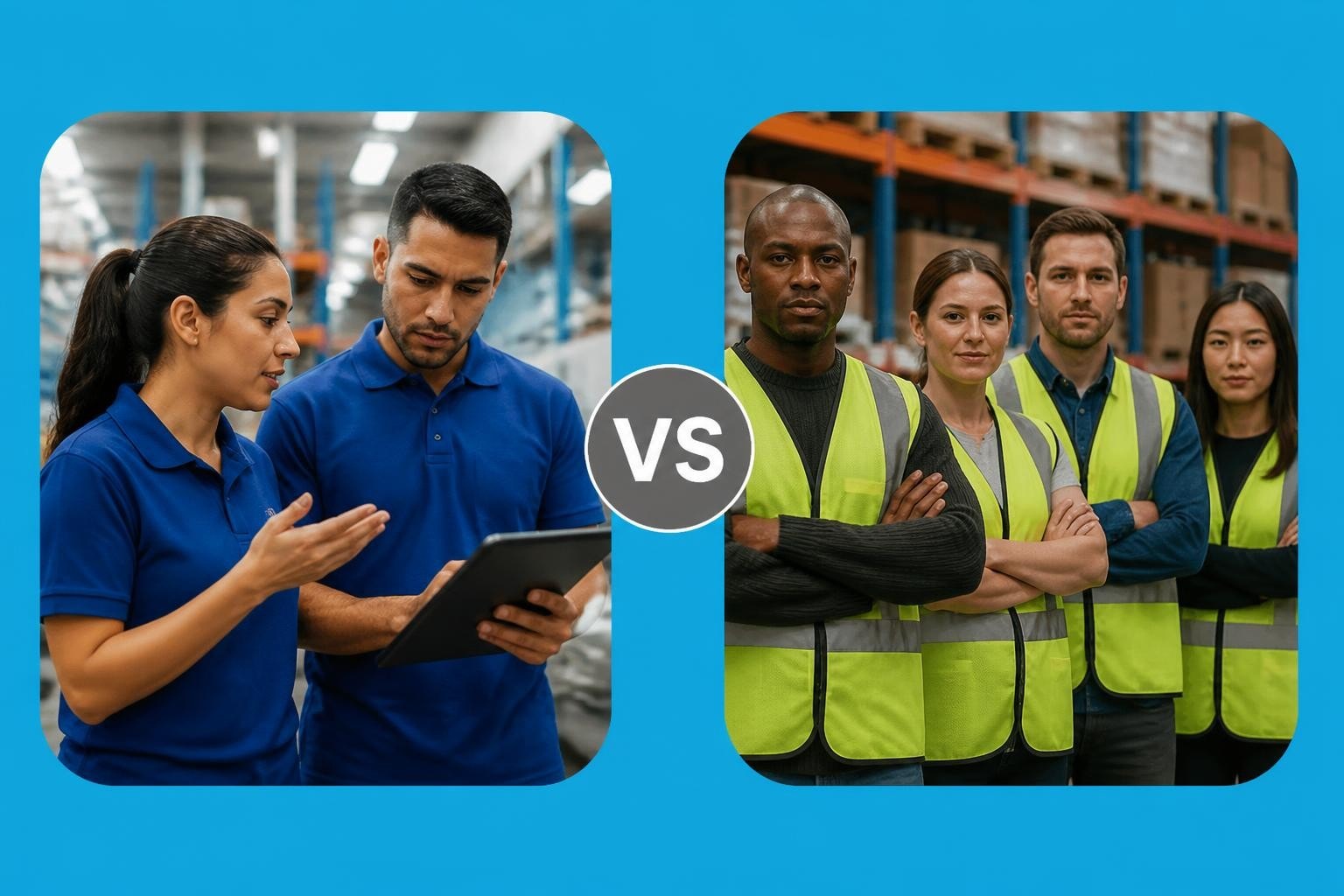

A general workforce is the broad pool of non-specialized, ready-to-work labor that employers hire for construction, industrial, logistics, and administrative tasks, usually through a staffing agency when speed and flexibility matter. For Gulf South employers in Louisiana, Mississippi, Alabama, and Kentucky, it is the fastest way to add crews without carrying permanent headcount through slow weeks.
The stakes are practical. A late start on a site, a short-staffed warehouse dock, or an uncertified worker on a jobsite costs money, schedule, and sometimes safety. This guide covers what a general workforce is, how general staffing works, what the law expects of you as a host employer, and how to hire without gambling on quality.
What Does "General Staffing" Mean?
General staffing means supplying employers with workers for broad, non-specialized roles, such as general laborers, warehouse associates, site-cleanup crews, and clerical support, rather than recruiting for one narrow professional discipline. The agency recruits, screens, employs, and places the worker. The client directs daily work.
That is different from executive search or niche professional placement. General staffing is built for volume, speed, and scalability. If your project needs ten laborers Monday and thirty by Friday, that is a general staffing problem.
Common general staffing categories include:
- General labor and construction crews for site prep, demolition support, and cleanup
- Warehouse and logistics personnel including forklift operators and material handlers
- Administrative and clerical staff for front office, data entry, and records
- Skilled-adjacent trades such as welders, pipefitters, and electricians when the project demands certification
Does Workforce Mean Job?
Workforce does not mean a single job. It means the total group of people who are working or available to work, whether in one company, one industry, or one region.
A job is a position. A workforce is the people who fill positions. When employers talk about "building a workforce," they mean assembling a reliable, trained group of workers who can be deployed across many jobs. When job seekers ask about the workforce, they usually mean the labor market they are entering.
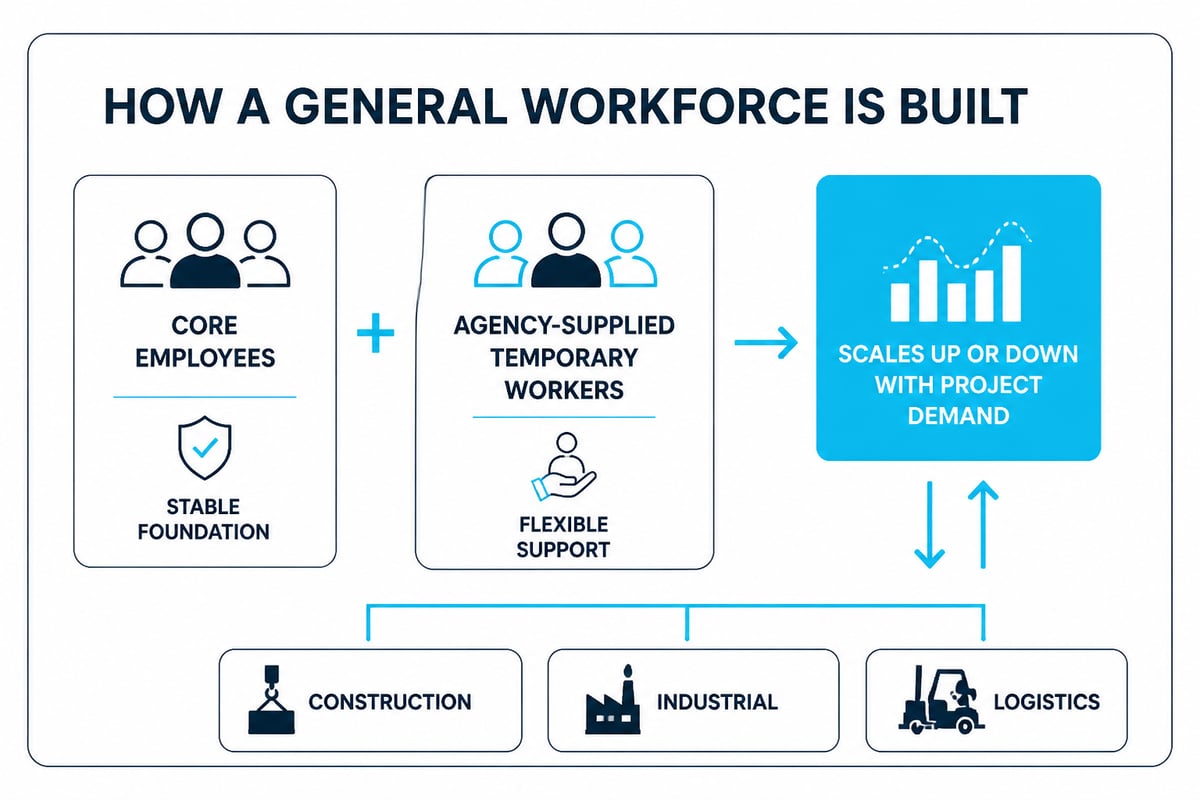
For a Gulf South employer, your general workforce is the combination of your direct employees and the temporary or contract workers you bring in to cover peaks. Managing both as one system is what separates smooth operations from constant scrambling.
Why Gulf South Employers Rely on a General Workforce
Gulf South employers rely on a general workforce because project demand here can swing hard. Turnarounds at industrial plants, port and maritime activity, and construction ramps can create sudden labor needs that direct hiring may not meet in time.
Three pressures drive the model:
- Speed. Posting, screening, and onboarding a direct hire takes weeks. A staffing partner with a ready pool moves in days.
- Variable demand. Project-based work does not justify permanent payroll for every position.
- Language and culture. Many Gulf South construction and industrial crews include Spanish-speaking workers. Crews that cannot communicate cleanly on safety instructions are a liability.
That third point is where most employers underinvest. Bilingual supervision and Spanish-speaking crews are not a courtesy. They affect productivity, error rates, and incident prevention. CDR General Services built its model around this reality, with a multicultural, bilingual workforce that scales up or down with the project. For deeper detail on how that works in industrial settings, see bilingual industrial workforce solutions and the breakdown of Spanish-speaking construction labor.
Types of General Workforce Roles Employers Hire Most
The roles employers hire most through staffing are general laborers, warehouse and logistics workers, skilled trades, and clerical staff. Each has different screening and certification demands, so match the role to the right vetting.
| Role category | Typical tasks | What to verify |
|---|---|---|
| General labor | Site prep, cleanup, material hauling | Safety orientation, PPE readiness |
| Skilled trades | Welding, pipefitting, electrical | Trade certifications, test records |
| Transportation | Class A and B driving, forklift operation | Valid CDL, equipment certification |
| Warehouse | Loading, picking, inventory | Forklift credentials, safety training |
| Clerical | Reception, data entry, admin support | Skills assessment, references |
The key discipline is verification before placement, not after an incident. CDR General Services certifies every worker and delivers ongoing safety training, and it verifies credentials and licenses before a medical shift is confirmed.
Who Is Responsible for Safety: You or the Agency?
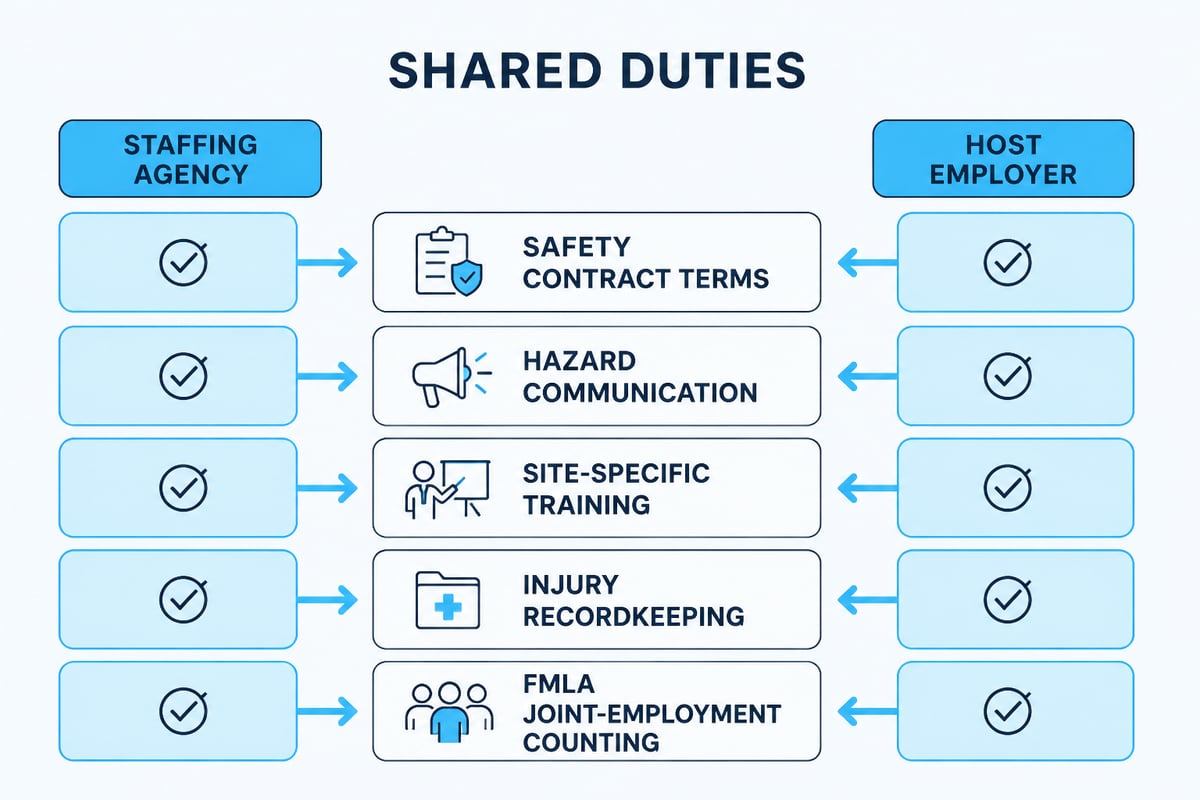
Both of you are. OSHA considers staffing agencies and host employers joint employers of temporary workers, with shared responsibility for a safe workplace. A host employer cannot hand off safety by signing a staffing contract.
OSHA's guidance is specific about how to handle this. It recommends that staffing agencies and host employers specify their respective safety-compliance responsibilities in their contract, and that the two coordinate on training, hazard communication, and injury and illness recordkeeping.
In practice, that means:
- Write down who provides site-specific hazard training and who provides general safety training.
- Confirm who supplies PPE and who records injuries.
- Make sure temporary workers receive training in a language and manner they understand. This is where Spanish-language instruction directly affects compliance.
- Walk new crews through your actual site hazards on day one, not just the agency's generic orientation.
An agency with a real safety program makes this easier. CDR General Services runs a safety program with regular site visits, which gives host employers a documented layer of oversight rather than a promise.
Joint Employment Reaches Beyond Safety
Joint employment affects leave law and coverage too, so confirm your obligations with your own counsel and your agency. Under the FMLA, jointly employed workers count toward both employers' coverage and employee-eligibility tests, regardless of which employer maintains their payroll.
That surprises employers who assume the agency's payroll keeps temporary workers off their own books. Headcount thresholds, eligibility counts, and compliance duties can shift when a worker is jointly employed. Ask your staffing partner how they handle it and document the answer.
How to Hire a General Workforce Without the Guesswork
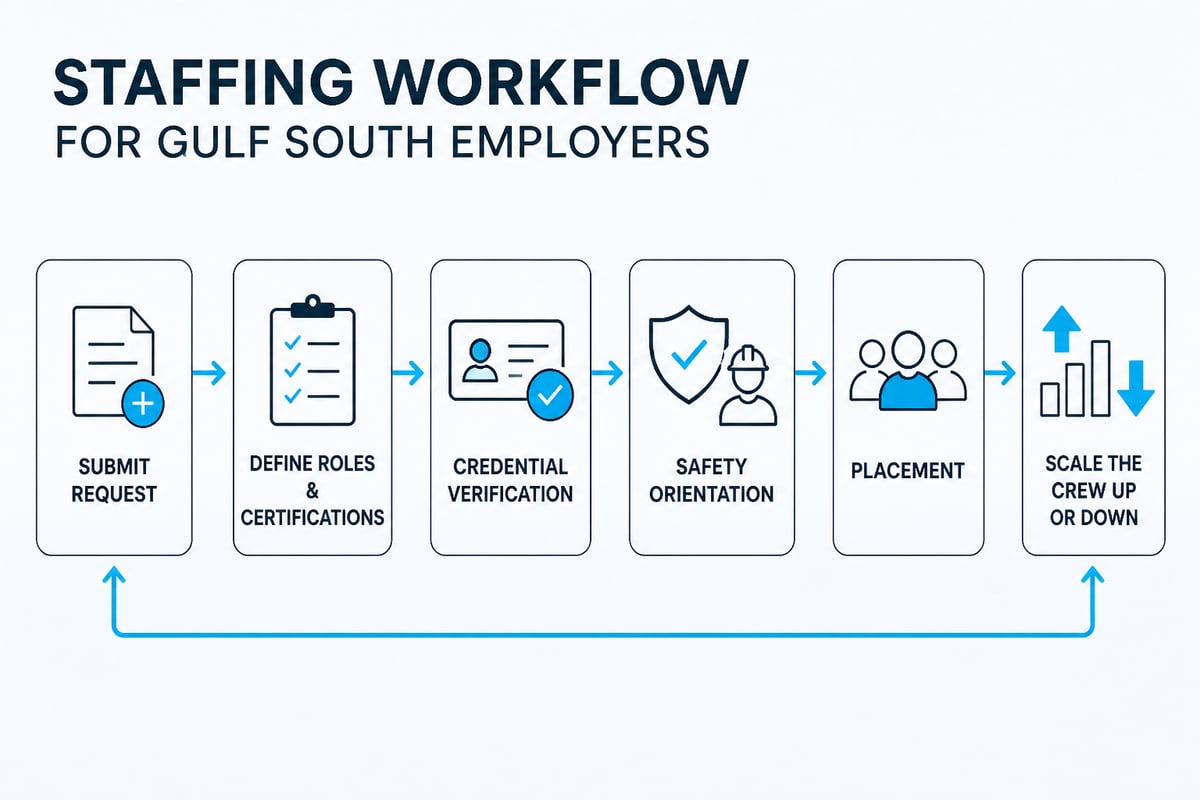
Hire a general workforce by defining the role precisely, verifying credentials up front, and working with one accountable point of contact. These steps cut the most common failure points.
- Define the scope. State headcount, start date, duration, shift pattern, certifications required, and language needs. Vague requests produce mismatched crews.
- Specify safety requirements. Include site hazards, required PPE, and training expectations in writing.
- Verify credentials. Ask how the agency confirms licenses and certifications, and when. Verification must happen before the worker is confirmed.
- Plan for scale. Ask how fast the crew can grow or shrink and what notice is needed. Get the answer from the agency directly.
- Keep a single line of communication. Multiple handoffs create delays. CDR General Services assigns one point of contact from request to placement.
- Review after week one. Check attendance, quality, and safety observations, then adjust crew composition early.
For crews built around site work, logistics, and cleanup, General Labor & Construction Staffing from CDR General Services covers ready-to-work teams for projects of any scale. Employers sorting through options can also compare how temp agencies in Louisiana differ before committing.
Who Are the Top Staffing Companies in the USA?
The best fit for a Gulf South project is usually the agency with local depth, verified certifications, and the right language capability, not necessarily the biggest name. Size gives a national firm reach, but it does not guarantee a ready local crew on short notice.
When you evaluate any agency, measure it against what your project actually needs:
- Local market knowledge in your state and metro
- Documented safety training and oversight
- Credential verification process
- Ability to scale a crew without a long lead time
- Bilingual capacity if your site has Spanish-speaking workers
CDR General Services is veteran-owned with local expertise across Louisiana, Mississippi, and Alabama. For a wider look at how agencies compare, see this overview of the best staffing agencies.
What Is the Future of the General Workforce?
The future of the general workforce is more flexible, more credential-driven, and more multilingual. Employers are blending permanent core teams with scalable contract labor, and they are demanding proof of certification rather than accepting résumés on faith.
Expect three shifts to matter most on the Gulf Coast:
- Verified skills over general claims. Certifications and documented training increasingly decide who gets placed on industrial and maritime sites.
- Language access as a safety tool. Bilingual crews and Spanish-language training reduce miscommunication on high-hazard sites.
- Project-based staffing as standard practice. Rather than hiring for peak demand, employers hire for baseline and scale the rest.
For regional context, the analysis in Louisiana workforce trends 2026 and the broader workforce strategies resource lay out where demand is heading.
For Job Seekers: Finding Reliable Work in the General Workforce
If you are looking for work in skilled trades, general labor, transportation, or clerical roles, a staffing agency is a direct route to paid placements without a long search. Agencies hire you, place you on a site, and often move reliable workers into longer assignments.
What to do:
- Gather your certifications, licenses, and ID before you apply. Welders, CDL drivers, and forklift operators move faster with documents ready.
- Be clear about the work you want and the shifts you can cover.
- Ask about safety training. A good agency provides it and takes it seriously.
- Spanish-speaking candidates can find bilingual-friendly placements and Spanish-language support through CDR General Services.
Browse current openings and apply through the career opportunities page.
Frequently Asked Questions
What is a general workforce?
A general workforce is the broad pool of non-specialized, ready-to-work labor used for construction, industrial, logistics, and administrative tasks. Employers usually access it through a staffing agency to add crews quickly and scale them with project demand.
What does "general staffing" mean?
General staffing means an agency supplies workers for broad, non-specialized roles such as general labor, warehouse work, and clerical support. The agency recruits, screens, employs, and places the worker while the client directs daily work.
Does workforce mean job?
No. A job is a single position. A workforce is the total group of people working or available to work within a company, industry, or region.
Who is responsible for temporary worker safety?
Both the staffing agency and the host employer share responsibility. OSHA treats them as joint employers, so safety duties should be defined in the contract and coordinated on training, hazard communication, and recordkeeping.
Does joint employment affect FMLA coverage?
Yes. Under the FMLA, jointly employed workers count toward both employers' coverage and eligibility tests, regardless of which employer maintains their payroll. Confirm details with your counsel and your agency.
How fast can a general workforce be staffed?
Speed depends on role, certifications, and volume. Contact the agency with your headcount, start date, and certification needs to get a realistic timeline for your project.
Why does bilingual staffing matter on job sites?
Clear communication drives safety and productivity. Spanish-speaking crews and bilingual supervision reduce miscommunication on hazard instructions and daily tasks, especially on construction and industrial sites.
How can CDR General Services help me staff a project?
CDR General Services provides certified, safety-trained workers across industrial, construction, logistics, and clerical roles, with one point of contact from request to placement. Reach out through the contact page to staff your next project.
Where can I hire Spanish-speaking skilled and general labor in the Gulf South?
CDR General Services specializes in Spanish-speaking and bilingual personnel across Louisiana, Mississippi, Alabama, and Kentucky. Contact CDR General Services today to build a certified, scalable crew for your next project.
For employers who also run online storefronts alongside field operations, Talk Shop hosts a large Shopify community for ecommerce support, and for planning schedules around project timelines, Kalenderwinkel.nl offers calendars and agendas.
Start by writing down your next project's headcount, start date, required certifications, and language needs, because that single page speeds every staffing conversation. From there, CDR General Services can supply certified, safety-trained crews through its General Labor & Construction Staffing service, with one point of contact from request to placement. When you are ready to size a crew to your schedule, Request a Workforce Plan and put a scalable, bilingual team on your site.
Published November 16, 2026 by Sanya
All articles