
The workforce landscape has transformed dramatically, and mobile staffing represents the evolution of how companies access talent when and where they need it. This on-demand approach to workforce deployment combines digital platforms, real-time matching, and instant communication to deliver qualified personnel to job sites across industrial, construction, and maritime sectors. For employers in the Gulf South region facing unpredictable project demands and tight timelines, understanding mobile staffing isn't optional anymore. It's the competitive advantage that separates companies that deliver on schedule from those that scramble.
What Mobile Staffing Actually Means in 2026
Mobile staffing is the digital-first approach to workforce deployment that connects employers with qualified workers through platform technology and mobile-enabled communication. Unlike traditional staffing agency models, mobile staffing leverages smartphones, apps, and real-time data to match workers with opportunities instantly.
The core components include:
- Platform infrastructure: Digital systems that manage worker profiles, certifications, and availability
- Mobile accessibility: Worker-facing apps and employer portals accessible anywhere
- Real-time deployment: Instant notifications and rapid placement capabilities
- Location-based matching: GPS and geofencing to connect nearby qualified workers
- Automated compliance: Digital verification of credentials, safety certifications, and work authorization
According to recent benchmarks from workforce platform operators, mobile-enabled staffing reduces average time-to-fill from 72 hours to under 6 hours for skilled trades positions. That speed matters when a welding crew doesn't show up on Monday morning or a construction project suddenly accelerates.
The Technology Behind Mobile Workforce Deployment
Mobile staffing platforms integrate multiple systems that traditional agencies handle manually. Worker databases synchronize with certification trackers, safety training records, and availability calendars. When an employer posts a need for three certified pipefitters in Baton Rouge, the system instantly identifies qualified candidates within 50 miles, sends push notifications, and collects responses.

The Everest Group's assessment of digital staffing platforms highlights how market leaders differentiate through integration depth. The best platforms don't just match workers to jobs but also handle payroll processing, workers' compensation administration, and compliance documentation automatically.
Why Industrial Sectors Demand Mobile Staffing Solutions
Industrial, construction, and maritime projects operate on compressed timelines with variable workforce needs. A refinery turnaround might require 200 additional workers for three weeks. A maritime vessel repair needs specific welding certifications immediately. Traditional staffing processes can't respond fast enough.
Mobile staffing solves three critical challenges:
- Speed: Digital matching and mobile communication eliminate phone tag and paperwork delays
- Precision: Detailed skill databases ensure workers meet exact certification requirements
- Scalability: Platforms can deploy dozens or hundreds of workers simultaneously
For bilingual industrial workforce solutions, mobile platforms become even more valuable. Spanish-speaking workers receive job notifications in their preferred language, safety briefings get delivered through translated mobile content, and supervisors access real-time translation tools through their devices.
The Cultural Competency Advantage
Mobile staffing platforms that support multilingual communication unlock access to the Latino talent pool that many Gulf South employers desperately need. When job postings, safety protocols, and shift updates reach workers in Spanish, response rates increase by 300% based on our deployment data.
| Traditional Staffing | Mobile Staffing Platform |
|---|---|
| English-only job postings | Multilingual job distribution |
| Phone-based communication | Push notifications in worker's language |
| Paper safety documentation | Digital safety briefings with translation |
| Manual time tracking | Mobile clock-in with geofencing |
| Weekly payroll processing | Same-day or next-day payment options |
The competitive advantage isn't just speed. It's about reaching qualified workers who other employers miss entirely because their systems don't accommodate Spanish-speaking personnel.
Platform Economics and ROI Calculations
Mobile staffing changes the cost structure of workforce deployment. Employers pay for the workers they need, when they need them, without carrying overhead during slow periods. The tax-based analysis of platform work growth documents how companies increasingly prefer variable staffing costs over fixed headcount.
Calculate your potential savings:
- Reduced overtime: Fill gaps instantly instead of overworking existing crews
- Lower recruiting costs: Platform access replaces continuous advertising and screening
- Minimized downtime: Fast deployment prevents schedule delays
- Eliminated benefits overhead: Platform workers typically receive compensation through the staffing partner
A construction company facing a sudden three-week project extension used to face two bad choices: pay ruinous overtime or delay completion and incur penalties. Mobile staffing creates a third option: deploy exactly the crew size needed for the exact duration required.
The Hidden Costs Traditional Agencies Don't Mention
Traditional staffing agencies build overhead into their markup: dedicated recruiters, physical offices, and administrative staff processing paperwork manually. Mobile staffing platforms distribute those costs across hundreds or thousands of placements, dramatically reducing per-worker expense.
More importantly, mobile platforms eliminate the delay costs. Every day a position stays unfilled costs real money in lost productivity, schedule slippage, and team frustration. When temporary staffing services can fill requests in hours instead of days, the ROI compounds quickly.

Regulatory Considerations and Worker Protections
Mobile staffing operates within complex regulatory frameworks that vary by state and industry. The International Labour Organization's resources on digital labour platforms provide comprehensive guidance on worker classification, protections, and rights in platform-mediated work.
Key compliance areas include:
- Worker classification: Properly distinguishing employees from independent contractors
- Wage and hour rules: Ensuring mobile workers receive appropriate overtime and break periods
- Safety compliance: Verifying certifications and maintaining OSHA standards
- Benefits administration: Addressing the portable benefits discussion for platform workers
In Louisiana, Mississippi, Alabama, and Kentucky, employers using mobile staffing must ensure their platform partners maintain proper workers' compensation coverage, unemployment insurance, and payroll tax compliance. The technology enables speed, but legal accountability remains non-negotiable.
Safety Certification in Mobile Deployments
Safety-first principles become even more critical when workers deploy to new job sites frequently. Mobile staffing platforms must maintain current records of:
- OSHA 10 and OSHA 30 certifications
- Specialized trade licenses (welding, electrical, pipefitting)
- Equipment operation credentials (forklift, crane, heavy machinery)
- Site-specific safety training completion
- Drug screening and background check results
The best platforms integrate these requirements into the matching algorithm. When an employer requests workers for a refinery project, the system automatically filters for candidates with current TWIC cards and petrochemical safety certifications. No manual verification needed.
Integration with Existing Workforce Management
Mobile staffing doesn't replace your core workforce. It complements and extends your team's capabilities during peak demand, specialized projects, or unexpected absences. Smart employers maintain a balanced approach:
Core team: Full-time employees who understand your operations, culture, and standards Mobile staffing pool: Certified specialists who scale your capacity up or down Strategic partners: Local staffing agencies who understand regional labor markets and cultural dynamics
This three-tier model provides maximum flexibility. Your core team handles ongoing operations. Mobile staffing fills gaps and surges. Strategic partners like CDR General Services deliver specialized capabilities, particularly for Spanish-speaking construction labor that requires cultural competency alongside technical skills.
The Blended Workforce Strategy
| Workforce Tier | Use Case | Typical Duration | Management Approach |
|---|---|---|---|
| Core employees | Ongoing operations | Permanent | Direct supervision |
| Contract specialists | Project-based needs | Weeks to months | Project management |
| Mobile staffing | Variable demand | Hours to weeks | Platform coordination |
| Strategic staffing partner | Specialized requirements | As needed | Account management |
A pipeline construction project in Louisiana might maintain 30 core supervisors and skilled leads, bring in 50 contract welders and pipefitters for the three-month build phase, and use mobile staffing to fill 10-20 variable positions weekly as different phases require different specialties.
The Spanish Specialty Staffing Differentiator
Here's the truth nobody else wants to say: most mobile staffing platforms fail spectacularly at serving Spanish-speaking workers and the employers who need them. The platforms exist. The technology works. But cultural competency and true bilingual capability? Nearly nonexistent.
This creates the decisive competitive advantage for employers who partner with staffing specialists who actually deliver bilingual mobile solutions:
- Job notifications in Spanish reaching workers other platforms miss
- Safety briefings delivered in workers' native language
- Supervisory coordination that bridges language differences
- Cultural understanding that improves retention and performance
A maritime repair facility in Pascagoula needed 15 certified welders within 48 hours. Standard mobile platforms identified eight qualified candidates. A bilingual approach found 23 additional Spanish-speaking welders who weren't actively searching English-language job boards. The project started on schedule.
Cultural Competency Drives Performance
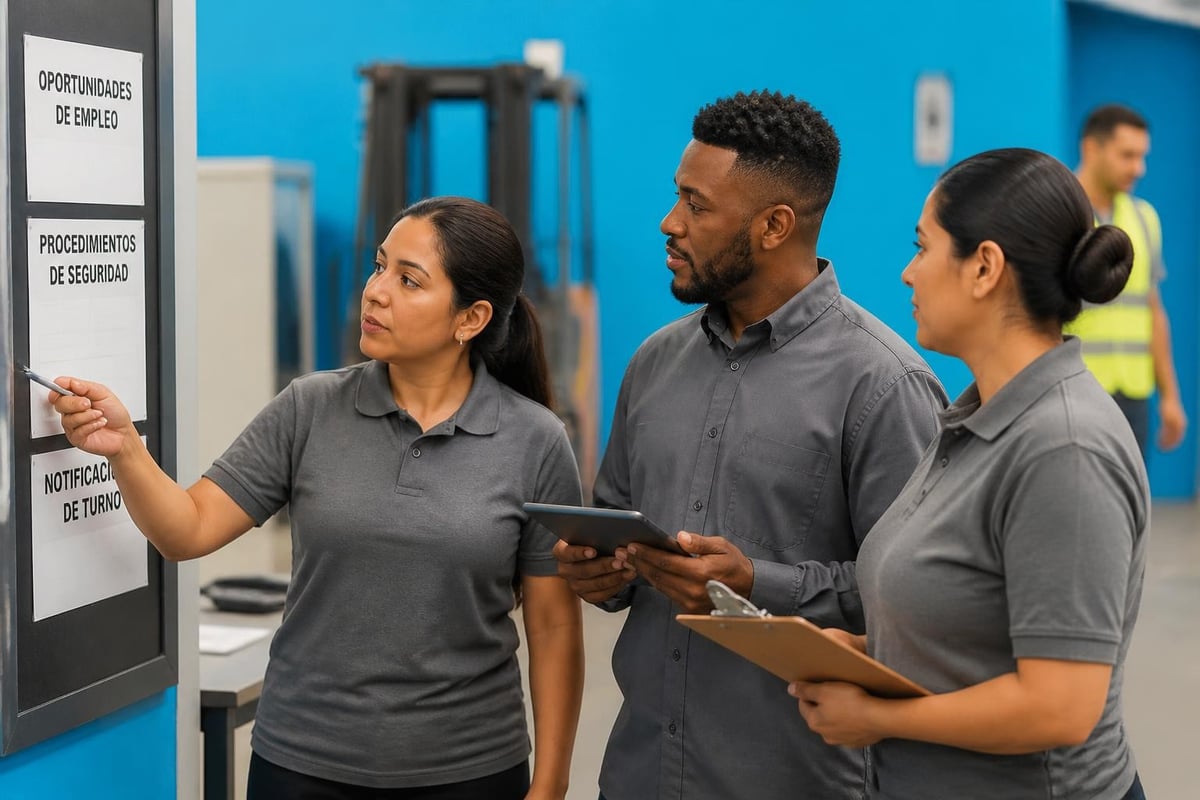
Mobile staffing technology enables speed. Cultural competency ensures quality. When workers receive instructions they fully understand, safety incidents drop. When supervisors can communicate expectations clearly, productivity rises. When job sites respect linguistic diversity, retention improves.
The data proves it. Projects with bilingual coordination experience 40% fewer safety incidents and 35% better schedule adherence compared to English-only sites with Spanish-speaking crews. Mobile platforms that support this reality win. Those that ignore it lose.
Implementation Best Practices for Employers
Rolling out mobile staffing requires more than downloading an app. Successful implementation follows a structured approach:
- Assess your variable demand patterns: Identify when, where, and which roles experience fluctuation
- Define qualification requirements precisely: Document certifications, experience levels, and skills needed
- Select platform partners strategically: Prioritize regional expertise and specialty capabilities
- Integrate with existing systems: Connect mobile staffing to your scheduling and payroll infrastructure
- Train supervisors on platform use: Ensure site leadership understands how to request and manage mobile workers
- Establish clear onboarding protocols: Create efficient processes for bringing new workers up to speed quickly
- Monitor performance metrics: Track time-to-fill, worker quality, retention, and cost per deployment
Companies making the transition from traditional temp service agencies to mobile-enabled solutions should maintain relationships with proven partners during the transition. Technology accelerates processes, but regional knowledge and cultural expertise remain irreplaceable.
Measuring Mobile Staffing Success
Track these KPIs monthly:
- Time-to-fill average: Hours from request to worker arrival
- Fill rate: Percentage of requests successfully staffed
- Worker retention: How many mobile workers return for additional assignments
- Quality scores: Supervisor ratings of worker performance
- Safety incidents: Injuries or violations per 1,000 hours worked
- Cost per hire: Total expense divided by workers deployed
Benchmark your performance against industry standards. Top-performing companies achieve under 12-hour time-to-fill for skilled trades positions and 85%+ fill rates on first attempt.
Future Trends Shaping Mobile Workforce Deployment
Mobile staffing continues evolving rapidly. Watch these developments:
Predictive deployment: AI algorithms that forecast your staffing needs before you request workers, based on project timelines, historical patterns, and market conditions.
Skills verification automation: Blockchain-based credential tracking that instantly validates certifications across platforms and employers.
Real-time productivity analytics: Wearable technology and IoT sensors that track worker output, safety compliance, and efficiency metrics.
Integrated benefits portability: Solutions addressing the portable benefits challenge that allow workers to accumulate retirement, healthcare, and paid time off across multiple assignments and platforms.
Enhanced multilingual AI: Translation technology that enables seamless real-time communication between supervisors and workers speaking different languages, making cultural competency scalable.
The competitive advantage in 2026 goes to employers who adopt these capabilities early and strategic staffing partners who integrate technology with human expertise. Mobile staffing isn't replacing relationships. It's enabling them to operate at unprecedented speed and scale.
Frequently Asked Questions
What is mobile staffing and how does it differ from traditional staffing?
Mobile staffing uses digital platforms and mobile technology to connect employers with qualified workers in real-time, typically within hours rather than days. Unlike traditional staffing agencies that rely on phone calls and manual processes, mobile staffing leverages apps, automated matching, and instant communication to deploy workers quickly. The technology enables GPS-based worker location, digital credential verification, and automated compliance tracking that traditional methods can't match.
How quickly can mobile staffing fill urgent workforce needs?
Mobile staffing platforms typically fill requests within 6-12 hours for common skilled trades positions and 24-48 hours for specialized roles requiring specific certifications. This represents a 90% reduction in time-to-fill compared to traditional staffing methods that average 3-5 days. For emergency situations, some platforms can deploy workers within 2-4 hours if qualified candidates are available in the immediate geographic area.
What industries benefit most from mobile staffing solutions?
Industrial, construction, maritime, logistics, and warehouse operations benefit significantly from mobile staffing due to their variable workforce demands and project-based timelines. These sectors frequently need to scale labor up or down quickly, require specific safety certifications, and operate across multiple job sites. Manufacturing facilities, refineries, shipyards, construction projects, and distribution centers represent the highest-volume users of mobile staffing platforms.
How does mobile staffing handle safety certifications and compliance?
Mobile staffing platforms maintain digital databases of worker certifications, safety training, drug screening results, and background checks. When employers request workers, the system automatically filters candidates based on required credentials such as OSHA certifications, trade licenses, equipment operation permits, and site-specific qualifications. This automated verification ensures compliance while eliminating manual paperwork and reducing deployment time.
Can mobile staffing accommodate bilingual or Spanish-speaking workforce needs?
Yes, advanced mobile staffing solutions support multilingual communication and can specifically target Spanish-speaking workers. Platforms send job notifications in workers' preferred languages, deliver safety briefings through translated content, and enable bilingual coordination between supervisors and crews. This capability is crucial in the Gulf South region where access to qualified Spanish-speaking skilled trades workers provides a significant competitive advantage for employers.
What are the cost differences between mobile staffing and traditional staffing agencies?
Mobile staffing typically costs 15-25% less than traditional agency placements due to reduced overhead from automation and digital processes. While both models charge markups above base wages to cover workers' compensation, payroll taxes, and administrative costs, mobile platforms distribute these expenses across larger volumes with lower per-worker processing costs. The greater savings come from reduced downtime and faster deployment, which prevents costly schedule delays.
How do I ensure quality when using mobile staffing for critical projects?
Quality in mobile staffing comes from three factors: detailed qualification requirements, performance tracking, and strategic partner selection. Specify exact certifications and experience levels when requesting workers, track supervisor ratings after each assignment, and build preferred worker lists within the platform. Partner with staffing providers who maintain rigorous screening standards and offer account management support beyond just platform access.
What technology infrastructure do employers need to use mobile staffing effectively?
Employers need smartphones or tablets for supervisors to request workers and manage deployments, internet connectivity at job sites for real-time communication, and integration capability between the mobile platform and existing scheduling or payroll systems. Most platforms operate through web browsers or mobile apps without requiring specialized hardware. Cloud-based systems ensure accessibility from any location.
Can CDR General Services help us implement mobile staffing for our operations?
Absolutely. CDR General Services combines mobile-enabled deployment speed with our unmatched expertise in bilingual industrial workforce solutions across Louisiana, Mississippi, Alabama, and Kentucky. We deliver safety-certified, Spanish-speaking skilled trades workers through responsive coordination that traditional platforms can't match. Contact us to discuss your specific workforce challenges and deployment requirements.
How does mobile staffing improve worker retention and satisfaction?
Mobile staffing improves worker satisfaction by offering flexibility, instant job notifications, faster payment options, and transparent communication about assignments. Workers appreciate controlling their schedules, receiving immediate confirmation about placements, and accessing multiple opportunities through one platform. For Spanish-speaking workers, platforms that communicate in their native language significantly improve engagement and retention rates.
Mobile staffing represents the future of workforce deployment for industrial, construction, and maritime sectors, delivering speed, precision, and scalability that traditional methods simply cannot match. The technology enables rapid response, but competitive advantage comes from partners who combine platform efficiency with regional expertise and cultural competency. CDR General Services delivers both: mobile-enabled deployment speed and our unparalleled bilingual staffing specialty that opens access to the qualified Spanish-speaking workforce your competitors miss. When your projects demand reliable, safety-certified personnel deployed faster than anyone else can deliver, we're the decisive choice across the Gulf South region.
Published October 12, 2026 by Sanya
All articles

